What’s the Difference Between a Sewing Machine and a Serger for Everyday Sewing
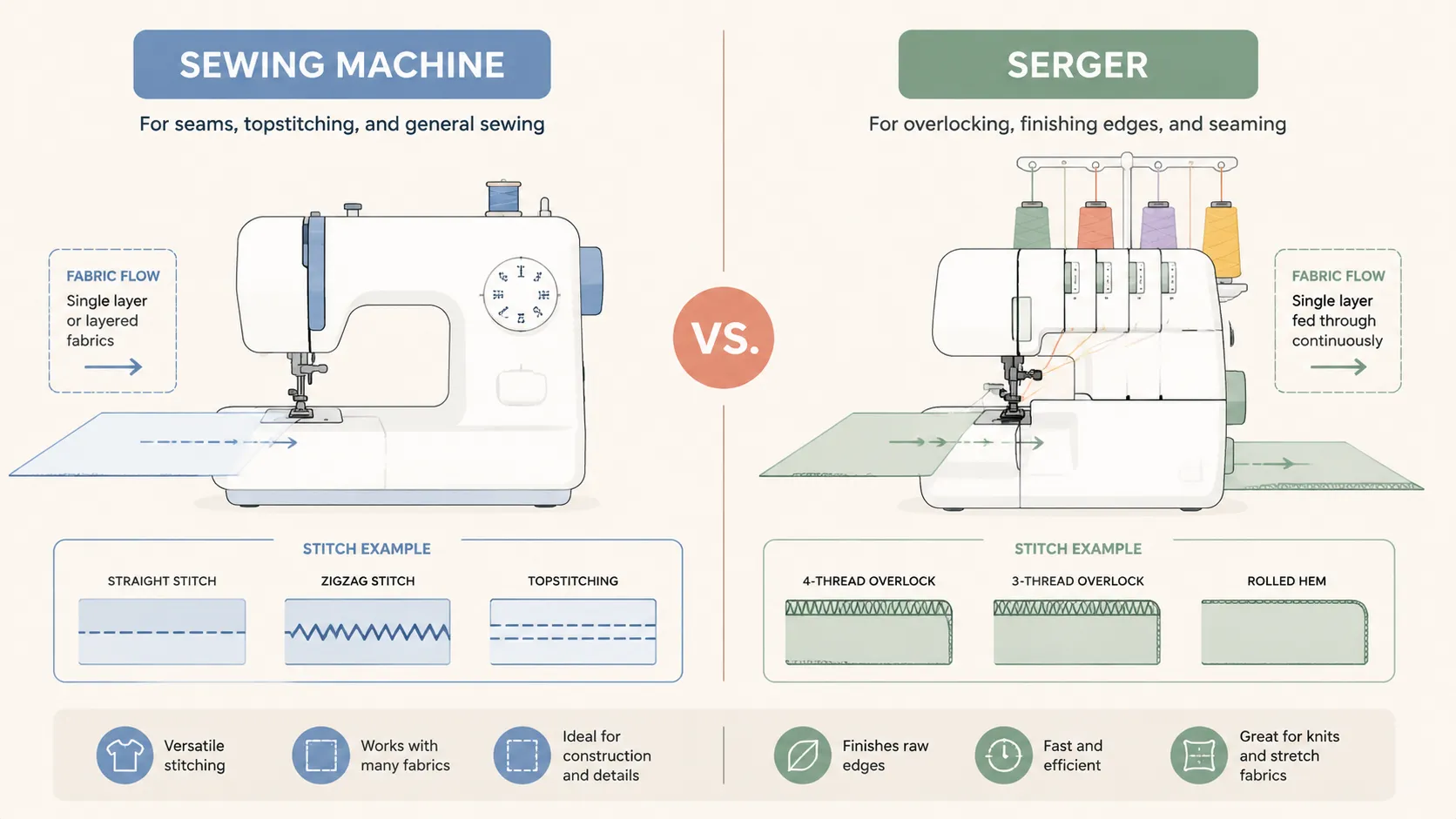
Choosing between a sewing machine and a serger can be confusing because both create stitches, but they are designed for different jobs. A sewing machine is the versatile foundation for construction, repairs, quilting, zippers, buttonholes, and decorative work. A serger specializes in trimming, joining, and finishing fabric edges quickly and neatly.
For beginners, the key difference is versatility versus specialization. A standard sewing machine gives you more control over individual sewing techniques, while a serger excels at producing durable, professional-looking seam finishes, particularly on knit fabrics.
Understanding how these machines differ before buying one can help you avoid spending money on equipment you may not need yet. This guide compares their functions, stitch types, speed, fabric handling, maintenance, and ideal uses so you can choose the setup that matches your sewing goals.
Contents
Understanding the Basic Difference
What a Sewing Machine Does
A regular sewing machine is the primary construction tool for most sewing projects. It joins fabric with a controlled stitch and can handle tasks such as seams, hems, zippers, buttonholes, topstitching, quilting, repairs, and decorative details.
Its biggest advantage is versatility. Depending on the model and accessories, one machine can work with everything from lightweight fabric to denim and canvas. You can also stop, pivot, reverse, adjust stitch length, and carefully position the needle when accuracy matters.
Modern computerized models may add features such as automatic needle threading, programmable stitches, speed controls, automatic tension adjustment, and embroidery functions. These features can make learning easier, although a simple mechanical machine is still capable of handling a wide range of everyday projects.
What a Serger Does
A serger, also known as an overlock machine, is designed primarily for fast seam construction and edge finishing. It trims the fabric edge, wraps thread around the raw edge, and forms the seam in one continuous operation.
Most sergers use three, four, or five threads, depending on the stitch configuration. The resulting seams can be strong and flexible, making the machine particularly useful for knit garments and fabrics that need to stretch during wear.
Speed is another major advantage. Many household sergers can sew at roughly 1,300 to 1,500 stitches per minute, allowing repeated seams and edge finishing to be completed much faster than with several separate sewing-machine steps.
The simplest way to think about the difference is this: a sewing machine gives you broad control over garment construction, while a serger specializes in efficient seam finishing and fast overlock stitching. They complement each other rather than serving as identical alternatives.
The Main Purpose Behind Each Machine
Everyday Construction Sewing
The main job of a sewing machine is construction. It builds garments piece by piece. When you attach sleeves, sew collars, install pockets, or create buttonholes, you are performing construction sewing. These tasks require precision, control, and versatility.
A sewing machine excels here because it allows slow, accurate stitching. You can pivot around corners, sew tiny details, backstitch for reinforcement, and carefully manipulate difficult fabrics. That level of control is impossible to fully replicate on a serger.
This is especially important for beginners. Many sewing communities strongly recommend starting with a regular sewing machine before investing in a serger. Learning garment construction teaches core sewing skills that remain valuable forever, regardless of what advanced machines you later purchase.
Another major advantage is stitch variety. Most sewing machines include straight stitches, zigzag stitches, stretch stitches, blind hems, decorative options, and specialty stitches. That flexibility opens the door to creative sewing projects far beyond clothing alone.
Professional Edge Finishing
A serger’s main purpose is edge finishing and seam durability. Raw fabric edges naturally fray over time, especially after repeated washing and wearing. Sergers solve this problem elegantly by wrapping thread around the fabric edge while trimming away excess material.
This creates several benefits at once:
| Feature | Sewing Machine | Serger |
|---|---|---|
| Seams fabric together | Yes | Yes |
| Prevents fraying | Limited | Excellent |
| Cuts fabric while sewing | No | Yes |
| Creates stretchy seams | Moderate | Excellent |
| Makes buttonholes | Yes | No |
| Decorative stitching | Yes | Limited |
| Speed | Moderate | Very Fast |
Professional garment makers rely heavily on sergers because they dramatically improve production efficiency. A serger can finish seams in a fraction of the time required with zigzag stitching or French seams on a regular machine.
The difference becomes especially obvious with knit fabrics. T-shirts, leggings, activewear, and stretch garments perform better when sewn with overlock seams because the stitches flex naturally with body movement.
How Stitch Types Affect Fabric Edges
Straight Stitch vs Overlock Stitch
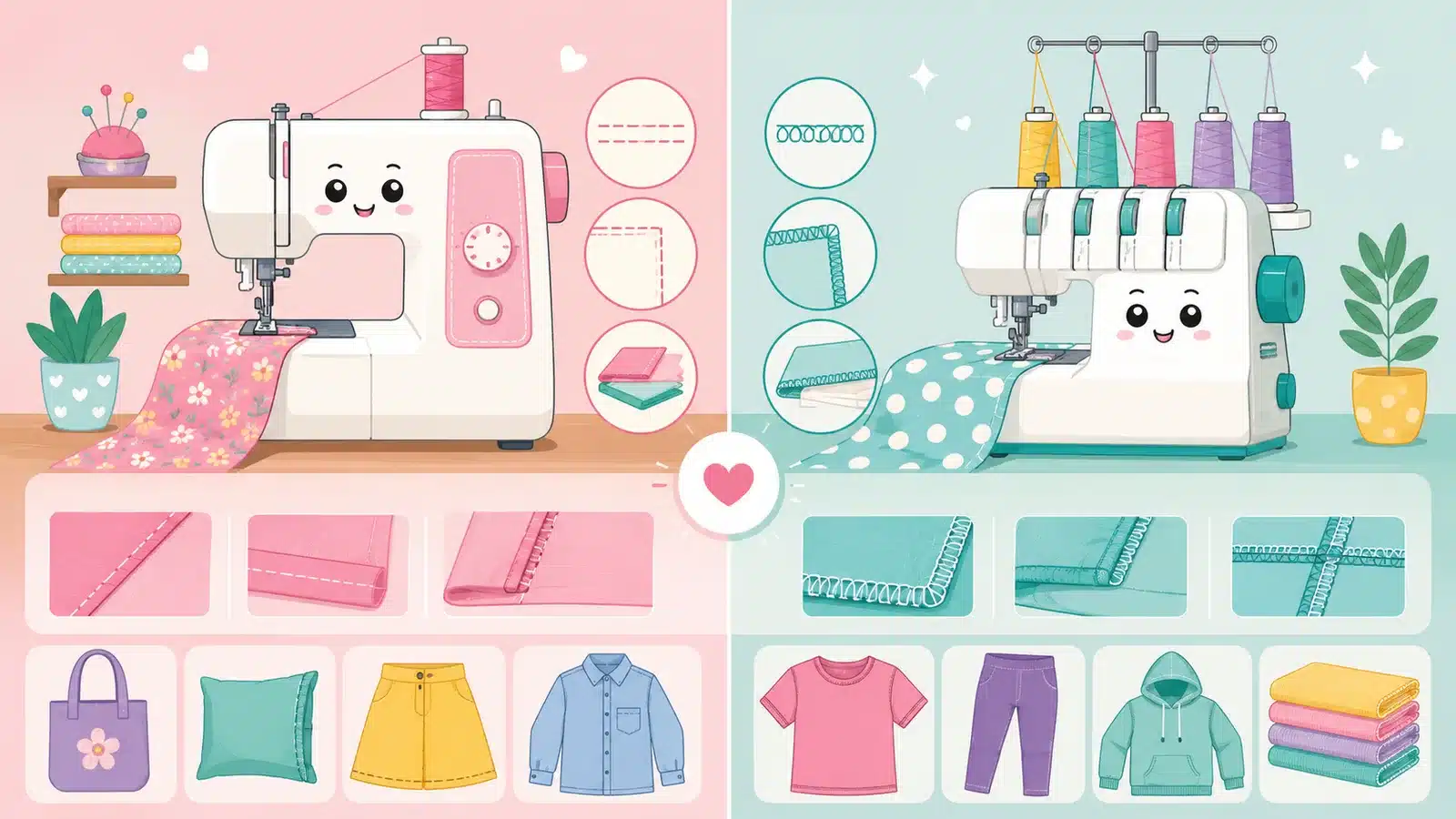
A sewing machine straight stitch forms a precise row of interlocking stitches through the fabric. It is excellent for seams that need accuracy and stability, but the cut edge remains exposed unless you finish it separately.
An overlock stitch works differently. The serger’s loopers wrap thread around the fabric edge while the machine trims excess material. This helps control fraying and produces a neat finish in a single pass.
The distinction becomes especially useful with stretch fabrics. Overlock stitches can accommodate movement better than a basic straight stitch, while a standard sewing machine can use zigzag, stretch, or other specialty stitches when an overlock machine is unavailable.
Why Fraying Happens
Fraying occurs when the threads at a cut fabric edge loosen and pull away from one another. Loosely woven materials and fabrics such as linen, rayon, and lightweight cotton can be particularly prone to unraveling.
Leaving raw edges unfinished can gradually make seams look untidy and may allow the fabric to deteriorate with repeated handling and washing. Choosing the right finishing method helps protect the edge and improves the garment’s interior appearance.
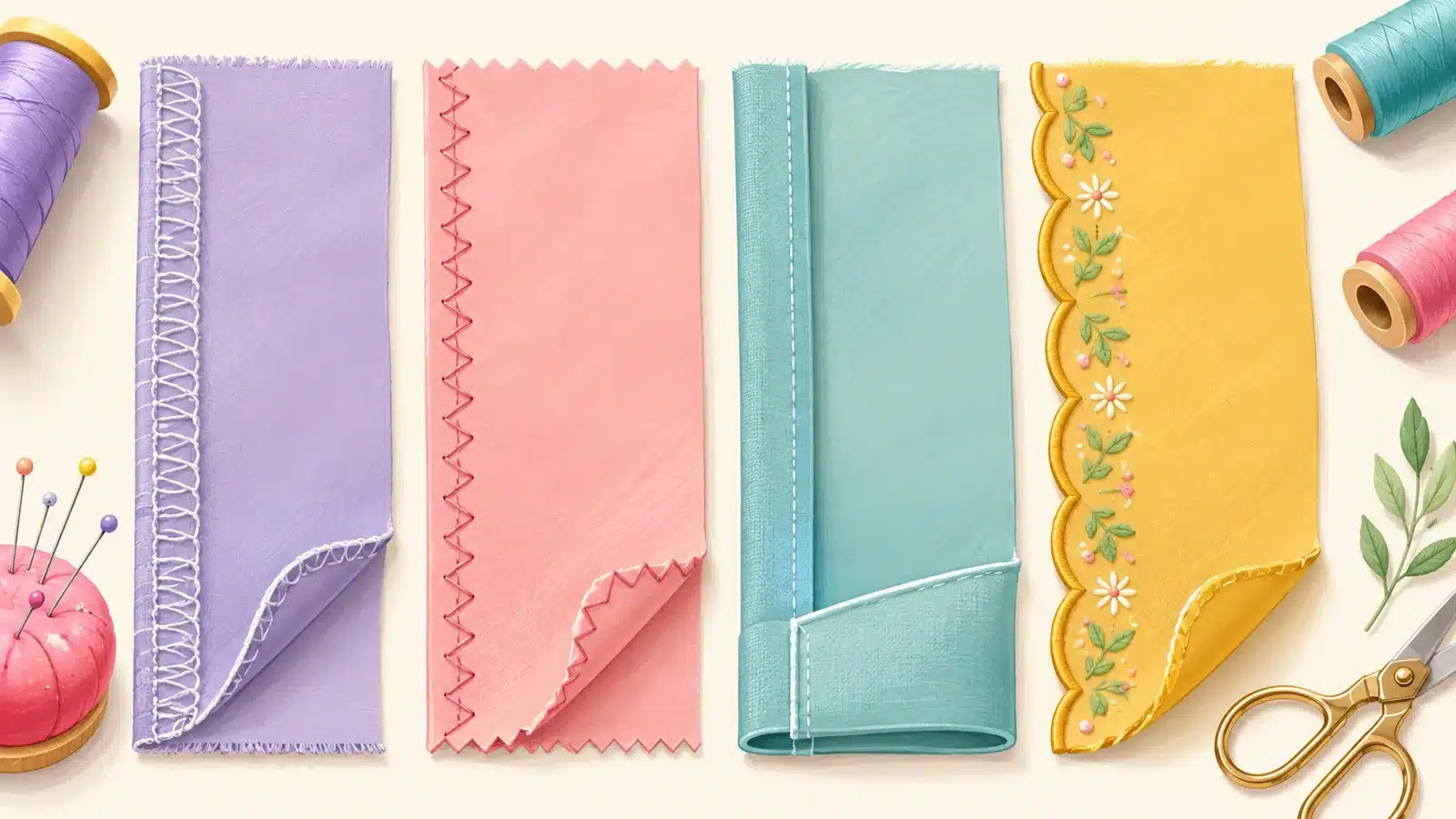
- Zigzag stitching
- Pinked edges
- French seams
- Bias binding
- Overcast stitches
These methods can produce excellent results, but each requires a different technique and may take longer than the single-pass edge finishing provided by a serger.
Speed and Efficiency in Sewing Projects
Fast Production With a Serger
If sewing machines are careful artists, sergers are caffeinated sprinters. Speed is one of the biggest reasons professional garment factories rely heavily on overlock machines.
A serger can trim, stitch, and finish simultaneously. That means what normally takes several steps on a sewing machine happens in one smooth motion. For people sewing large batches of garments, this efficiency becomes invaluable.
Recent sewing sources note that combining sewing machines and sergers can reduce assembly time significantly while improving garment durability. That efficiency explains why advanced sewists often invest in both machines rather than choosing only one.
Imagine sewing ten T-shirts. On a regular sewing machine, you might stitch seams first and then finish every edge separately afterward. On a serger, those actions happen together almost instantly.
The time savings become dramatic when sewing professionally or handling large projects.
Precision Control With a Sewing Machine
While sergers dominate speed, sewing machines dominate precision. A regular sewing machine allows careful stitching around curves, corners, pockets, and delicate details.
This matters more than many beginners realize. Clothing construction is not only about speed. Accuracy determines fit, symmetry, and overall garment quality.
You cannot easily install a zipper with a serger. You cannot create buttonholes, decorative embroidery, or delicate topstitching either. Those tasks require the controlled movement and stitch options available on standard sewing machines.
That’s why experienced garment makers often use both machines in the same project. The sewing machine handles construction details, while the serger finishes seams cleanly afterward.
Projects Best Suited for a Sewing Machine
Quilting and Decorative Sewing
Quilters almost always prioritize sewing machines over sergers because quilting depends heavily on precise piecing and decorative stitching. A serger simply lacks the stitch variety needed for detailed quilt work.
Decorative sewing also falls squarely into sewing machine territory. Monograms, satin stitches, appliqué, heirloom sewing, and embroidery all require specialized stitch control.
For hobbyists interested in creativity rather than production speed, a regular sewing machine offers much broader possibilities. You can experiment endlessly with stitch combinations, fabric layers, and embellishments.
Another advantage is fabric compatibility. Sewing machines handle thick denim, leather, canvas, and delicate silk more flexibly than many sergers.
Repairs and Alterations
Alterations are another area where sewing machines dominate completely. Shortening pants, adjusting waistlines, patching tears, and replacing zippers all require careful maneuvering.
A serger’s cutting blade actually becomes risky during alteration work because it permanently trims fabric as you sew. One wrong move can ruin a garment instantly.
This concern appears frequently in sewing communities. Many sewists warn beginners not to rush into purchasing a serger before mastering construction basics because sergers leave less room for correcting mistakes.
For practical household sewing tasks, a regular sewing machine remains the most versatile and beginner-friendly choice.
What a Serger Adds to Garments
Stretch Fabric Performance
Stretch fabrics are where sergers truly shine. Knits, jersey, spandex, and athletic fabrics behave differently from woven materials because they expand during movement.
A standard straight stitch often breaks when stretched repeatedly. Sergers avoid this problem by using looping thread formations that flex naturally.
This is why professional activewear, swimsuits, leggings, and T-shirts almost always use overlock seams. The seams remain smooth, durable, and comfortable against the skin.
Many sewists who initially avoided buying a serger later changed their minds after working extensively with knit fabrics. The improvement in seam quality and fabric handling can be dramatic.
Store-Bought Clothing Finishes
Turn almost any commercial garment inside out and you will probably see overlock stitching. Those neat thread-wrapped edges are a hallmark of mass-produced clothing.
A serger instantly elevates homemade garments closer to retail quality. The inside looks cleaner, seams resist fraying better, and fabrics drape more professionally.
That psychological boost matters more than people expect. Wearing something that looks polished both inside and outside creates a stronger sense of craftsmanship and pride.
Still, it’s important to remember that beautiful garments existed long before sergers became common household tools. Many vintage garments used French seams, bound edges, and other traditional finishing techniques instead.
Thread Usage and Machine Complexity
Easy Threading vs Multi-Thread Setup
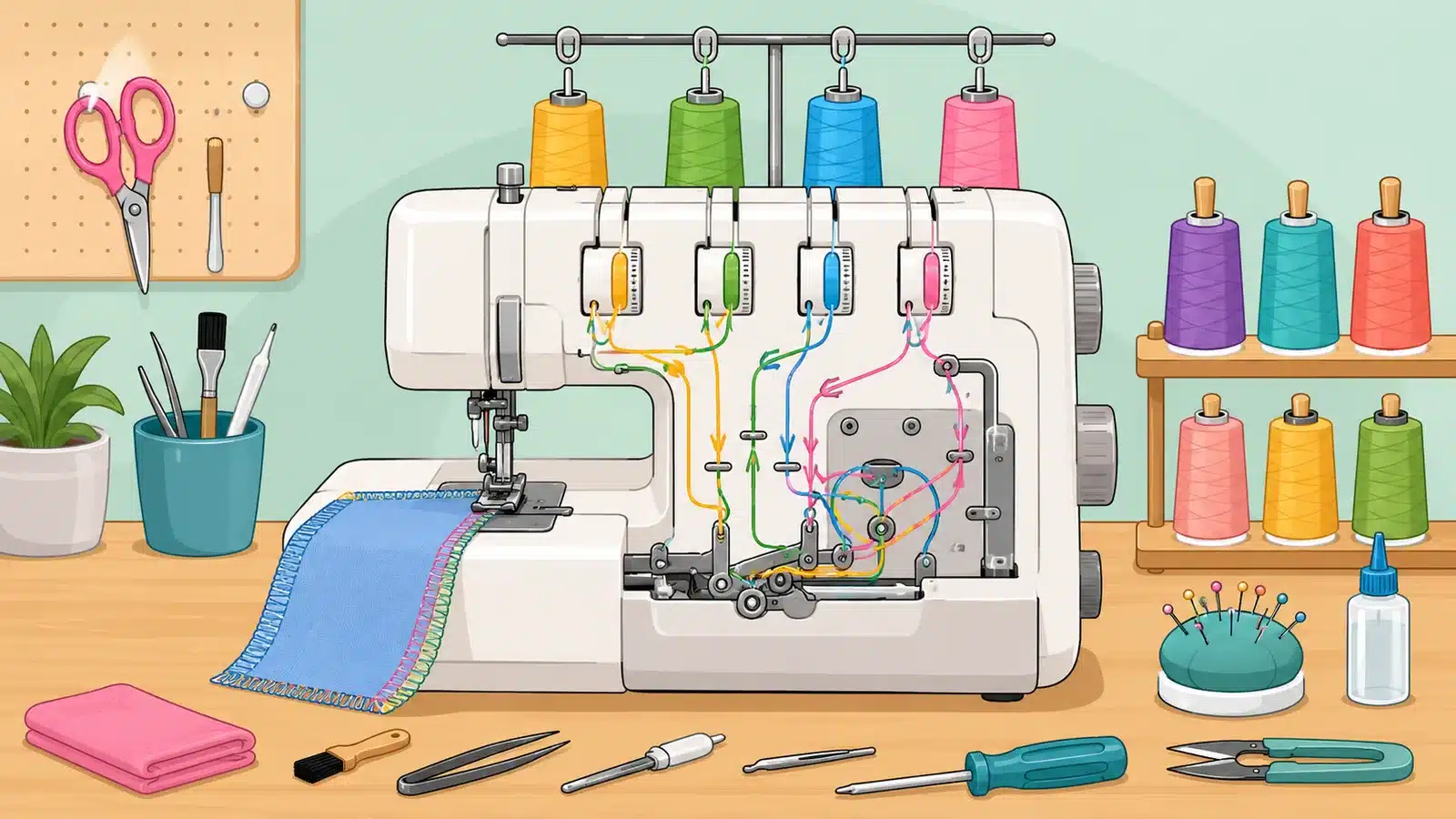
One of the biggest frustrations beginners experience with sergers is threading. A regular sewing machine usually uses one upper thread and one bobbin thread. Threading takes only a minute or two.
A serger may require three to five separate thread paths moving through multiple loopers and tension discs. At first glance, it can resemble a spaghetti factory exploded inside the machine.
This complexity scares many new sewists away from sergers initially. Community discussions frequently mention threading difficulty as one of the main drawbacks.
Modern sergers have improved considerably with color-coded guides and easier threading systems, but they still demand more patience than standard sewing machines.
Maintenance Differences
Sergers also require different maintenance routines. Because they cut fabric while sewing, blades eventually dull and need replacement. Lint buildup can happen faster as trimmed fabric particles accumulate inside the machine.
Sewing machines generally require simpler cleaning and maintenance. Their internal systems are less aggressive and easier for beginners to manage.
Thread consumption is another factor. Sergers use multiple cones of thread simultaneously, meaning they consume thread much faster than standard machines. That can slightly increase ongoing sewing costs over time.
Can One Machine Replace the Other?
When a Sewing Machine Alone Is Enough
For many hobbyists, a regular sewing machine is completely sufficient. You can absolutely sew clothing, home décor, bags, quilts, and accessories without ever touching a serger.
Traditional seam finishes still work beautifully. Zigzag stitching, French seams, flat-felled seams, and pinking shears all help prevent fraying effectively.
Beginners especially benefit from mastering sewing fundamentals first. Learning construction techniques, fabric handling, tension control, and garment fitting provides a stronger foundation before adding specialized equipment.
If your projects mainly involve:
- Repairs
- Quilting
- Woven fabrics
- Crafts
- Home décor
- Occasional garments
…then a sewing machine alone may serve you perfectly well for years.
When Both Machines Work Best Together
The combination of a sewing machine and serger creates the ideal setup for advanced garment making. Each machine compensates for the other’s weaknesses.
Professional workflows often look like this:
- Construct detailed garment sections on the sewing machine
- Finish seams quickly on the serger
- Return to the sewing machine for hems, topstitching, and finishing details
This partnership creates garments that are both structurally precise and professionally finished.
People sewing large amounts of knitwear, activewear, or clothing for sale usually benefit the most from owning both machines.
Choosing the Right Machine for Your Goals
Best Option for Beginners
For beginners, the safest and smartest starting point is almost always a regular sewing machine. It teaches foundational sewing skills while remaining flexible enough for countless project types.
A beginner who buys only a serger often discovers limitations quickly. Sergers cannot replace essential sewing functions like buttonholes, zippers, or detailed construction work.
Industry trends show growing interest in beginner-friendly computerized sewing machines because they simplify learning curves dramatically.
Starting simple also protects your budget. Sewing already has a sneaky habit of turning fabric stores into dangerous playgrounds for your wallet.
Best Option for Advanced Garment Makers
Once sewing becomes a serious hobby or business, adding a serger often feels transformative. The jump in speed, seam quality, and knit handling can dramatically improve workflow.
Advanced sewists especially appreciate:
- Faster seam finishing
- Cleaner garment interiors
- Better stretch seams
- Reduced fraying
- More professional presentation
At that stage, the question usually shifts from “Do I need a serger?” to “Why didn’t I buy one sooner?”
Still, even experienced professionals rarely abandon their sewing machines entirely. Both tools remain essential for different parts of the garment-making process.
Conclusion
The debate between a sewing machine and a serger is not really about choosing a winner. It’s about understanding purpose.
A sewing machine is the versatile backbone of sewing. It handles construction, repairs, decorative stitching, quilting, and countless everyday projects. For beginners and casual sewists, it is often all you truly need.
A serger specializes in speed, seam finishing, and stretch fabrics. It transforms homemade garments into polished pieces that resemble ready-to-wear clothing. While it adds enormous value, it works best as a companion rather than a replacement for a sewing machine.
If your sewing journey focuses on creativity, learning, and general household projects, start with a quality sewing machine. If you later fall deeply into garment making, knit fabrics, or professional finishes, adding a serger can completely change the experience.
In many ways, the relationship between these machines mirrors the relationship between cooking tools. A chef’s knife can handle almost everything in the kitchen. But specialized tools make certain tasks faster, cleaner, and more refined.
The best choice ultimately depends on what you want to create.
FAQs
1. Can a serger completely replace a sewing machine?
No. A serger cannot perform essential sewing tasks like buttonholes, zipper installation, topstitching, or many decorative stitches. Most sewists still need a regular sewing machine even if they own a serger.
2. Is a serger worth buying for beginners?
Usually, beginners benefit more from mastering a standard sewing machine first. A serger becomes more valuable once you start sewing garments regularly, especially with knit fabrics.
3. Why do store-bought clothes use serger stitches?
Sergers create durable, stretchy, and professional-looking seam finishes quickly. That speed and consistency make them ideal for mass garment production.
4. Are sergers harder to thread?
Yes. Sergers use multiple threads and loopers, making threading more complex than a regular sewing machine. Modern machines help simplify the process with color-coded threading paths.
5. What fabrics benefit most from a serger?
Stretch fabrics like jersey, spandex, knit blends, and athletic materials benefit greatly from serger seams because the stitches flex naturally without breaking.

Kareem Sallam is an Egyptian special writer based in Australia, with a strong interest in practical ideas and creative content that focuses on everyday solutions. He writes clear, engaging articles designed to be easy to follow and useful for a wide range of readers.
His work centers on DIY projects, handmade ideas, simple crafts, and home based creativity. Kareem aims to deliver content that is practical, inspiring, and accessible, helping readers turn simple materials into smart and enjoyable projects.