How to Write the Title of a Painting in Essays and Articles

A painting title is not just a label hanging beside a canvas. It acts like a doorway into the emotional and psychological experience of the artwork itself. Before viewers fully absorb the composition, colors, or textures, they often read the title first. That small collection of words quietly shapes expectations and frames interpretation. A strong title can make a painting feel mysterious, intimate, poetic, unsettling, nostalgic, or unforgettable within seconds. A weak title, on the other hand, can flatten emotional impact and make even an extraordinary artwork feel generic.
Recent psychological research into aesthetic experience found that emotional reactions to visual art are deeply connected to language, perception, and personal interpretation. Researchers identified more than 25 emotional categories people associate with artwork experiences, ranging from awe and mystery to melancholy and wonder. That matters because titles often act as emotional signposts. They subtly guide viewers toward a particular feeling or interpretation without fully controlling the experience.
Think about iconic artwork names for a moment. The Persistence of Memory, Nighthawks, and Girl with a Pearl Earring all create atmosphere before the viewer studies the image itself. The title becomes part of the artwork’s identity. It almost fuses with the visual experience like a soundtrack attached to a film scene. That is why experienced artists rarely choose titles casually.
The modern art world has also shifted dramatically toward conceptual interpretation. Contemporary galleries, digital portfolios, and NFT marketplaces place enormous emphasis on naming because viewers often encounter titles online before seeing the artwork in person. Studies in digital art markets even suggest that shorter and more fluent names can influence perceived value and memorability. A title is no longer an afterthought. In many ways, it has become part branding tool, part emotional anchor, and part storytelling device.
The Psychological Effect of Artwork Names
Words carry emotional weight. A title like Winter Silence instantly creates a different expectation than Untitled #47. Even before analyzing the brushwork, the viewer begins imagining cold air, quiet landscapes, isolation, or reflection. The human brain naturally searches for narrative meaning, and titles feed that instinct.
Researchers studying emotional responses to art discovered that viewers emotionally engage with artwork more intensely when they feel they understand the intended emotional direction. Titles help establish that direction. They create a bridge between the artist’s intention and the audience’s interpretation. This does not mean the title should explain everything. In fact, overly explanatory names can weaken emotional engagement because they remove ambiguity and discovery.
Imagine entering a dimly lit gallery and seeing two paintings side by side. One is called Blue Composition No. 2 and the other is called The Last Conversation Before Goodbye. Even if the visuals are similar, the emotional reaction changes dramatically. The second title triggers memory, imagination, and human experience. Suddenly the painting feels cinematic rather than decorative.
Titles also affect how long viewers remember a painting. A 2025 study examining artwork titles found that pseudo-profound or emotionally loaded titles increased perceived profundity, even when they did not necessarily improve memory retention. This reveals something fascinating about human psychology: people want artwork titles to feel emotionally meaningful, even when the meaning remains partly mysterious.
That emotional tension is where great titles live. The best painting names do not fully answer questions. They invite viewers into a conversation.

Choosing a Title That Reflects the Mood or Subject
One of the easiest mistakes artists make is focusing only on the subject matter rather than the emotional atmosphere. A painting of a rainy street does not necessarily need to be called Rainy Street. That title tells viewers what they already see. A more emotionally reflective title like After the Argument or City Echoes transforms the painting into something layered and psychologically engaging.
Mood should always guide title selection. Ask yourself what emotional temperature the artwork carries. Is it calm? Aggressive? Dreamlike? Lonely? Chaotic? Hopeful? The title should amplify that emotional current instead of merely describing objects within the composition.
Color psychology can also play a major role here. Deep blues often evoke introspection or sadness, warm oranges suggest vitality, while muted grays can imply nostalgia or emotional distance. Some artists pull directly from these emotional associations when naming their work. Titles such as Crimson Memory, Golden Static, or Lavender Hours blend color with atmosphere, creating poetic resonance without overexplaining.
Literal titles are not inherently bad. In fact, realism and portraiture often benefit from straightforward naming conventions. A title like Woman Reading by the Window can feel elegant and timeless because simplicity suits the style. The key is intentionality. If the artwork relies heavily on emotional ambiguity or conceptual storytelling, the title should reflect that complexity.
Abstract and surreal art especially benefit from atmospheric naming because viewers rely on verbal cues to interpret emotional direction. Research on conceptual art titles suggests that names increasingly function as part of the artwork itself rather than mere identification tags. In other words, the title becomes another brushstroke in the composition.
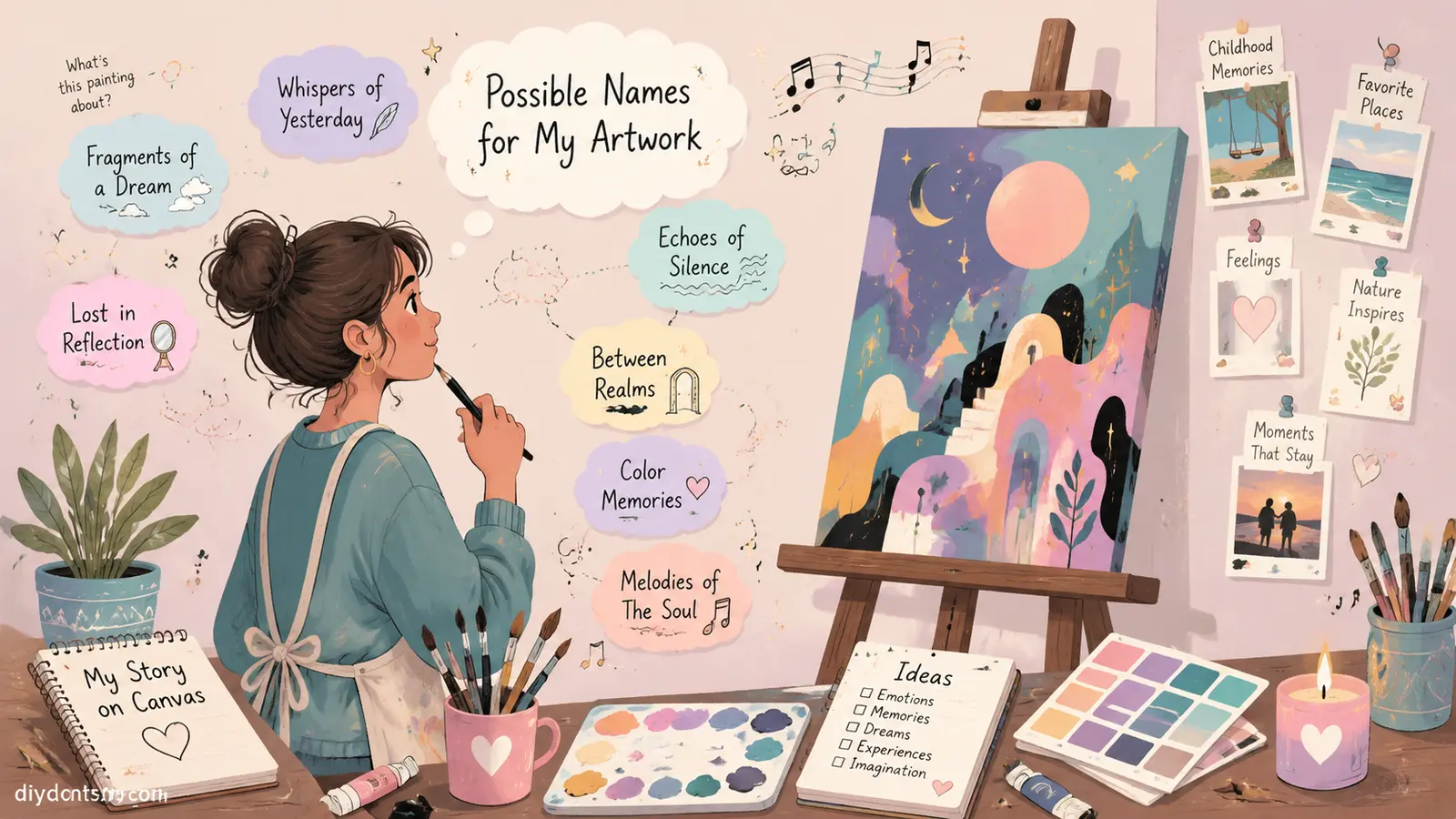
Artists often discover their best titles by stepping away from literal thinking and asking deeper questions:
- What memory does this painting remind me of?
- What emotion lingers after looking at it?
- If this artwork were a song lyric, what would it sound like?
- What hidden story exists behind the image?
Those questions usually lead to richer and more emotionally charged titles.
Simple Versus Abstract Titles and Their Different Effects
Simple titles and abstract titles create entirely different viewer experiences. Neither approach is universally better. The right choice depends on the artwork’s personality, audience, and emotional goal.
Simple titles tend to feel grounded, elegant, and confident. Think about names like Sunflowers, Water Lilies, or The Kiss. These titles are direct yet memorable because the artwork itself carries emotional intensity. Simplicity allows the image to speak loudly without verbal interference. Minimal titles also tend to feel more timeless because they avoid trendy or overly intellectual phrasing.
Abstract titles work differently. Instead of clarifying meaning, they create emotional ambiguity and curiosity. A title such as Whispers Beneath Static does not immediately explain the painting, but it stimulates imagination. Viewers begin constructing emotional narratives on their own. That participation deepens engagement because the audience becomes emotionally involved in interpretation.
There is a fine line, however, between intriguing abstraction and meaningless obscurity. Titles overloaded with vague philosophical language often feel artificial or pretentious. Studies examining “pseudo-profound” artwork titles found that viewers sometimes perceive them as deeper initially, but excessive abstraction does not necessarily produce lasting emotional connection. That means artists should avoid using complexity merely to sound intellectual.
Here is a simple comparison table showing how title styles influence perception:
| Title Style | Emotional Effect | Best For | Risk |
|---|---|---|---|
| Simple Titles | Clear, elegant, timeless | Realism, portraits, landscapes | Can feel generic |
| Abstract Titles | Mysterious, interpretive, emotional | Abstract or conceptual art | Can confuse viewers |
| Narrative Titles | Cinematic, emotional, story-driven | Figurative and surreal work | May overexplain |
| Minimalist Titles | Sophisticated and modern | Contemporary collections | Can feel emotionally distant |
The smartest artists know how to shift between styles depending on the project. A consistent naming philosophy matters more than rigid adherence to one format.
What Drives Emotional Connections Through Artwork Names
Human beings are emotional storytellers. Even when staring at abstract shapes or fragmented compositions, the brain tries to build meaning. Titles accelerate that process by activating memory, symbolism, and imagination simultaneously.
Certain words naturally carry emotional energy. Terms associated with time, distance, weather, memory, or silence often trigger introspection because they connect with universal experiences. A title like Fading August instantly evokes seasonal nostalgia. Empty Rooms Remember creates emotional tension even before viewers analyze the painting itself.
Recent studies on aesthetic experience reveal that emotional engagement with art often depends on whether viewers feel emotionally understood or emotionally invited by the artwork. Titles contribute heavily to that invitation. They tell viewers where emotional entry points might exist.
Memory-based titles are especially powerful because they feel personal while remaining universal. Consider names like:
- The House We Left Behind
- Summer Before the Storm
- Letters Never Sent
- Where the River Turned Cold
These phrases work because they hint at lived experience without fully defining it. The viewer fills the gaps with personal memories and emotions. That participation creates stronger psychological attachment.
Symbolism also matters enormously. Oceans symbolize uncertainty or freedom. Birds suggest escape. Windows imply longing or transition. Night often represents introspection. Artists who understand symbolic language can create titles that resonate subconsciously.
The strongest emotional titles often combine three elements:
- Emotional atmosphere
- Suggestive imagery
- Open-ended interpretation
That combination creates mystery without alienating the audience.

Finding Inspiration from Colors, Places, or Memories
Many artists struggle with titles because they search for perfect intellectual concepts instead of emotional triggers. Inspiration usually emerges from ordinary experiences rather than forced cleverness.
Colors are one of the easiest starting points. Different shades carry psychological associations shaped by culture, memory, and perception. A title like Burnt Orange Silence feels emotionally richer than simply calling a painting Orange Abstract. The first title transforms color into atmosphere.
Places also generate evocative naming possibilities. Streets, cities, coastlines, abandoned buildings, train stations, and childhood neighborhoods all contain emotional history. Even fictional places can become poetic title foundations. A painting inspired by loneliness might borrow from a forgotten town name or a vague geographical memory. Titles such as North Harbor at Midnight or The Last Light Over Verona create cinematic imagery instantly.
Personal memories are often the richest source of all. Many artists keep journals filled with overheard conversations, dream fragments, song lyrics, and emotional impressions. Those small moments become title goldmines later. A phrase remembered from childhood may suddenly perfectly capture the emotional tone of a completed painting.
Some artists develop entire title collections before finishing their work. Others wait until the painting feels emotionally complete. Neither method is wrong. What matters is authenticity. Forced titles usually sound forced.
A practical exercise many professional artists use involves describing the painting without mentioning visible objects. Instead of saying “a woman standing near water,” they describe feelings:
- distant
- restless
- suspended
- intimate
- unresolved
Those emotional descriptions often lead naturally toward compelling titles.
Research into emotional art interpretation increasingly supports the idea that viewers respond strongly to emotionally salient cues rather than excessive descriptive detail. The same principle applies to titles. Emotional resonance matters more than literal explanation.
Avoiding Titles That Feel Too Generic or Literal
Generic titles weaken artistic identity. Names like Untitled Blue Painting, Abstract Composition #12, or Beautiful Sunset rarely create lasting emotional impact unless intentional minimalism is part of the artistic concept.
Literal titles become problematic when they merely repeat obvious visual information. If viewers can already see a tree, calling the painting Tree adds nothing emotionally or intellectually. Great titles expand interpretation rather than duplicate visible content.
One common issue is overused emotional vocabulary. Words like “dream,” “soul,” “chaos,” and “infinity” appear so frequently in contemporary art that they often lose emotional precision. That does not mean artists should never use them, but they need context or originality to regain impact.
Another mistake involves trying too hard to sound profound. Long philosophical phrases packed with vague abstraction often create emotional distance instead of intimacy. Research into pseudo-profound titles found that audiences may initially perceive them as meaningful, but overly inflated language does not necessarily deepen long-term engagement.
Here are examples showing the difference between weak and stronger title choices:
| Weak Title | Why It Feels Weak | Stronger Alternative |
|---|---|---|
| Lonely Woman | Too literal | Waiting for Winter |
| Abstract No. 6 | Emotionally empty | Fragments of Silence |
| Red Painting | Describes only color | Crimson Departure |
| Dreamscape | Overused term | Where Sleep Breaks Apart |
Artists should also avoid copying naming trends blindly. During certain periods, minimal lowercase titles become fashionable. Other times, poetic sentence-style titles dominate galleries. Trends fade quickly. Emotional authenticity lasts longer.
If a title feels interchangeable with dozens of other artworks online, it probably needs refinement.

Placement and Formatting When Displaying the Title
Even a brilliant title can lose impact if displayed poorly. Presentation matters because titles are part of the viewer’s first impression. Gallery labels, portfolio websites, Instagram captions, and exhibition catalogs all shape how audiences interact with artwork names.
Professional galleries usually display titles in italics or bold typography with clean spacing beside the artwork. Consistency matters enormously. If one painting title appears in sentence case and another in all caps with different formatting styles, the collection can feel visually chaotic.
Online presentation deserves equal attention. Digital audiences scroll quickly, meaning titles must work instantly. On social media especially, strong titles encourage emotional curiosity and increase engagement. Shorter, more visually fluid names often perform better in digital environments because they are easier to remember and share.
Artists should also think carefully about punctuation. Excessive punctuation can feel dramatic or forced. Ellipses, quotation marks, or random capitalization often distract from the artwork itself. Clean formatting generally feels more timeless and professional.
There is also the question of whether to display titles directly beneath paintings or separately in catalogs and wall labels. Museums often separate them slightly to encourage uninterrupted visual experience. Contemporary galleries sometimes integrate titles closely into installations so the language becomes part of the artistic atmosphere.
Consistency across exhibitions helps build recognizable identity. If your artwork titles always feel poetic, cinematic, minimalist, or emotionally reflective, audiences begin associating that tone with your artistic voice.
That consistency quietly strengthens branding without sacrificing authenticity.
How Artists Develop a Consistent Naming Style
Naming style evolves just like painting style. Early-career artists often experiment wildly with titles because they are still discovering emotional voice and conceptual direction. Over time, patterns naturally emerge.
Some artists prefer concise one-word titles. Others gravitate toward sentence fragments or emotionally suggestive phrases. Certain painters consistently reference weather, memory, music, or geography. Those recurring patterns create artistic identity.
A consistent naming style does not mean every title should sound identical. It means there is emotional coherence connecting them. Imagine walking through an exhibition where every title feels like it belongs in the same emotional universe. That unity strengthens the viewer’s overall experience.
One useful strategy involves building a personal vocabulary bank. Many artists collect:
- favorite emotional words
- recurring symbols
- sensory descriptions
- fragments from poetry
- memories tied to specific places
- overheard dialogue
Over time, those elements become recognizable creative fingerprints.
Some contemporary artists intentionally avoid titles altogether by using numbers or dates. That minimalist approach can work beautifully when the artwork itself demands unrestricted interpretation. Yet even untitled works communicate a naming philosophy. Silence becomes part of the artistic language.
Research into modern conceptual art increasingly emphasizes that titles function as interpretive tools rather than secondary labels. In practical terms, that means artists should treat naming with the same creative seriousness as composition, texture, or color theory.
The strongest naming styles usually emerge when artists stop trying to impress audiences and instead focus on emotional honesty. Viewers instinctively recognize authenticity. A simple, emotionally true title often resonates more deeply than a complicated phrase designed purely to sound intelligent.
Conclusion
Learning how to write the title of a painting is really about learning how to extend the emotional life of the artwork itself. A title can whisper, provoke, comfort, unsettle, or haunt the viewer long after they leave the gallery. It shapes interpretation without fully controlling it, creating a delicate balance between guidance and mystery.
The best painting titles rarely appear through force. They emerge from emotional awareness, memory, symbolism, and atmosphere. Some are direct and timeless. Others are abstract and cinematic. What matters most is whether the title deepens the viewer’s connection to the artwork rather than merely describing what already exists visually.
Artists who develop thoughtful naming habits gradually build stronger artistic identity. Their titles begin to feel recognizable, emotionally coherent, and inseparable from the work itself. That consistency strengthens exhibitions, portfolios, and audience engagement in ways many creators underestimate.
A painting may begin with color and composition, but often it is the title that quietly finishes the story.
FAQs
1. Should every painting have a title?
Not necessarily. Some artists intentionally leave works untitled to encourage unrestricted interpretation. However, titles often help viewers emotionally engage with artwork more deeply, especially in galleries and online portfolios.
2. Are abstract titles better than literal titles?
Neither is automatically better. Abstract titles create curiosity and emotional interpretation, while literal titles provide clarity and simplicity. The right choice depends on the artwork’s style and emotional goal.
3. How long should a painting title be?
Most effective titles are concise enough to remember easily but descriptive enough to create emotional atmosphere. Short phrases between one and six words often work best, although longer narrative titles can also be powerful.
4. Can a painting title affect the value of artwork?
Yes. Research into art perception and NFT markets suggests that title fluency, memorability, and emotional resonance can influence perceived artistic value and audience engagement.
5. Where do artists usually find inspiration for titles?
Artists commonly draw inspiration from memories, emotions, music lyrics, literature, colors, dreams, conversations, landscapes, and symbolic imagery connected to the painting’s mood.

Ahmed Elhor is an Egyptian SEO specialist, pharmacist, and copywriter based in Canada. He combines strong research skills with search focused writing to create clear, helpful content that answers real questions and ranks effectively in search engines.
With a passion for practical DIY ideas, homemade solutions, and creative projects, Ahmed focuses on producing easy to follow guides that are simple, affordable, and useful for everyday life. His work blends creativity with structure, helping readers turn basic materials into meaningful results.