What Is a Marching Band Hat Called and Why It Matters
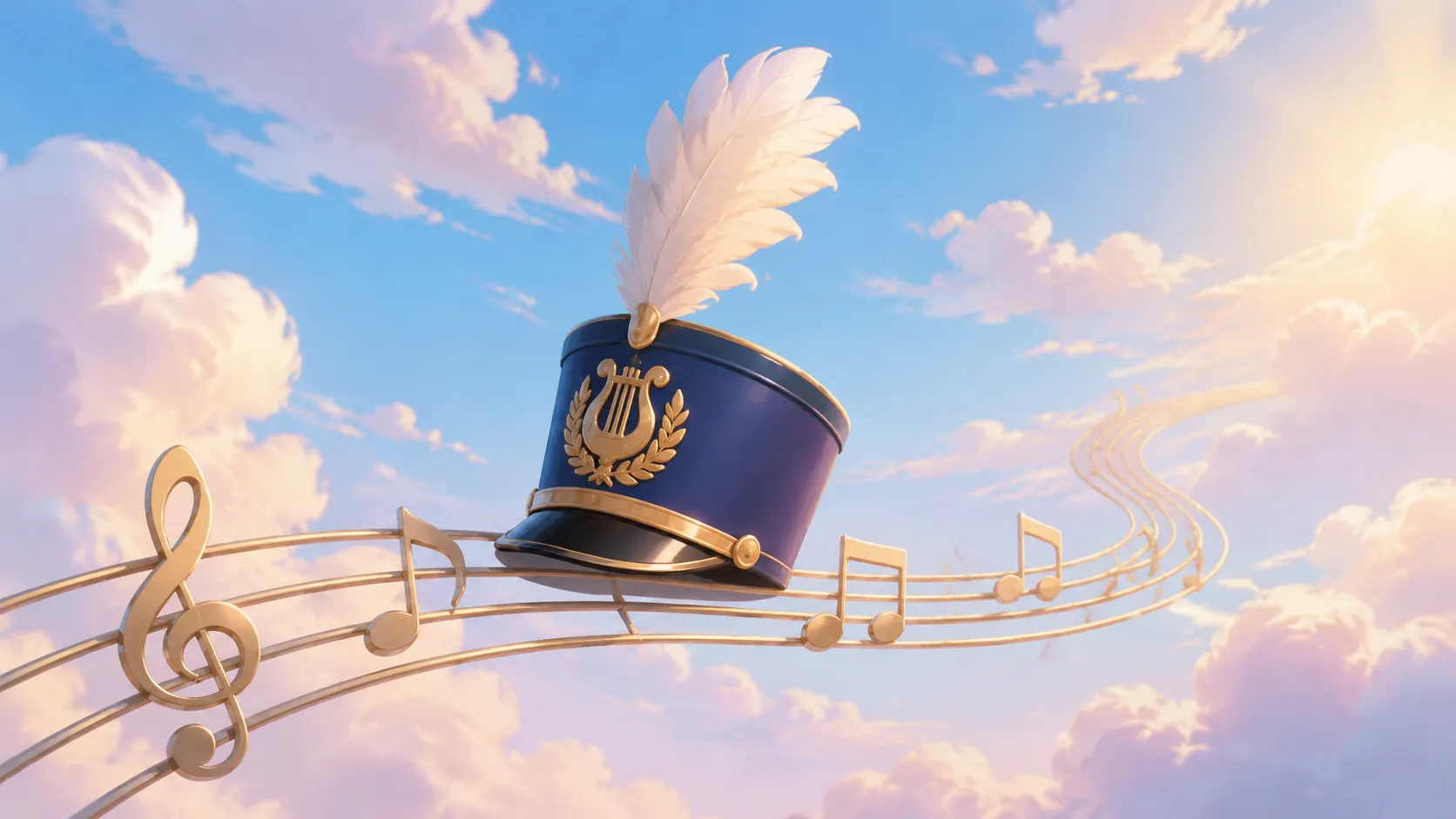
Walk into a football stadium on a Friday night, and one of the first things you notice about a marching band is the towering headwear. Those tall hats topped with dramatic feathers instantly grab attention, almost like crowns announcing the arrival of musical royalty. Many people casually call them “marching band hats,” but the truth is that these hats actually have several names depending on the design, tradition, and style of the band. The most recognized term is the shako, a military-inspired hat that has become closely tied to marching band culture across schools, colleges, and professional drum corps.
Marching band hats are far more than decorative accessories. They help create a visual identity, unify performers, and amplify the dramatic presence of a band during performances. Think about it for a second: without the hats, plumes, visors, and matching details, a marching band would lose much of its commanding visual impact. The audience doesn’t just hear the music; they experience the spectacle. That spectacle begins with the uniform, and the hat sits right at the center of it all.
Over time, these hats evolved from military gear into artistic performance pieces. Today’s marching bands experiment with everything from traditional shakos to cowboy hats, aussie hats, busbies, and modern costume-inspired headwear. Some bands embrace tradition with military-style uniforms, while others lean into theatrical storytelling with lightweight contemporary designs. According to current marching band discussions and uniform trends, many competitive bands are even moving away from traditional shakos in favor of more modern, show-themed looks.
The fascinating part is that each style tells a story. A plume color might represent school pride. A metallic emblem could symbolize decades of tradition. Even the shape of the visor changes how performers appear under stadium lights. Marching band hats blend history, functionality, identity, and performance art into one unforgettable visual element.
Contents
The Most Common Name for a Marching Band Hat
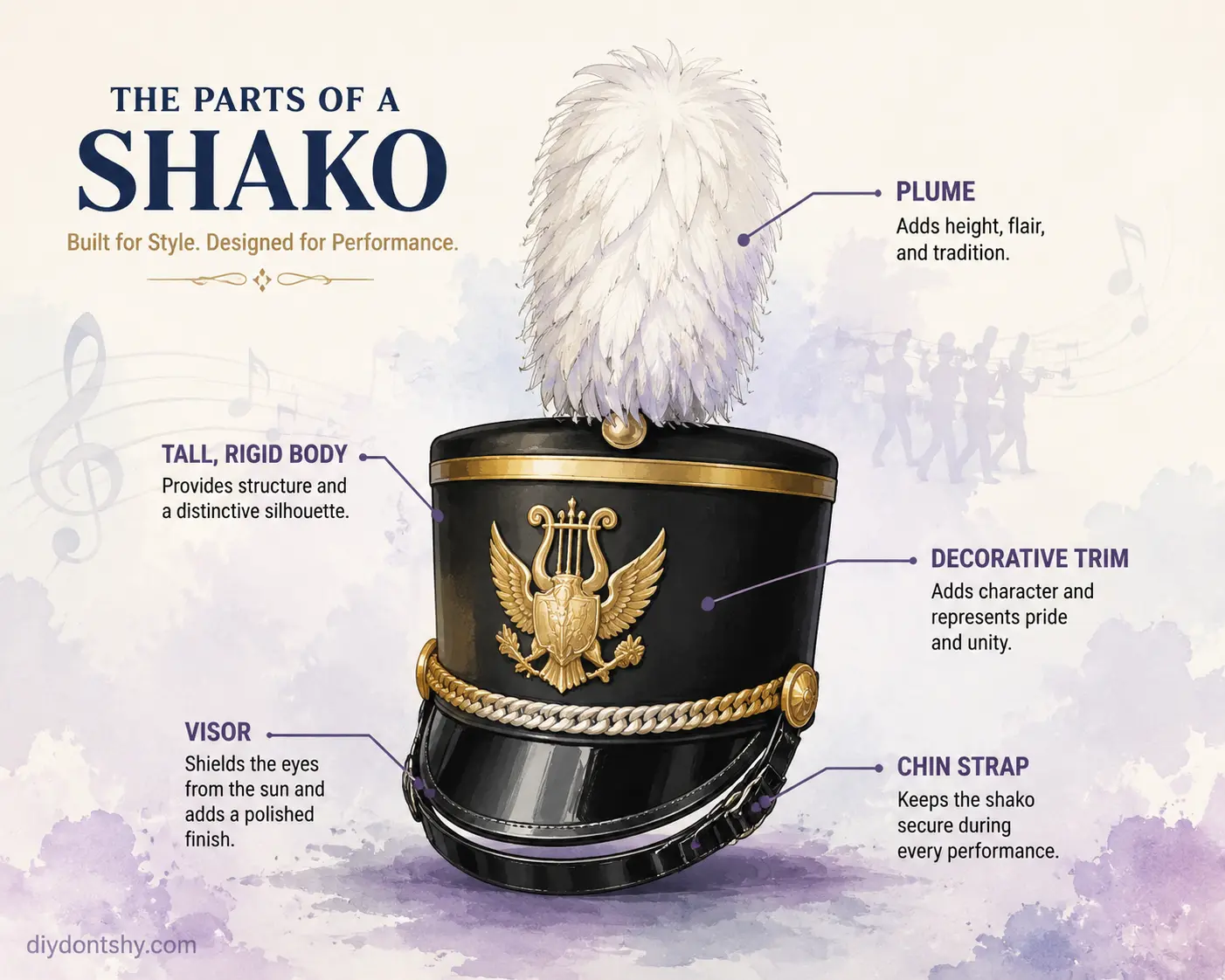
If you ask experienced band directors or longtime performers what a marching band hat is called, most will immediately answer with one word: shako. The shako is the tall, cylindrical hat commonly worn by marching bands and drum corps throughout the United States and beyond. It usually features a stiff structure, a front visor, decorative chin strap, and a plume attached at the top.
The word “shako” originally comes from military history. European armies in the nineteenth century wore similar hats as part of ceremonial and combat uniforms. Over time, marching bands adopted the style because it projected discipline, authority, and uniformity. It’s funny how something once associated with military drills eventually became a symbol of halftime entertainment and musical creativity. Yet the connection makes sense. Marching bands rely heavily on synchronized movement and precision, much like military formations.
Shakos became especially popular because of their dramatic height and visibility. When performers stand in formation, the tall hats create clean visual lines across the field. Add brightly colored plumes waving in perfect synchronization, and suddenly the entire performance gains an extra layer of motion and energy. That’s one reason many traditional bands still cling tightly to the classic shako look even as modern uniform trends evolve.
Still, “shako” is not the only name used for marching band hats. Some bands refer to them casually as “band hats” or simply “hats.” Others use different headwear styles entirely. Drum majors may wear busbies, which are taller and often covered in fur-like material. Some southern bands use cowboy hats or aussie hats for regional flair. Competitive bands experimenting with theatrical storytelling sometimes skip hats altogether. One Reddit discussion even highlighted how newer bands are replacing shakos with modern show costumes to emphasize creativity over tradition.
This variety is what makes marching band culture so interesting. The hat is never just a hat. It’s a statement about identity, tradition, and performance philosophy.
The Historical Origins of the Shako
The history of the shako stretches back centuries before football stadiums and halftime performances existed. Originally, shakos were military hats worn throughout Europe during the eighteenth and nineteenth centuries. Soldiers favored them because their tall structure created an intimidating appearance while also allowing regimental decorations and insignias to stand out clearly. Over time, these hats became symbols of discipline, power, and military prestige.
Marching bands inherited much of their identity from military traditions. Early military bands used music to communicate commands, maintain troop morale, and coordinate movement during battles. Naturally, the uniforms of these bands closely resembled standard military attire. As civilian marching bands developed in schools and universities, they continued using military-inspired designs because the structured appearance matched the precision and order expected during performances.
By the late nineteenth and early twentieth centuries, marching bands began evolving into entertainment groups for parades, ceremonies, and sporting events. Yet the military influence remained deeply embedded in their uniforms. Shakos stayed popular because they looked impressive from a distance and reinforced a sense of professionalism. Modern marching bands may perform pop songs, jazz arrangements, or movie themes, but the visual DNA of their uniforms still reflects centuries-old military traditions.
Interestingly, the design of shakos changed significantly over time. Early versions were often made from heavy wool, leather, or stiff felt materials. They could become extremely uncomfortable during long performances or warm weather. Modern manufacturers now use lightweight plastics, synthetic fabrics, and breathable liners to improve comfort and flexibility. According to recent marching band uniform research, contemporary designs increasingly prioritize mobility and heat management due to the athletic demands placed on performers today.
The transition from battlefield practicality to artistic performance piece mirrors the broader evolution of marching bands themselves. Today’s bands are part athletic team, part musical ensemble, and part visual theater production. The shako survived because it adapted alongside the changing needs of performers.
Different Types of Marching Band Headwear
While the shako remains the most recognizable marching band hat, it’s far from the only style used in performances today. Different bands choose different headwear depending on tradition, geography, budget, and visual philosophy. Walking through a major marching competition can feel like entering a parade of wearable art, with each hat style telling its own unique story.
Shakos
The classic shako dominates traditional marching bands. Its tall cylindrical design creates a commanding silhouette that works especially well during field formations. Most shakos include a visor, chin strap, decorative emblem, and plume attachment. They’re popular because they provide a clean, uniform appearance that emphasizes synchronized movement. Many college and high school bands continue using shakos because they symbolize classic marching tradition.
Busbies
Busbies are often worn by drum majors or elite performers. These hats are taller, fluffier, and more theatrical than standard shakos. Some feature fur-like materials and oversized plumes that make leaders stand out dramatically from the rest of the ensemble. They almost look like something from a royal guard ceremony, which adds to their visual appeal during performances.
Aussie Hats and Cavalier Hats
Some bands reject traditional military styling altogether. Aussie hats feature wide brims that provide shade and a more relaxed appearance. Cavalier hats and cowboy hats are also common in regions where local culture influences band identity. One recent marching band discussion revealed that several southern bands replaced shakos with cowboy hats specifically to create a unique regional image.
Berets and Contemporary Designs
Modern competitive drum corps sometimes abandon rigid hats completely. Instead, performers may wear berets, fitted caps, themed costume pieces, or no headwear at all. This shift reflects broader changes in marching band aesthetics, where storytelling and choreography increasingly influence costume design. Some fans love the innovation, while others passionately defend traditional shakos and plumes as essential elements of band culture.
The diversity of marching band hats proves there’s no single formula for visual success. Each design creates a different emotional response from the audience.
Key Features That Make Shakos Unique
What exactly separates a shako from ordinary hats? The answer lies in a combination of structure, decoration, and visual engineering. Every component of a shako is carefully designed to contribute to the overall appearance of the marching band.
The first defining feature is the tall, rigid structure. Unlike casual hats that conform naturally to the shape of the head, shakos maintain a stiff cylindrical profile. This structure helps performers appear taller and more uniform when viewed from a distance. Stadium audiences may sit hundreds of feet away from the field, so exaggerated visual elements become extremely important.
Another major feature is the visor. The visor frames the face while also adding dramatic shadows under stadium lights. It creates a sharper, more disciplined appearance, almost like a theatrical spotlight directing attention upward toward the plume. Many bands also customize visors with metallic trim or decorative cords for added flair.
Plumes are perhaps the most eye-catching feature of all. These feather-like decorations sway with every movement, making formations appear more dynamic and energetic. Plumes come in countless colors, lengths, and materials. Some schools choose colors matching their mascots or team branding, while others use contrasting colors for maximum visibility. According to Smithsonian documentation of a historic Florida A&M University marching band shako, decorative cords and plume arrangements can become deeply symbolic elements tied to school heritage and identity.
The chin strap serves both practical and visual purposes. Practically, it helps keep the hat stable during movement. Visually, it reinforces the military-inspired aesthetic associated with traditional marching bands. Interestingly, many drum corps performers wear the chin strap below the lip rather than directly under the chin for stylistic reasons.
Together, these features transform the shako into something larger than simple headwear. It becomes a performance tool designed to amplify movement, symmetry, and identity.
Why Marching Band Hat Design Matters
At first glance, some people assume marching band hats are mostly decorative. In reality, hat design can dramatically influence how an audience experiences a performance. The visual presentation of a marching band matters almost as much as the music itself, especially in competitive environments where judges evaluate overall effect and coordination.
Imagine watching a marching band without hats or uniform consistency. The performance would immediately lose part of its visual power. Hats create strong horizontal and vertical lines across formations, making synchronized movement easier for audiences to perceive from a distance. When dozens or even hundreds of performers move together wearing matching shakos and plumes, the result feels larger than life.
Design also affects perception of precision. Tall shakos make even slight mistakes in posture or marching technique more visible. Some performers argue that shakos expose visual imperfections, while others believe they force musicians to maintain better discipline and posture. Recent discussions among marching band communities reveal ongoing debates about whether modern costume-based uniforms improve or weaken visual identity compared to traditional shakos.
Band identity plays a huge role as well. Uniforms and hats often become symbols recognized by alumni and fans for generations. School colors, mascots, logos, and regional influences all shape the final design. Some bands are instantly recognizable because of their iconic plumes or headwear styles. The visual branding becomes emotionally tied to school spirit and tradition.
There’s also a psychological dimension. Performers often describe feeling more confident and unified once fully dressed in uniform. Putting on the hat almost acts like stepping into character before a theatrical production. The transformation helps musicians mentally shift from individual students into members of a larger synchronized unit.
In many ways, marching band hats function like armor for performers. They project confidence outward while strengthening group identity internally.
Decorative Elements That Represent School or Band Identity
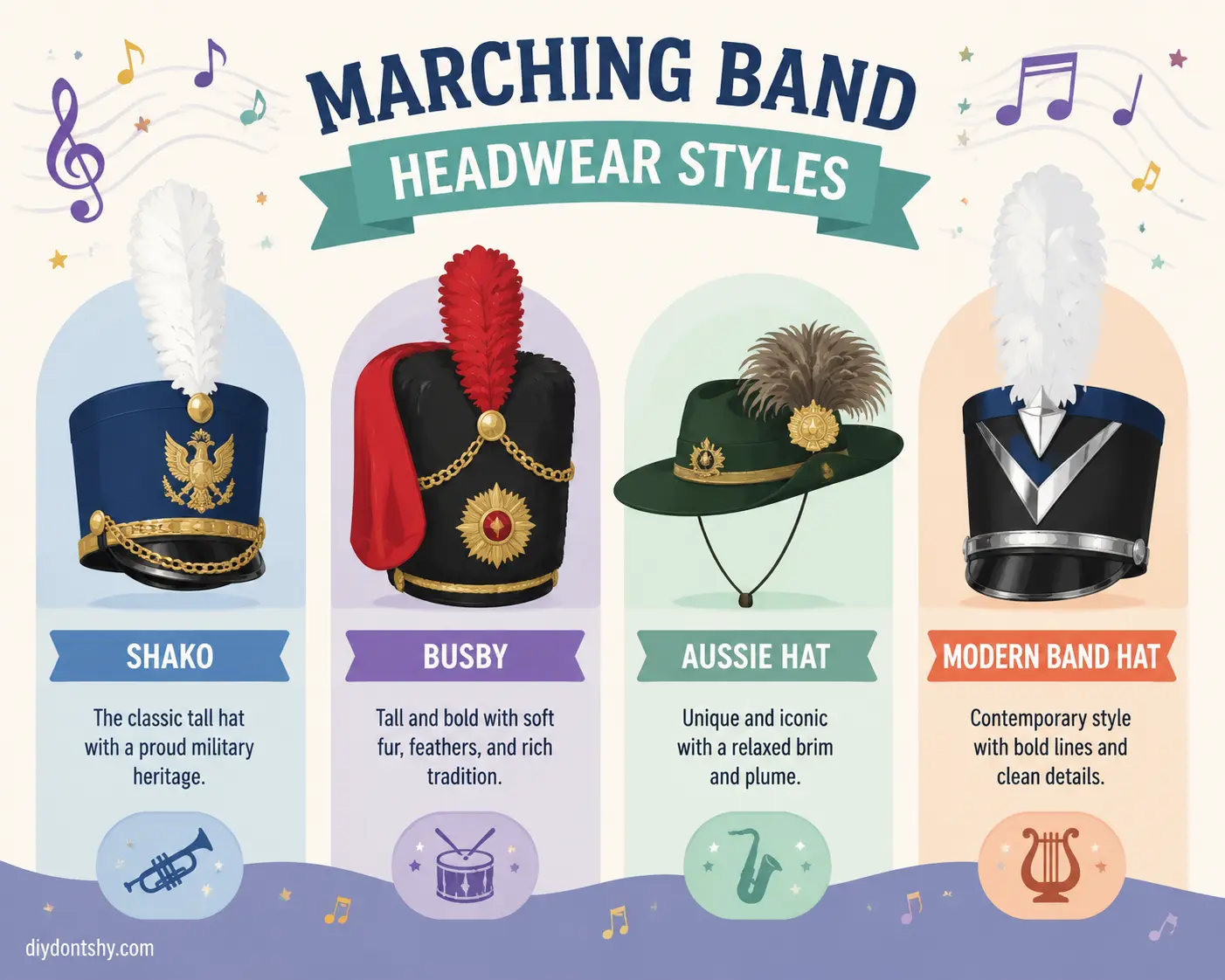
Every decorative detail on a marching band hat tells a story. From metallic badges to braided cords, these embellishments help transform a simple uniform into a symbol of pride and tradition. Schools invest significant time and money into designing hats that visually communicate who they are before the band even plays its first note.
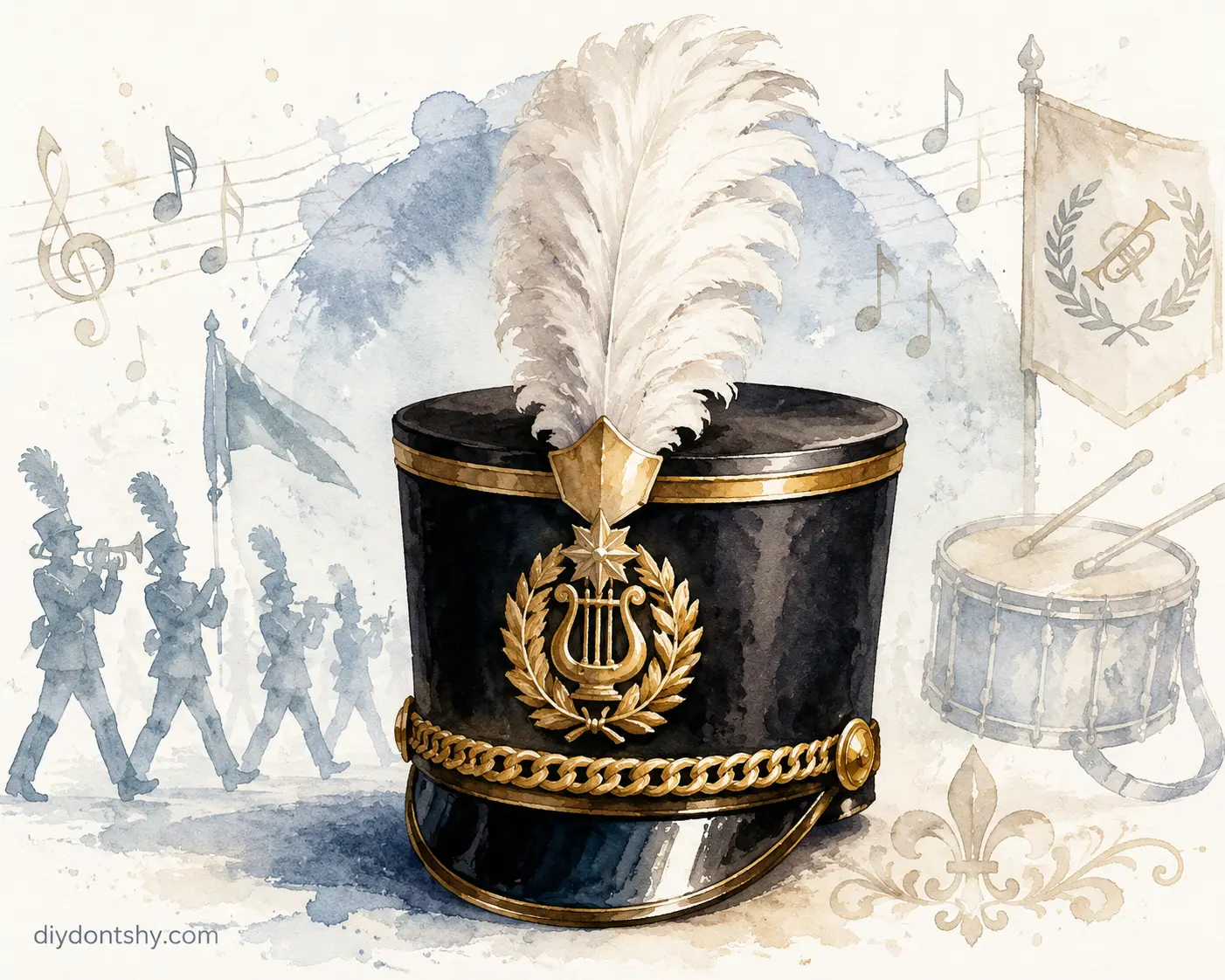
Logos and emblems are among the most recognizable decorative features. Many shakos display school initials, mascots, stars, shields, or custom insignias directly on the front. These symbols act almost like flags carried into battle, instantly identifying the band to audiences and competitors. Some schools maintain the same emblem designs for decades to preserve continuity across generations of performers.
Braided cords and metallic trim add another layer of elegance. Gold and silver cords often drape across visors or wrap around the base of the shako, creating a polished ceremonial appearance. According to Smithsonian records documenting a Florida A&M University marching band shako, decorative cords and silver star emblems were central visual elements representing school tradition and pride.
Plumes carry powerful symbolism too. Color choices frequently reflect school branding or cultural meaning. White plumes often symbolize tradition and prestige, while bright colors create stronger visual energy during performances. Some schools intentionally choose oversized plumes to make field formations appear more dramatic under stadium lights.
The emotional attachment to these decorative details can become surprisingly strong. Alumni often remember specific hat designs long after graduation because they symbolize memories, competitions, friendships, and performances. Recent online discussions show how passionately some performers defend traditional shakos and plumes against newer minimalist costume trends.
Decorative elements also help audiences connect emotionally with the performance. When a band marches onto the field wearing distinctive hats and coordinated colors, spectators instantly recognize the identity and spirit being represented. That instant recognition is incredibly powerful in sports culture and competitive performance environments.
Comfort and Functionality During Performances
For all their beauty and symbolism, marching band hats also need to survive intense physical conditions. Performers may spend hours rehearsing outdoors in extreme heat while carrying heavy instruments and executing complex drill routines. A poorly designed hat can quickly become a nightmare.
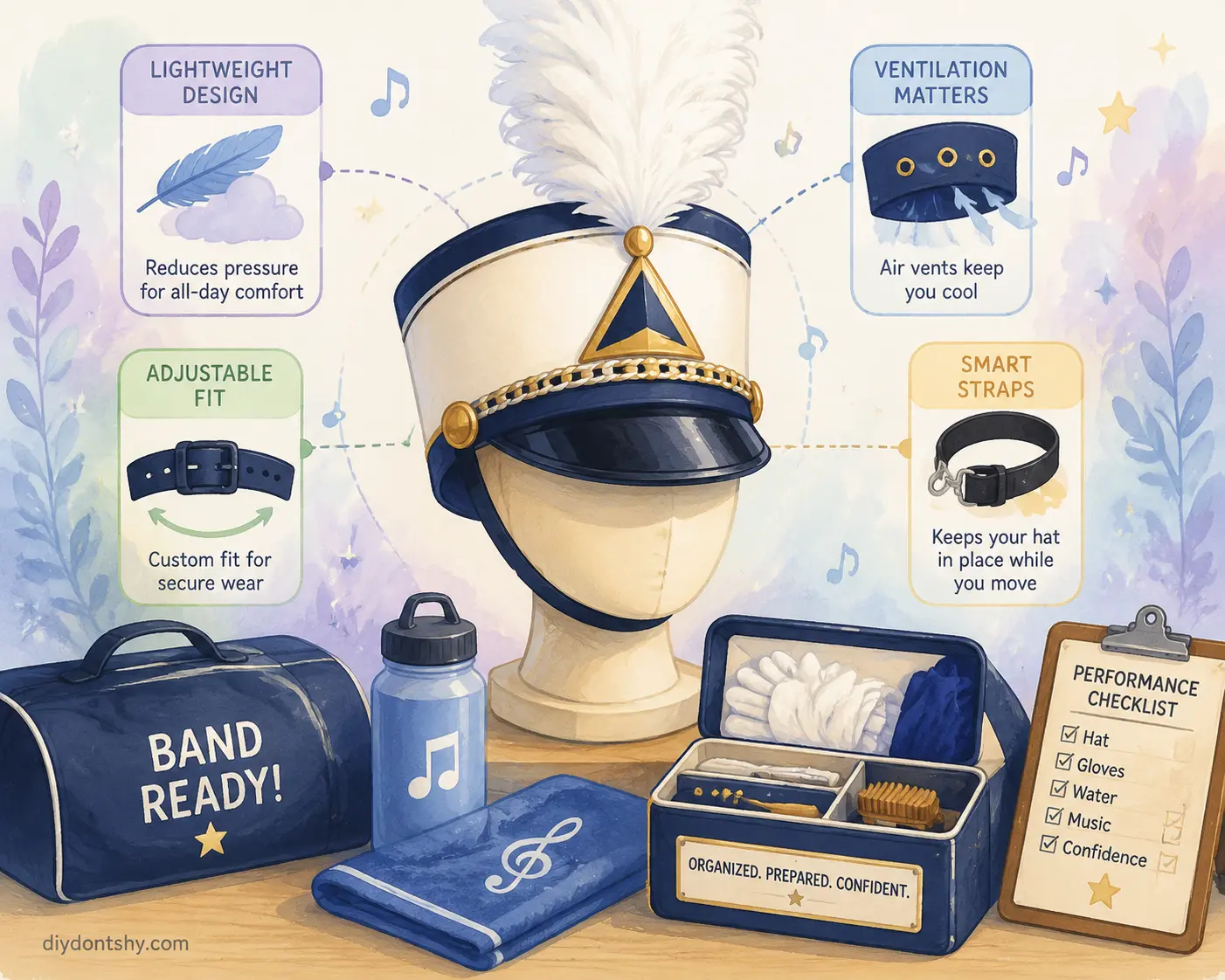
Older marching band uniforms often prioritized appearance over comfort. Heavy wool fabrics, stiff liners, and bulky shakos trapped heat and caused discomfort during long rehearsals. Modern uniform designers increasingly focus on lightweight materials, ventilation systems, and ergonomic support to reduce strain on performers.
Weight distribution is especially important. A hat that constantly shifts or tilts during movement becomes distracting and exhausting. Adjustable liners and secure chin straps help stabilize shakos during rapid turns, dance choreography, and high-step marching. Even subtle improvements in fit can dramatically improve performance confidence.
Heat management remains one of the biggest challenges. Many marching band seasons occur during late summer and early fall, when temperatures inside uniforms can become overwhelming. Contemporary shakos often include breathable interior padding and moisture-resistant materials to improve airflow.
Hair management also affects comfort, particularly for performers with long hair. Multiple recent discussions from marching band communities highlight frustrations around hairstyle rules required for proper shako fitting. Some performers describe discomfort caused by tightly secured buns or hair adjustments needed to maintain a uniform appearance.
Comfort directly impacts performance quality. A musician distracted by overheating, slipping hats, or painful pressure points cannot fully focus on music and choreography. That’s why modern band programs increasingly treat uniform design as both an artistic and athletic concern.
The Evolution of Marching Band Hats Over Time
Marching band hats have changed dramatically over the last century. What began as rigid military-inspired headwear has evolved into a wide spectrum of traditional and experimental designs shaped by performance trends, technology, and artistic ambition.
Early marching bands stayed very close to military traditions. Uniforms featured heavy fabrics, stiff collars, elaborate trim, and classic shakos designed primarily for ceremonial appearance. The goal was discipline and uniformity. Bands wanted to project authority and professionalism, much like military regiments.
As halftime shows and field competitions became more theatrical, uniform design started evolving alongside performance styles. Bands began experimenting with brighter colors, larger plumes, and more elaborate visual effects. Some schools incorporated regional themes or mascots directly into their headwear designs.
The biggest shift happened during the late twentieth and early twenty-first centuries. Competitive marching organizations increasingly prioritized storytelling, choreography, and thematic creativity. This pushed many designers toward lighter fabrics and costume-inspired aesthetics. According to modern marching band uniform research, contemporary designs now emphasize flexibility, breathability, and athletic mobility far more than older traditional uniforms did.
This evolution sparked debate within marching band culture. Traditionalists argue that shakos and plumes are essential visual symbols of the activity. Others embrace modern show-themed costumes that prioritize creativity and storytelling over military tradition. Reddit discussions reveal passionate opinions on both sides, with some performers nostalgic for classic uniforms while others appreciate the freedom of contemporary designs.
The future of marching band headwear will likely continue balancing tradition and innovation. Some bands will preserve timeless military-inspired aesthetics, while others experiment with futuristic materials and artistic concepts. Either way, the marching band hat remains one of the most iconic symbols in performance culture.
Conclusion
The next time you watch a marching band perform, take a closer look at the hats. Those towering shakos, dramatic plumes, polished visors, and gleaming emblems are far more than decorative costume pieces. They carry centuries of military history, school tradition, artistic symbolism, and performance engineering all at once.
The most common marching band hat is called a shako, but the world of marching band headwear extends far beyond that single style. Bands today use busbies, aussie hats, cowboy hats, berets, and modern costume-inspired designs depending on their traditions and creative goals. Every detail; from plume color to visor shape; contributes to how the audience experiences the performance.
Hat design matters because marching band is a visual art form as much as a musical one. The hats create symmetry, reinforce identity, and amplify movement across the field. They also present unique challenges involving comfort, heat management, and mobility during long rehearsals and performances.
As marching bands continue evolving, their headwear evolves too. Some programs proudly preserve traditional shakos as symbols of heritage, while others embrace modern theatrical experimentation. Yet no matter how styles change, the marching band hat remains an unforgettable icon of discipline, creativity, and school spirit.
FAQs
What is the traditional marching band hat called?
The traditional marching band hat is most commonly called a shako. It is a tall, structured hat often featuring a visor, chin strap, emblem, and decorative plume.
Why do marching bands wear plumes on their hats?
Plumes add visual movement and make performances more dramatic from a distance. They also help reinforce school colors and band identity.
Are marching band hats based on military uniforms?
Yes. Marching band hats, especially shakos, originated from nineteenth-century military headwear and ceremonial uniforms.
Do all marching bands use shakos?
No. Some bands use cowboy hats, aussie hats, busbies, berets, or modern costume-style headwear instead of traditional shakos.
Why are modern marching bands changing their uniforms?
Many modern bands prioritize flexibility, comfort, and theatrical storytelling. This has led some programs to adopt lighter, contemporary costume-inspired designs instead of traditional military-style uniforms.

Kareem Sallam is an Egyptian special writer based in Australia, with a strong interest in practical ideas and creative content that focuses on everyday solutions. He writes clear, engaging articles designed to be easy to follow and useful for a wide range of readers.
His work centers on DIY projects, handmade ideas, simple crafts, and home based creativity. Kareem aims to deliver content that is practical, inspiring, and accessible, helping readers turn simple materials into smart and enjoyable projects.