
Creative Wording for What to Say on a Graduation Invitation

Graduation is one of those rare moments in life that feels both emotional and electric at the same time. One minute you are stressing over deadlines, exams, and late-night study sessions, and the next, you are standing in a cap and gown wondering how the years disappeared so quickly. That is exactly why graduation invitations matter so much. They are not just pieces of paper or digital cards. They are the opening note of the celebration. They tell people what this milestone means to you and what kind of gathering they are about to attend.
Recent graduation invitation trends for 2026 show that families are leaning toward more personalized, warm, and conversational wording instead of overly stiff templates. Many invitation platforms and etiquette guides now encourage blending emotional storytelling with clear event details to make invitations feel more authentic and memorable.
Whether you want something elegant and traditional or relaxed and playful, finding the right words can feel surprisingly difficult. People often stare at a blank invitation template longer than they expected because they want every sentence to sound meaningful without sounding awkward or overdone. The good news is that writing a graduation invitation does not need to feel stressful. Once you understand the tone, structure, and details that matter most, everything becomes much easier.
Contents
Why Graduation Invitation Wording Matters
The Invitation Sets the Emotional Tone
Think of a graduation invitation like the movie trailer before the big premiere. Before guests walk into the party, hear the speeches, or take photos with the graduate, they experience the invitation first. The wording immediately tells them whether the celebration will feel elegant, emotional, playful, intimate, or energetic. A formal dinner reception should not sound like a beach barbecue, and a relaxed backyard gathering should not read like a legal document from the 1800s.
The emotional tone matters because graduation itself is deeply personal. For some families, it represents years of sacrifice, financial pressure, and determination finally paying off. For others, it symbolizes a fresh start or a major turning point in life. That emotional weight often comes through in the wording, even in small details. Phrases like “with great pride” or “join us for a casual celebration” instantly create different feelings in the reader’s mind.
Modern invitation experts note that personalization is becoming one of the biggest graduation trends in 2026. Families increasingly want invitations that feel authentic rather than copied from generic templates. People respond more positively when invitations sound like real humans wrote them instead of robotic stationery samples.
Why Personalization Feels More Meaningful in 2026
Graduation invitations used to follow extremely rigid etiquette rules. While formal styles still exist and absolutely work beautifully for traditional events, modern graduates often want wording that reflects their personality. Some include humor. Others mention personal achievements, future college plans, or memorable moments from their academic journey.
Social media has also influenced how people communicate milestones. Guests now expect celebrations to feel personal, visual, and emotionally engaging. Invitations have evolved from simple announcements into storytelling tools. According to recent graduation invitation trend reports, customized wording, meaningful photos, and conversational language are increasingly preferred over generic designs.
This does not mean every invitation needs to become dramatic or overly creative. Sometimes the simplest wording feels the most sincere. The key is balance. You want guests to feel invited into the moment rather than simply informed about an event date.
Essential Details Every Graduation Invitation Should Include
Important Information Guests Need
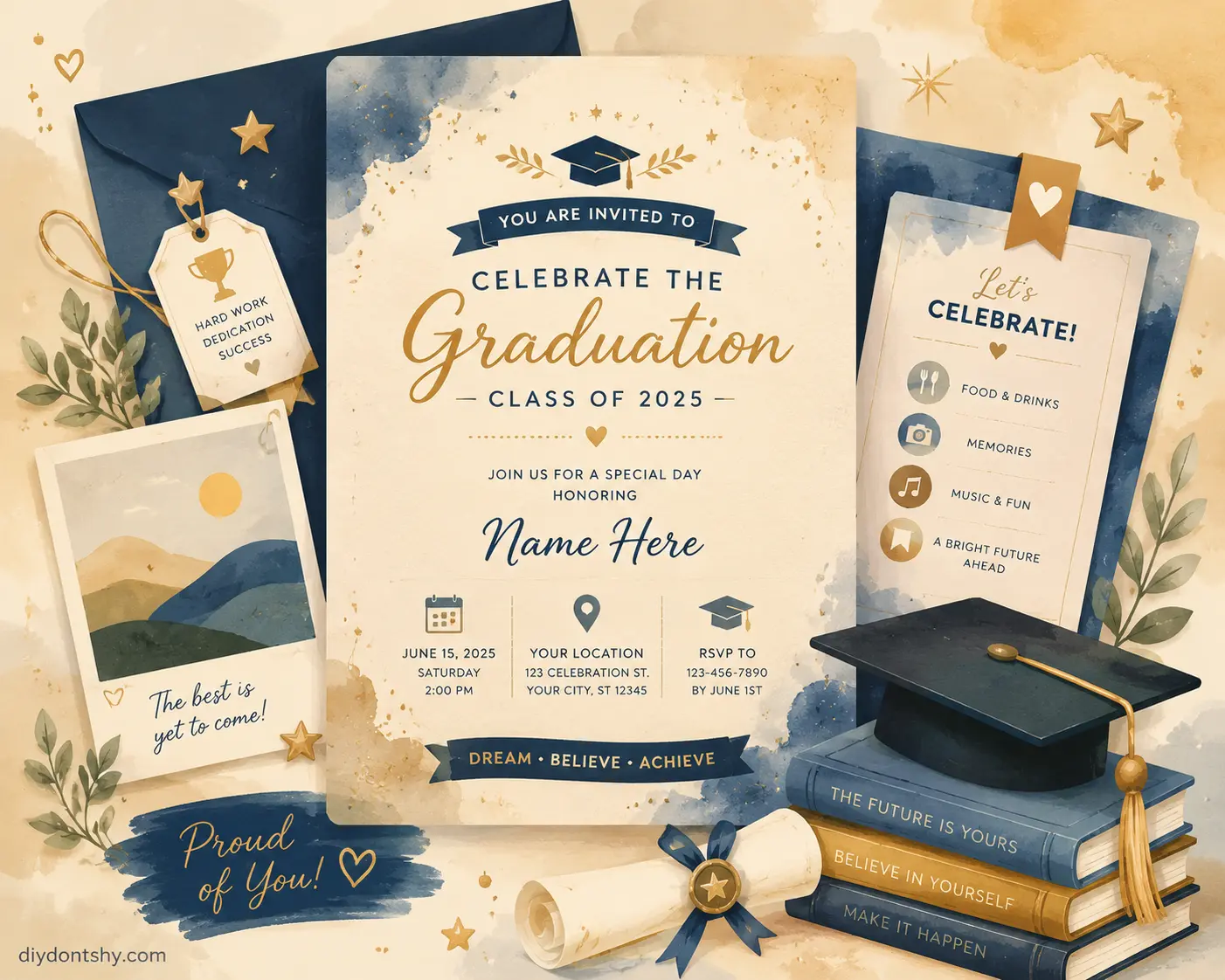
No matter how beautiful or emotional the wording sounds, an invitation still needs to function properly. Guests should immediately understand who is graduating, what is being celebrated, where the event takes place, and when they need to arrive. Missing details create confusion faster than people realize.
Most graduation etiquette guides agree that invitations should clearly include:
| Essential Detail | Why It Matters |
|---|---|
| Graduate’s full name | Identifies the honoree clearly |
| School or university name | Gives context to the achievement |
| Graduation year or degree | Highlights the milestone |
| Event date and time | Helps guests plan properly |
| Venue or address | Prevents confusion and delays |
| RSVP information | Helps hosts estimate attendance |
Recent etiquette resources emphasize that graduation invitations should balance celebration with practicality. Guests appreciate invitations that are easy to understand without forcing them to search through tiny print or follow-up text messages for details.
One overlooked element is readability. Some invitations try so hard to sound poetic that they accidentally hide the essential information. Guests should never need detective skills to figure out when the event starts.
RSVP and Timing Etiquette
Timing is another area where many people struggle. Graduation season is crowded with parties, ceremonies, weddings, and vacations. Sending invitations too late dramatically lowers attendance rates because calendars fill quickly.
Etiquette experts generally recommend mailing graduation invitations several weeks before the celebration. Last-minute invitations can unintentionally make guests feel like backup options rather than valued attendees.
RSVP wording also matters more than people think. A simple line such as “Kindly RSVP by May 15” works perfectly for formal events, while casual parties might say “Text us if you can make it!” The tone should match the style of the celebration.
Setting the Right Tone for the Celebration
Choosing Between Formal and Casual Styles
One of the biggest decisions when writing a graduation invitation is choosing between formal and casual wording. Neither option is automatically better. It depends entirely on the type of celebration you are planning.
Formal invitations often work best for:
- University graduations
- Elegant dinner receptions
- Multi-family celebrations
- Traditional family gatherings
- Graduate or doctoral degree events
Casual invitations fit naturally with:
- Backyard parties
- Pool celebrations
- Open-house style events
- Small gatherings with friends
- Informal family cookouts
The language itself changes dramatically between these styles. Formal invitations often use phrases like “request the pleasure of your company” or “cordially invited.” Casual invitations sound more conversational, relaxed, and emotionally direct.
Matching the Invitation to the Event Personality
Imagine receiving an invitation that sounds incredibly elegant and sophisticated, only to arrive at a laid-back barbecue with paper plates and lawn games. The mismatch creates confusion. Your invitation should reflect the atmosphere guests can expect.
Recent invitation examples show that many graduates now combine polished wording with warm personality. That hybrid approach often works beautifully because it feels respectful without sounding stiff.
A good trick is to read the invitation out loud. If it sounds unnatural coming from your own voice, it probably needs adjustment. Invitations should sound like real people talking, even when they are formal.
Formal Wording Ideas for Traditional Invitations
Elegant High School Graduation Invitation Examples
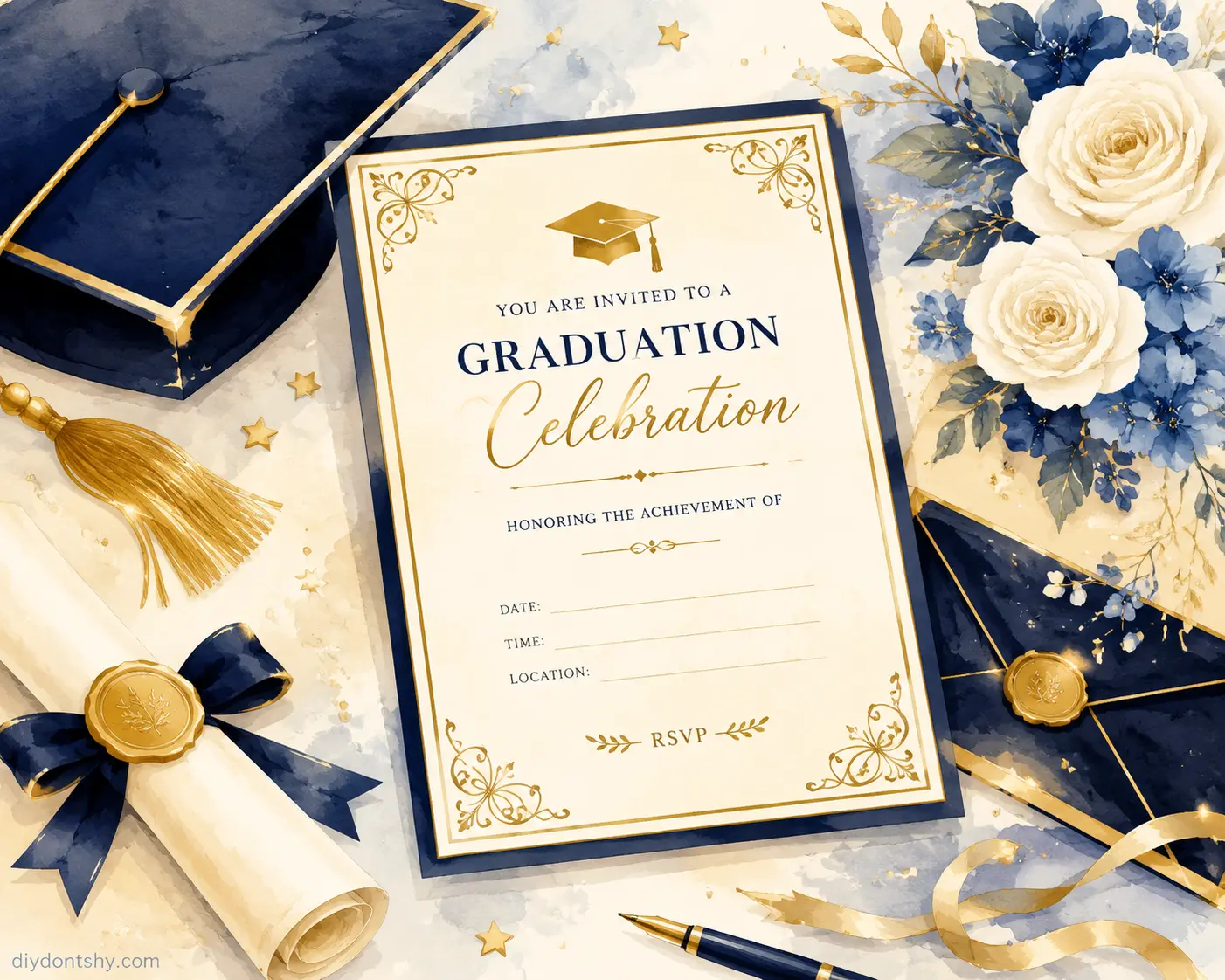
Traditional invitations carry a timeless charm that never really goes out of style. They create a sense of importance and occasion, which feels especially fitting for milestone academic achievements.
Here is an example of classic formal wording:
Together with their family,
Sophia Bennett
requests the pleasure of your company
at a celebration honoring her graduation
from Westview High School
Class of 2026.
This style feels polished, respectful, and graceful. It works especially well for formal receptions, banquet halls, or church-hosted celebrations. Formal invitations often use complete names, carefully structured sentences, and elegant phrasing.
Many families also enjoy adding subtle emotional language such as “with pride and gratitude” or “celebrating years of dedication and achievement.” Those small touches soften the formality and make the message feel more heartfelt.
Sophisticated College Graduation Invitation Examples
College and graduate degree celebrations often lean slightly more formal because the achievements themselves carry professional significance. Invitations may include degree titles, academic honors, or future career plans.
Example:
Please join us in celebrating
the graduation of
Daniel Carter
from the University of Michigan
with a Bachelor of Science in Engineering.
Invitation wording guides published in 2026 continue to show strong demand for classic formats with personalized emotional details. Families appreciate how formal wording creates a sense of ceremony and recognition.
Casual Invitation Phrases That Still Feel Special
Relaxed Backyard Celebration Examples
Casual invitations work because they sound welcoming and human. They remove the pressure of perfect etiquette and focus on genuine excitement. That relaxed energy often makes guests more enthusiastic about attending.
Example:
We did it!
Join us for food, laughs, and celebration
as Emma graduates from Lincoln High School!
Notice how the wording feels immediate and conversational. It sounds like something a friend would actually say rather than a scripted announcement.
Casual wording can still feel meaningful without becoming sloppy. The goal is warmth, not laziness. Short phrases, humor, and energetic language often work beautifully for informal celebrations.
Friendly Invitations for Modern Graduates
Modern invitations increasingly reflect personality. Some graduates include inside jokes, references to late-night studying, or comments about future plans.
Examples include:
- “After four years and countless cups of coffee… it’s finally official.
- “The tassel was worth the hassle!
- “School’s out forever… probably.
These phrases work especially well for younger graduates who want invitations to feel playful and social-media friendly. Recent graduation invitation resources highlight the growing popularity of personalized and humorous wording styles among Gen Z graduates.
The trick is moderation. A little humor feels charming. Too much can make the invitation lose emotional impact.
Creative Ways to Mention Achievements and Future Plans

Sharing Honors Without Sounding Boastful
This is one of the hardest parts of writing graduation invitations. Families want to celebrate achievements proudly, but they also want to avoid sounding arrogant. The solution is simple: focus on gratitude and excitement rather than self-promotion.
For example:
Celebrating the graduation of
Olivia Martinez
Magna Cum Laude
Future Nursing Student at UCLA
That wording feels celebratory without becoming excessive. Academic honors naturally belong in graduation invitations because they reflect genuine accomplishments.
Experts note that modern invitations increasingly include future plans such as college acceptances, graduate programs, or career goals. Guests enjoy seeing where the graduate’s journey is heading next.
Mentioning Career Goals and Next Steps
Future plans add emotional momentum to graduation invitations. They remind guests that graduation is not just an ending. It is the launch of something new.
Examples include:
- “Heading to NYU this fall
- “Future elementary school teacher
- “Next stop: medical school
- “Starting a new chapter in Chicago
These details make invitations feel more personal and memorable. They also give guests easy conversation topics during the celebration itself.
Family-Centered Messages That Feel Warm and Personal
Invitations Written by Parents
Parent-hosted invitations often carry deep emotional warmth because they reflect pride, sacrifice, and gratitude all at once.
Example:
With grateful hearts and joyful pride,
we invite you to celebrate
our daughter Ava’s graduation.
Family-centered wording works especially well for high school graduations because parents often played a major role throughout the journey.
Recent invitation examples continue to show that emotionally sincere language resonates strongly with guests. People connect more deeply with invitations that feel personal rather than overly polished.

Multi-Generational Celebration Messages
Some graduation celebrations bring together grandparents, relatives, siblings, and close family friends. Invitations for these events often emphasize togetherness and shared pride.
Example:
Our family is excited to celebrate
this special milestone together
and would love for you to join us.
This wording creates emotional warmth without becoming overly dramatic. It reminds guests that graduation celebrations are often family memories as much as academic achievements.
Graduation Invitation Mistakes People Often Overlook
Common Wording and Design Errors
Even beautifully designed invitations can fail because of small mistakes. One of the biggest issues is overcomplicating the wording. People sometimes try so hard to sound elegant that the invitation becomes confusing or unnatural.
Common mistakes include:
| Mistake | Why It Causes Problems |
|---|---|
| Missing RSVP deadline | Guests forget to respond |
| Overly tiny fonts | Difficult to read |
| Too much decorative wording | Essential details get buried |
| Incorrect addresses | Guests arrive late or lost |
| Overcrowded designs | Invitations feel chaotic |
Another frequent problem is inconsistency in tone. A funny invitation paired with extremely formal language can feel disjointed.
Timing Problems and RSVP Confusion
Late invitations remain one of the most common graduation etiquette issues. Reddit etiquette discussions and invitation experts frequently point out that short notice can unintentionally make guests feel secondary.
Confusing RSVP instructions also create frustration. If guests do not know how or when to respond, attendance becomes unpredictable. Keep RSVP wording simple and direct.
Simple Tips for Writing Invitations That Sound Natural
Keeping the Language Authentic
The best graduation invitations sound human. They do not try too hard. They avoid stiff phrases unless the event genuinely calls for traditional formality.
A great strategy is pretending you are verbally inviting someone to the celebration. Write the way you would naturally speak. Then polish the grammar slightly while keeping the emotional tone intact.
Many modern invitation guides encourage conversational wording because it creates stronger emotional connection and authenticity.
Authenticity matters because guests are not judging literary brilliance. They simply want to feel welcomed and included in an important life moment.
Final Editing and Proofreading Tips
Before printing or sending invitations, check everything carefully. Graduation season is hectic, and small errors happen easily.
Review:
- Names
- Dates
- Addresses
- RSVP information
- Time zones for digital events
- Grammar and spelling
It also helps to have another person read the invitation aloud. Fresh eyes catch mistakes quickly.
A clean, sincere invitation almost always works better than an overly elaborate one. Simplicity paired with genuine emotion creates the strongest impact.
Conclusion
Graduation invitations are more than announcements. They are emotional snapshots of a major life milestone. The wording you choose shapes how people experience the celebration before it even begins. Whether you prefer formal elegance, casual warmth, or creative personality, the best invitations sound authentic to the graduate and meaningful to the guests.
A strong invitation balances emotion with clarity. It celebrates achievements without sounding boastful, includes important details without overwhelming the reader, and reflects the atmosphere of the event naturally. Trends in 2026 continue to show that people value sincerity, personalization, and conversational tone more than overly rigid etiquette.
At the end of the day, guests will not remember whether every phrase sounded perfectly poetic. They will remember how the invitation made them feel. Warmth, excitement, pride, and genuine connection always matter most.
FAQs
1. What should a graduation invitation say?
A graduation invitation should include the graduate’s name, school, degree or graduation year, event date, time, location, and RSVP details. The wording should also reflect the tone of the celebration.
2. Should graduation invitations be formal or casual?
Either style works well depending on the event. Formal wording suits elegant receptions and traditional celebrations, while casual wording feels perfect for relaxed parties and modern gatherings.
3. How early should graduation invitations be sent?
Most etiquette experts recommend sending invitations several weeks before the event so guests can plan ahead during the busy graduation season.
4. Is it okay to mention honors and achievements?
Yes. Academic honors, scholarships, and future college plans are commonly included in graduation invitations as long as the wording feels celebratory rather than boastful.
5. What is the biggest mistake people make with graduation invitations?
The most common mistakes are missing important details, sending invitations too late, and using wording that sounds unnatural or overly complicated.

Kareem Sallam is an Egyptian special writer based in Australia, with a strong interest in practical ideas and creative content that focuses on everyday solutions. He writes clear, engaging articles designed to be easy to follow and useful for a wide range of readers.
His work centers on DIY projects, handmade ideas, simple crafts, and home based creativity. Kareem aims to deliver content that is practical, inspiring, and accessible, helping readers turn simple materials into smart and enjoyable projects.


