What Is the Average Size of a Baby Blanket for Different Uses
Choosing the right baby blanket size sounds simple at first. Then suddenly you are standing in a store, scrolling through dozens of measurements, wondering why one blanket looks tiny enough for a doll while another could practically cover a twin bed. Parents, grandparents, and even experienced crafters often get confused because baby blankets are not made in one universal size. Their dimensions change depending on purpose, age group, fabric type, and safety considerations.
A stroller blanket, for example, serves a completely different function than a swaddle blanket. One needs portability and compactness, while the other needs extra fabric for secure wrapping. Add handmade crochet projects, quilting shrinkage, thick fleece fabrics, and toddler growth spurts into the mix, and blanket sizing becomes surprisingly technical.
According to recent baby blanket sizing guides and consumer reports, the most common average baby blanket dimensions range between 30 x 30 inches and 40 x 60 inches, depending on intended use. The right dimensions can improve comfort, usability, portability, and even safety. The wrong size can create frustration, wasted fabric, or a blanket that becomes impractical after only a few months.
This guide breaks down everything you need to know about standard baby blanket sizes, how different blanket types compare, and how to choose the perfect measurements before buying or making one yourself.
Contents
Why Baby Blanket Size Matters More Than Most Parents Think
Blanket size affects far more than appearance. It changes how useful the blanket becomes in everyday life. A blanket that is too small may constantly slip off a baby during stroller walks. One that is too large can become bulky, difficult to fold, and potentially unsafe in sleep environments. This is why experienced parents often own multiple blanket sizes instead of relying on a single “perfect” option.
Recent blanket sizing research shows that different blanket categories exist because babies use blankets in very different ways throughout infancy and toddlerhood. A receiving blanket is designed for quick portability and light coverage, while a swaddle blanket must wrap securely around the baby several times. Crib blankets, meanwhile, prioritize mattress compatibility and toddler comfort.
Think of baby blankets like shoes. You would not wear hiking boots to the beach or flip-flops to climb a mountain. In the same way, each blanket size is built around a specific purpose. A stroller blanket should stay compact and manageable. A playmat blanket should provide enough floor space. A toddler blanket must accommodate rolling, stretching, and movement during sleep.
Safety also plays a major role in sizing decisions. Pediatric sleep experts continue to recommend avoiding loose blankets in cribs for babies under 12 months old because of suffocation risks. Oversized blankets can bunch around the face or create tangled fabric during sleep. That is why many parents prefer wearable sleep sacks for younger infants.
Blanket size also impacts longevity. Many handmade blanket makers intentionally choose slightly larger dimensions so the blanket remains useful for years instead of months. Community discussions among crochet and knitting groups frequently mention making baby blankets around 36 to 48 inches wide for extended usability.
Standard Baby Blanket Dimensions Explained
Baby blanket sizes are not completely standardized worldwide, but most manufacturers and handmade patterns follow similar ranges. Understanding these dimensions helps parents shop smarter and helps crafters avoid expensive sizing mistakes.
Receiving Blanket Sizes
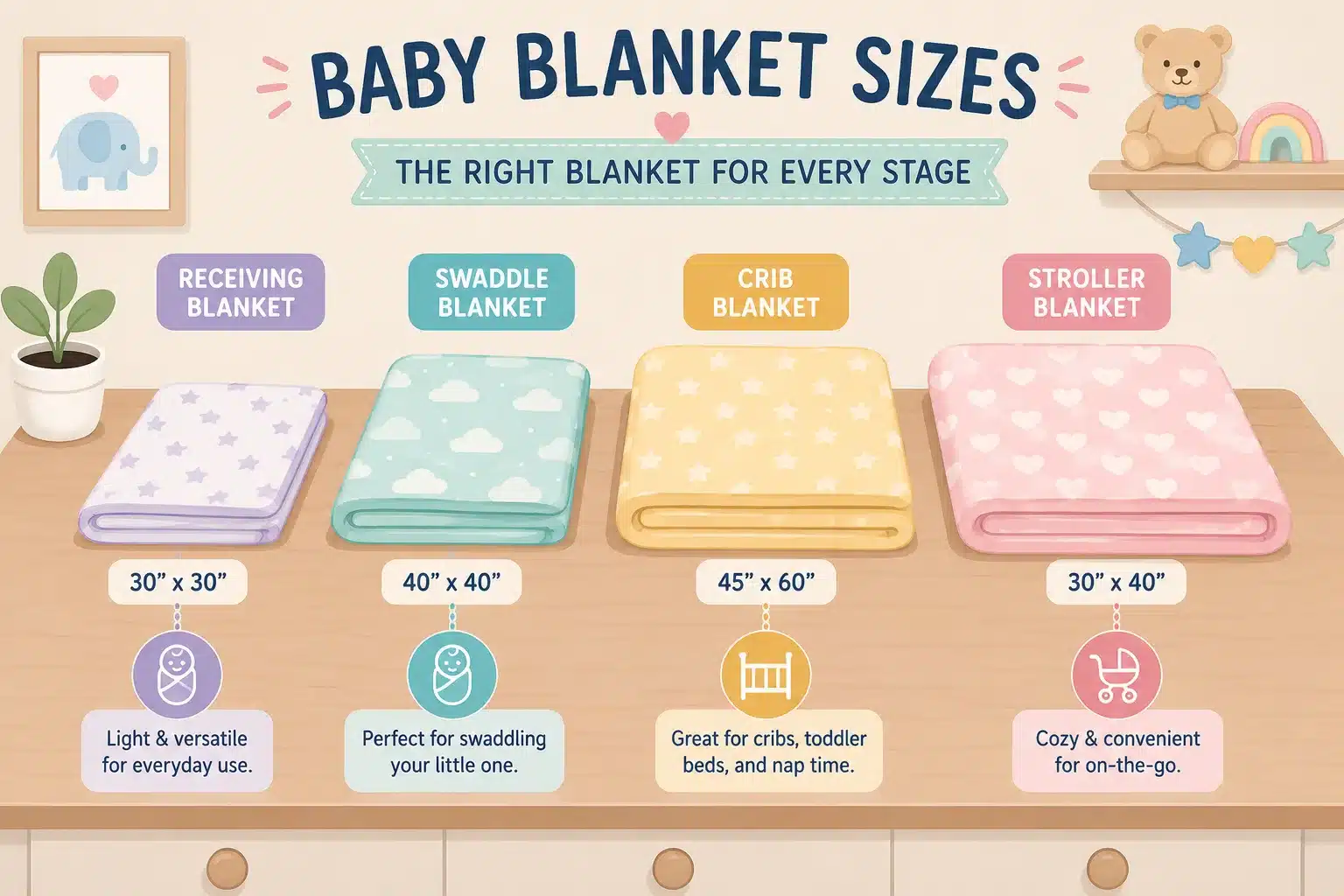
The average receiving blanket measures between 30 x 30 inches and 36 x 36 inches. These lightweight blankets are among the most versatile baby items ever invented. Parents use them for burping, tummy time, diaper changes, nursing covers, and light swaddling.
Receiving blankets are intentionally compact because portability matters. A giant receiving blanket would become awkward inside diaper bags or hospital totes. Their square shape also allows quick folding and easy wrapping. Many hospitals still send newborns home wrapped in receiving blankets because they are manageable and beginner-friendly.
Related Reading: Average Throw Blanket Size
The biggest misconception is assuming receiving blankets are ideal long-term swaddles. They often work for tiny newborns, but many babies outgrow them quickly. Once babies start kicking harder and stretching longer, the smaller fabric dimensions make secure wrapping difficult.
Swaddle Blanket Sizes
Swaddle blankets are larger by design, usually measuring between 40 x 40 inches and 48 x 48 inches. The larger dimensions help parents create snug wraps that stay secure overnight.
Many first-time parents blame themselves for “bad swaddling technique” when the real issue is insufficient blanket size. Imagine trying to wrap a burrito using a napkin instead of a tortilla. The fabric simply cannot overlap enough to stay secure. Larger swaddle blankets solve this problem by providing extra material for proper tucking.
Modern muslin swaddles often use breathable cotton blends because large blankets can trap heat if the material is too thick. Fabric breathability matters just as much as blanket dimensions.
Crib Blanket Sizes
Crib blankets are among the largest baby blanket categories. Typical dimensions range from 36 x 52 inches to 45 x 60 inches. These blankets are sized to fit standard crib mattresses while allowing moderate overhang.
Parents often confuse crib blankets with safe infant sleep products. Pediatric experts caution that loose crib blankets should generally not be used for babies under 12 months old. Instead, crib blankets become more practical during the toddler transition phase.
Because crib blankets are larger, they also tend to use thicker fabrics like quilted cotton, fleece, or layered crochet designs. Their purpose focuses more on warmth and long-term use than portability.
Stroller Blanket Sizes
Stroller blankets usually measure around 30 x 36 inches. These blankets prioritize convenience and mobility. A stroller blanket should keep a baby warm without dragging onto wheels, catching under straps, or constantly falling off during movement.
Parents love stroller blankets because they travel easily. They fold compactly, fit neatly into diaper bags, and work perfectly for car seats, doctor appointments, and outdoor walks.
Many experienced parents say smaller blankets often get more daily use than oversized decorative nursery blankets. Reddit discussions among parents and crafters consistently mention stroller-sized blankets as practical favorites.
Average Baby Blanket Size Chart
Comparison Table by Blanket Type
| Blanket Type | Standard Dimensions | Primary Use |
|---|---|---|
| Receiving Blanket | 30″ x 30″ to 36″ x 36″ | Newborn care, burping, light swaddling |
| Swaddle Blanket | 40″ x 40″ to 48″ x 48″ | Secure swaddling |
| Stroller Blanket | 30″ x 36″ | Outdoor walks and travel |
| Crib Blanket | 36″ x 52″ to 45″ x 60″ | Toddler bedding |
| Lovey Blanket | 12″ x 12″ | Comfort item |
| Toddler Blanket | 42″ x 52″ to 50″ x 60″ | Toddler sleep coverage |
| Preemie Blanket | 18″ x 24″ | Premature infants |
The table highlights one important truth: there is no single “average” baby blanket size. Dimensions depend entirely on function, age, and environment.
How Crib, Stroller, and Swaddle Blankets Compare
At first glance, all baby blankets seem interchangeable. After all, they are just soft rectangles or squares, right? In reality, each blanket category solves a different parenting challenge.
Best Uses for Each Blanket Type
Swaddle blankets excel during the newborn phase because they recreate the snug feeling babies experience in the womb. Their generous square dimensions help reduce startling reflexes and improve sleep quality. Pediatric sleep experts note that swaddling may calm babies effectively during the first weeks of life.
Stroller blankets focus on flexibility and movement. Parents constantly take them in and out of bags, car seats, and strollers. Oversized stroller blankets quickly become frustrating because they bunch awkwardly around straps and wheels.
Crib blankets prioritize coverage instead of mobility. Their rectangular proportions match mattress dimensions, making them practical for toddler beds and nap time setups. These blankets often become long-term comfort items because children can continue using them for years.
Which Blanket Offers the Most Versatility
If versatility is the goal, receiving blankets probably win the contest. They function almost like the Swiss Army knife of baby gear. Parents use them for cleanup, feeding, swaddling, changing pads, stroller coverage, and even emergency shade.
Swaddle blankets come second because many larger muslin swaddles also double as nursing covers or lightweight play mats. Crib blankets, although cozy, are less portable because of their size and thickness.
One interesting trend from online parenting communities is that many handmade blanket makers intentionally create “middle-ground” sizes around 36 x 36 inches or 40 x 40 inches. This compromise size balances portability with long-term usability.
Fabric Thickness and Its Effect on Blanket Size
Fabric thickness changes how a blanket behaves in real life. Two blankets with identical measurements can feel dramatically different depending on material weight, stretch, and layering.
Popular Posts: How to Get Spray Paint to Dry Faster in Any Weather
Cotton vs Fleece vs Crochet Materials
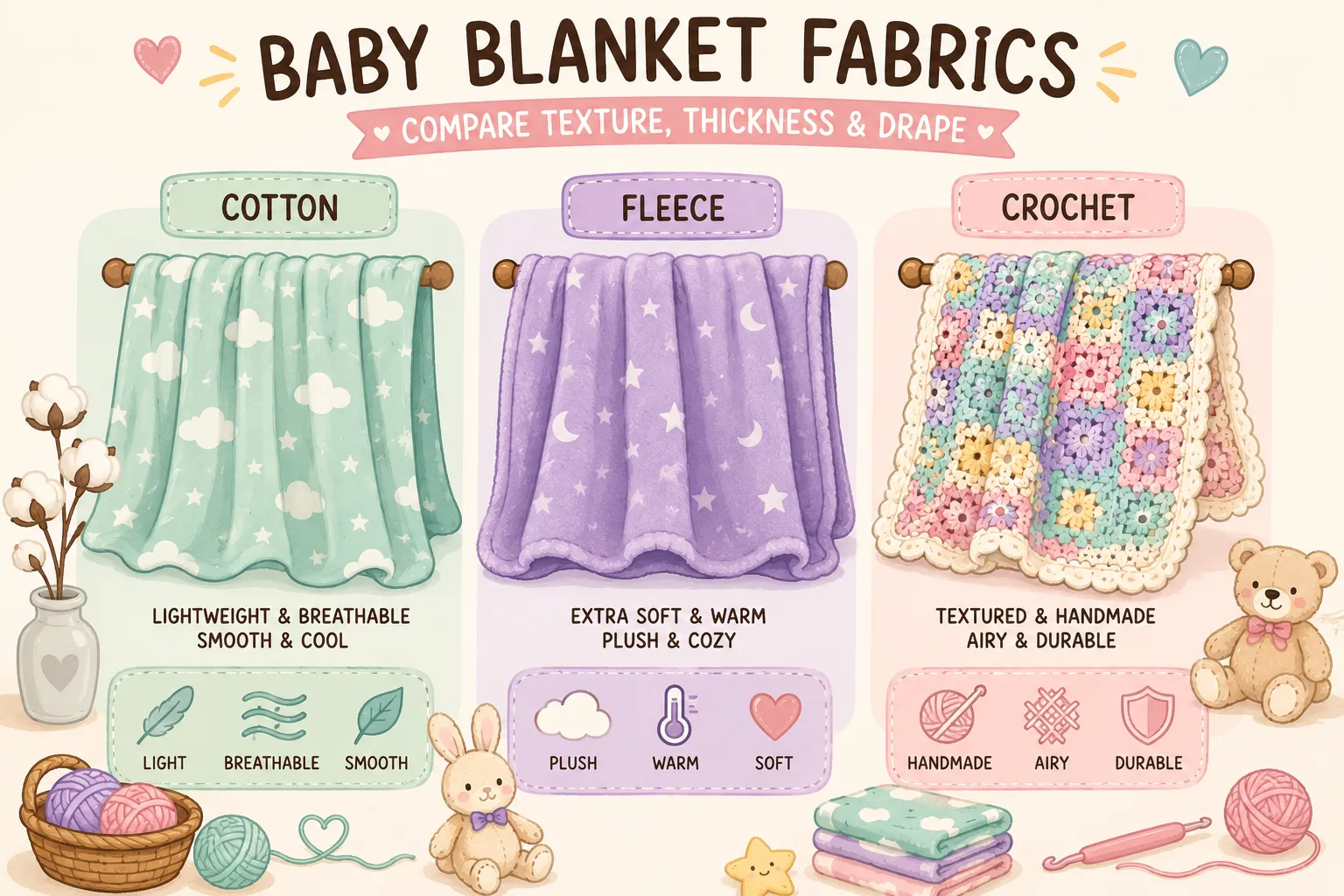
Cotton blankets remain the most popular option because they are breathable, washable, and lightweight. Cotton works especially well for swaddles because babies can overheat easily inside thick fabrics.
Fleece blankets provide excellent warmth but often feel bulkier. Because fleece traps heat effectively, many parents prefer slightly smaller fleece blankets to avoid overheating or excessive weight during travel.
Crochet and knitted blankets behave differently because stitch patterns create stretch and airflow variations. Loose crochet stitches may expand significantly after washing or prolonged use. Dense stitches create heavier blankets that may feel oversized even when measurements appear normal.
Imagine carrying two backpacks that weigh the same. One is neatly packed while the other contains awkward bulky items. That is essentially how fabric thickness changes blanket usability.
Shrinkage and Stretching Considerations
Fabric shrinkage is one of the biggest mistakes beginner blanket makers overlook. Some cotton materials shrink between 5% and 10% after washing. This means a perfectly measured blanket may suddenly become too small after the first laundry cycle.
Stretching creates the opposite problem. Crochet blankets, especially handmade ones, may widen or lengthen over time due to gravity and repeated washing. Borders can also distort dimensions if added unevenly.
Experienced crafters often recommend measuring blankets after blocking or prewashing fabrics before sewing. This small preparation step prevents frustrating surprises later.
What to Consider Before Making a Handmade Baby Blanket
Handmade baby blankets carry emotional value that store-bought blankets rarely match. They become heirlooms, keepsakes, and treasured gifts. But handmade projects require careful planning because sizing errors become expensive quickly.
Yarn Choice and Stitch Density
Different yarns dramatically affect final dimensions. Thick chenille yarn creates plush oversized blankets quickly, while lightweight cotton yarn requires far more rows and stitches to reach the same measurements.
Stitch density matters equally. Tight stitches reduce stretch and create compact warmth. Loose stitches increase airflow and flexibility. A blanket with extremely loose stitching may technically measure correctly but still fail to provide enough warmth or structure.
Many crafters intentionally size blankets slightly larger because babies grow rapidly. Reddit discussions reveal that some makers even create baby blankets close to lap blanket size for extended usability.
Washability and Durability
Learn More: Add a Border to a Crochet Blanket
Parents wash baby blankets constantly. Spit-up, milk spills, diaper accidents, and food stains are inevitable. That means delicate materials requiring handwashing often become impractical.
Durability should influence size choices too. Larger blankets experience more pulling, dragging, and folding stress over time. Reinforced edges and balanced dimensions help blankets maintain shape after repeated use.
Before starting any handmade blanket project, ask three practical questions:
- Who will use this blanket?
- Where will it be used most often?
- How frequently will it need washing?
Those answers usually reveal the ideal blanket dimensions surprisingly quickly.
Sizing Differences Between Newborn and Toddler Blankets
One major reason blanket sizing feels confusing is because babies change size unbelievably fast. A blanket perfect for a newborn may become useless within months.
Newborn Blanket Recommendations
Newborns benefit most from compact, breathable blankets. Swaddles and receiving blankets dominate this stage because portability and secure wrapping matter more than full-body coverage.
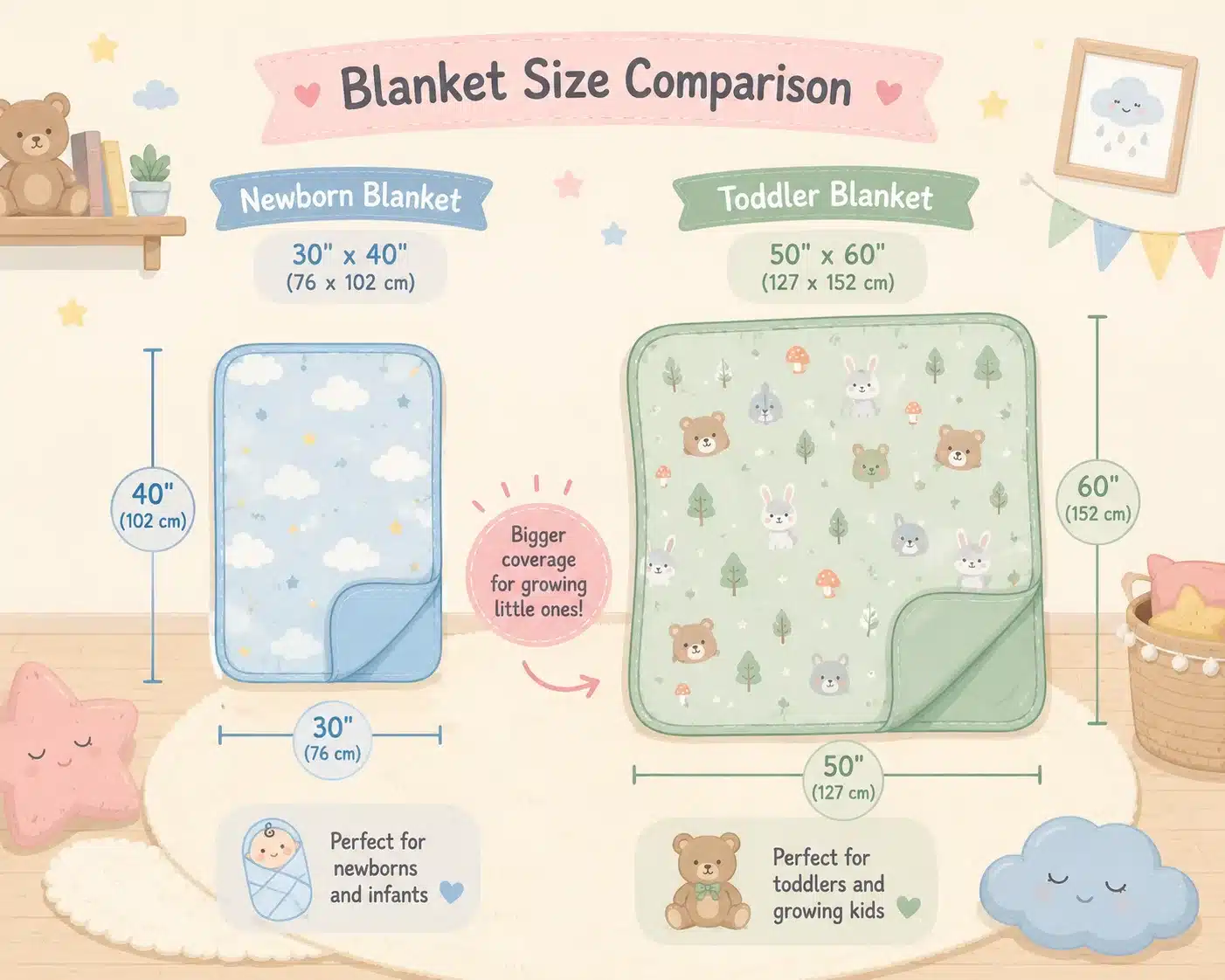
Most newborn-friendly blankets fall between 30 x 30 inches and 40 x 40 inches. These dimensions allow practical wrapping without overwhelming tiny infants.
Smaller blankets also reduce overheating risks and remain easier for exhausted parents to handle during late-night diaper changes.
Toddler Blanket Measurements
Toddler blankets grow considerably larger because toddlers move constantly during sleep. Standard toddler blanket sizes range between 42 x 52 inches and 50 x 60 inches.
At this stage, blankets become more about comfort and independence. Toddlers often drag blankets around the house, use them during naps, or attach emotionally to favorite textures and patterns.
This is why many parents prefer versatile blankets that bridge multiple growth stages. A moderately oversized blanket may remain useful from infancy into preschool years.
Common Mistakes That Lead to Oversized Baby Blankets
Oversized baby blankets are incredibly common, especially among enthusiastic first-time crafters. Bigger sounds better in theory, but practicality usually says otherwise.
Ignoring Purpose and Safety
The biggest mistake is forgetting the blanket’s primary purpose. A stroller blanket does not need to cover an entire couch. Oversized travel blankets become awkward, heavy, and difficult to secure safely.
Parents also sometimes confuse decorative nursery blankets with practical daily-use blankets. Large quilted blankets may look beautiful draped over cribs, but they are not necessarily practical for swaddling or travel.
Safety concerns matter too. Pediatric recommendations continue to discourage loose blankets in infant sleep spaces because excess fabric may create suffocation hazards.
Adding Too Many Borders or Layers
Handmade blankets frequently become oversized because creators keep “just adding one more row.” Borders, layered backing, and decorative edges can increase dimensions dramatically.
A blanket intended to finish at 36 inches wide may suddenly reach 48 inches after multiple decorative additions. This is especially common in crochet projects where textured borders expand measurements rapidly.
Experienced crafters often recommend setting strict measurement checkpoints throughout the project. Measuring once at the end is usually too late.
Practical Tips for Choosing the Right Measurements
Choosing the perfect baby blanket size becomes much easier when you focus on function instead of guesswork. Start by deciding exactly how the blanket will be used. A stroller blanket should remain compact and portable, while a swaddle blanket requires generous square dimensions for secure wrapping.
Pay attention to material weight before choosing measurements. Thick fleece and chunky yarns create visually larger blankets even at smaller dimensions. Lightweight muslin fabrics often require larger measurements to achieve the same coverage.
If you are making a handmade blanket, always account for shrinkage and stretching. Prewash fabrics whenever possible and create test swatches for crochet or knitting projects. This prevents unpleasant surprises later.
Many parents find that medium-sized blankets around 36 x 36 inches provide the best balance between portability and longevity. They fit easily into diaper bags while still remaining useful after the newborn stage. Community discussions among experienced crafters repeatedly mention this size range as a reliable middle ground.
Keep seasonal weather in mind too. Warm climates often favor lightweight breathable blankets with slightly larger dimensions for airflow. Colder climates may benefit from smaller but thicker blankets that trap heat efficiently.
The smartest approach is often owning multiple blanket sizes instead of chasing one universal solution. Babies use blankets differently during feeding, travel, naps, tummy time, and toddler sleep. A small collection of purpose-built blankets usually works far better than one oversized catch-all blanket.
Conclusion
The average baby blanket size depends entirely on how the blanket will be used. Receiving blankets typically measure around 30 x 30 inches, swaddle blankets range from 40 x 40 to 48 x 48 inches, stroller blankets stay close to 30 x 36 inches, and crib blankets may reach 45 x 60 inches.
Blanket dimensions influence comfort, portability, safety, and long-term usefulness. A properly sized blanket feels practical and effortless in daily life, while an oversized or undersized one quickly becomes frustrating. Fabric thickness, wash shrinkage, stitching style, and child growth all affect ideal sizing decisions as well.
Whether you are shopping for a newborn, planning a handmade crochet gift, or choosing toddler bedding, understanding standard blanket dimensions makes the entire process simpler. The best baby blanket is not necessarily the biggest or most decorative one. It is the one that fits the baby’s stage, purpose, and everyday routine perfectly.
FAQs
What is the most common baby blanket size?
The most common baby blanket size is typically around 30 x 30 inches to 36 x 36 inches for receiving blankets. These dimensions work well for newborn care, portability, and light swaddling.
What size should a handmade crochet baby blanket be?
Most handmade crochet baby blankets range from 36 x 36 inches to 40 x 40 inches because these dimensions balance long-term usability with portability. Many crafters intentionally go slightly larger so the blanket remains useful as the baby grows.
Are larger baby blankets safer?
Not always. Oversized blankets can create safety concerns, especially for infants under 12 months old. Pediatric experts recommend avoiding loose blankets in cribs for young babies.
How much does fabric shrink affect blanket size?
Cotton blankets may shrink between 5% and 10% after washing, depending on fabric type and laundering conditions. Handmade projects should account for this during planning.
What is the difference between a stroller blanket and a crib blanket?
A stroller blanket is smaller and designed for portability, usually around 30 x 36 inches. A crib blanket is much larger, often reaching 45 x 60 inches, and is intended for toddler bedding and nursery use.

Kareem Sallam is an Egyptian special writer based in Australia, with a strong interest in practical ideas and creative content that focuses on everyday solutions. He writes clear, engaging articles designed to be easy to follow and useful for a wide range of readers.
His work centers on DIY projects, handmade ideas, simple crafts, and home based creativity. Kareem aims to deliver content that is practical, inspiring, and accessible, helping readers turn simple materials into smart and enjoyable projects.