How to Write on the Envelope of a Wedding Invitation the Right Way
Wedding invitations are more than paper tucked into an envelope. They are the opening scene of your celebration. Before guests see the flowers, the venue, or the carefully chosen wording inside the invitation, they notice the envelope first. That single detail quietly communicates the tone of the wedding. Is it elegant and formal? Relaxed and modern? Luxurious and black-tie? The envelope already tells the story before the invitation is opened.
Many couples spend months choosing invitation designs, cardstock textures, and fonts, yet surprisingly little time learning how to properly address the envelopes themselves. That small oversight can make even the most beautiful invitation suite feel incomplete or inconsistent. A carefully addressed envelope creates a polished first impression and reinforces the style of your celebration. Recent wedding etiquette experts also note that today’s couples are blending traditional etiquette with modern personalization, allowing invitations to feel both elegant and authentic while remaining true to their personalities.
The Envelope Creates the First Impression
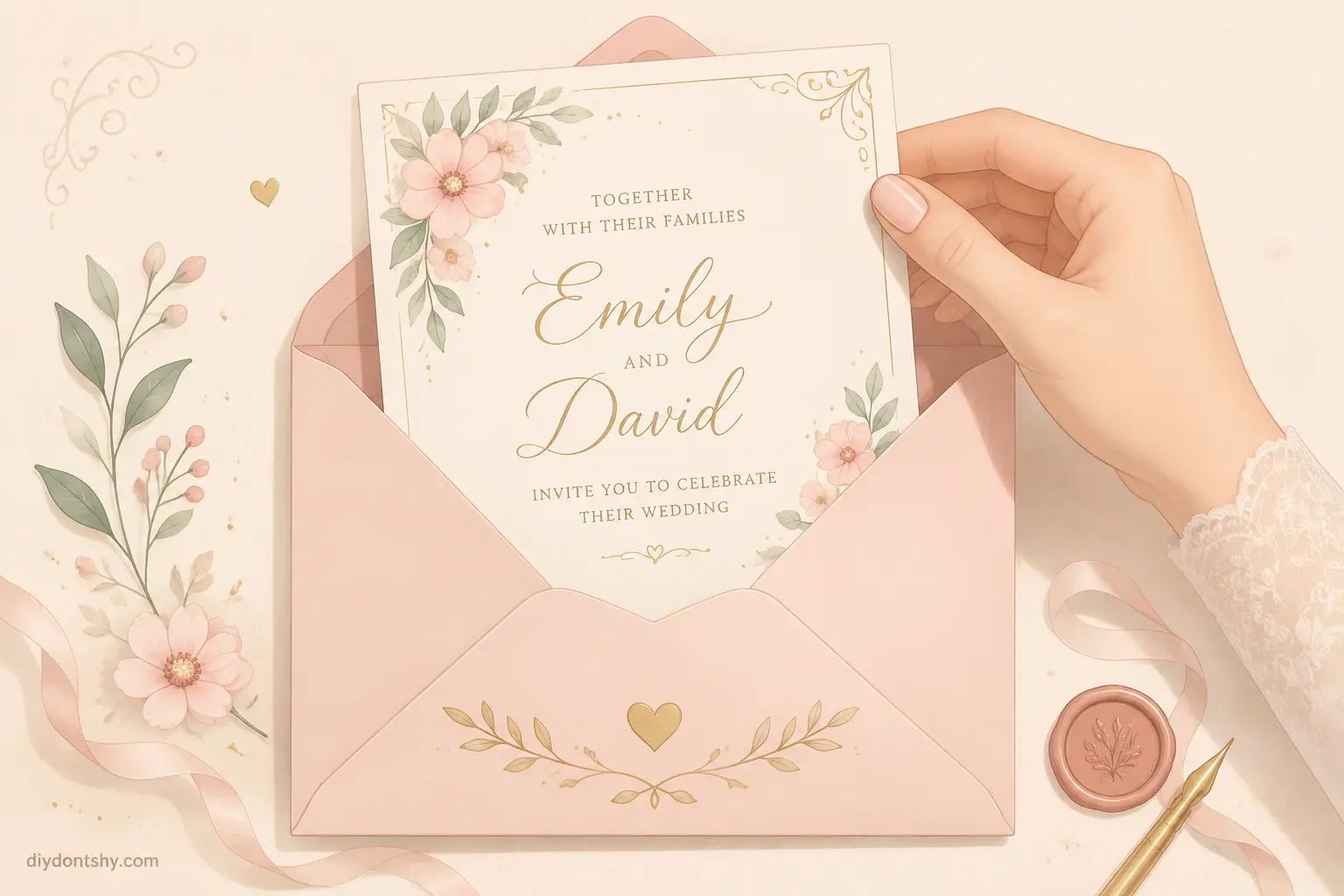
Imagine receiving two invitations in the mail. One arrives with a neatly centered address, balanced spacing, and elegant handwriting. The other has crooked labels, inconsistent abbreviations, and names squeezed awkwardly onto the envelope. Even before opening them, you already feel differently about each event. That reaction is exactly why wedding envelope etiquette still matters today.
Wedding planners and stationery experts consistently describe the envelope as the “preview” of the wedding experience. Invitation addressing reflects care, hospitality, and attention to detail. Guests notice when their names are spelled correctly, titles are used thoughtfully, and the layout feels balanced and intentional. More importantly, clear addressing eliminates confusion about who is invited and helps ensure invitations arrive without postal issues, making guests feel welcomed before the celebration even begins.
Wedding etiquette used to operate almost like a strict rulebook. Formal titles were mandatory. Inner and outer envelopes were expected. State names were spelled out completely, and abbreviations were often considered inappropriate for formal correspondence. While those traditions still exist, modern couples are rewriting many of those expectations.
Today’s wedding stationery trends show a noticeable shift toward personalization. According to recent stationery trend reports from , couples increasingly mix contemporary typography, minimalist layouts, and digitally printed calligraphy with traditional etiquette foundations. That means you can absolutely respect etiquette while still creating invitations that feel modern and unique.
Think of etiquette as a framework rather than a prison. Traditional etiquette provides structure and clarity. Modern style adds personality and warmth. For example, a formal invitation might address guests as “Doctor Emily Carter and Mr. Benjamin Carter,” while a modern invitation could comfortably say “Emily and Ben Carter” depending on the wedding style. Neither approach is automatically wrong. The important thing is choosing one consistent style throughout the entire invitation suite.
This flexibility has made wedding invitation etiquette far less intimidating than it once was. Couples no longer feel pressured to follow outdated social expectations that do not reflect their relationships or personalities. Inclusive language, same-sex couple addressing, blended families, and gender-neutral titles have all become much more common in modern wedding stationery. Etiquette is evolving alongside culture, which makes today’s invitation practices feel more welcoming and realistic.
Contents
Understanding Formal vs Modern Envelope Etiquette
What Formal Wedding Envelope Etiquette Looks Like
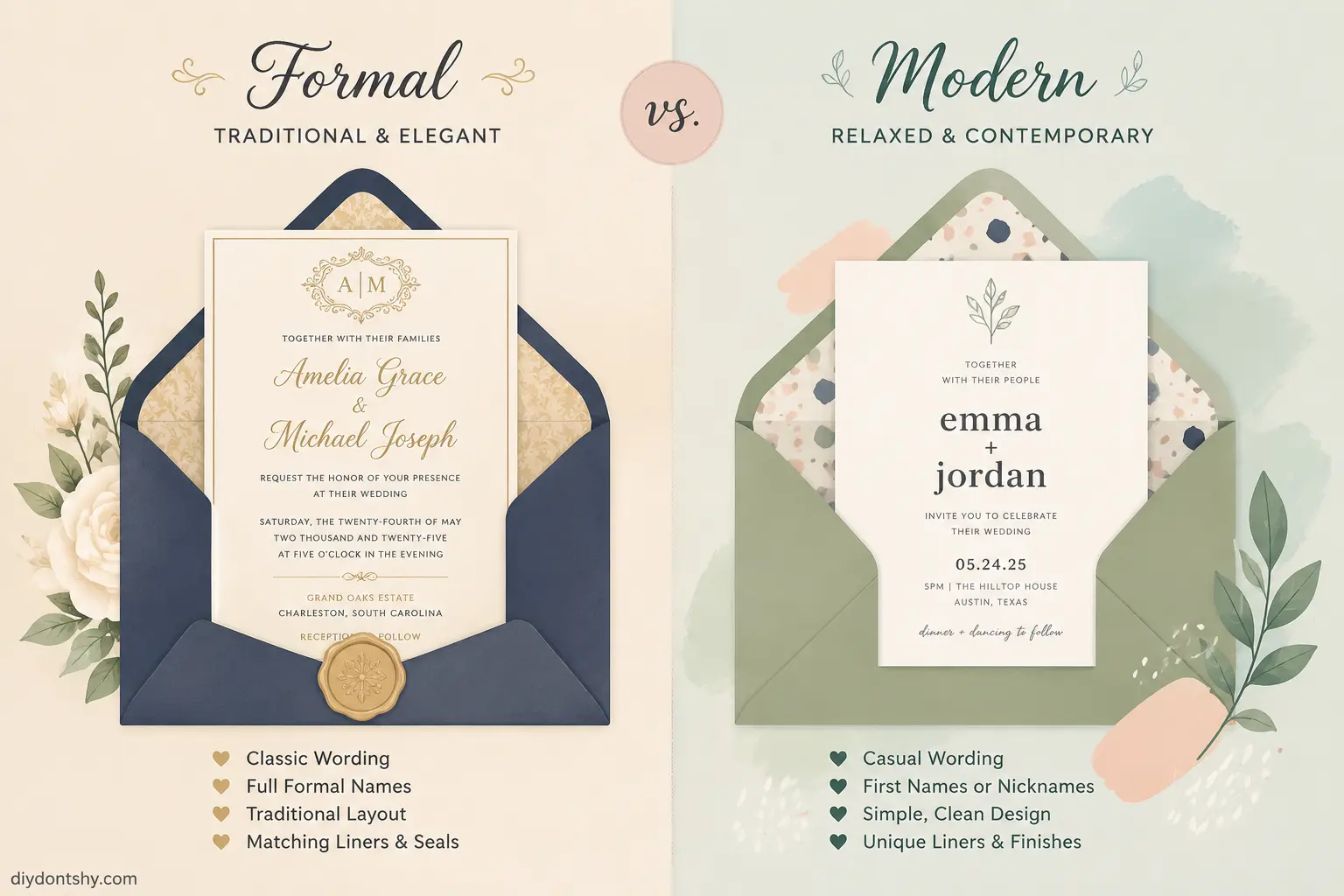
Formal wedding invitation etiquette follows a polished and highly structured style. It prioritizes tradition, symmetry, and complete wording. If your wedding includes black-tie attire, a cathedral ceremony, or a luxury venue, formal addressing usually feels the most appropriate.
Traditionally, formal envelopes spell out nearly everything in full. Street names are written without abbreviations, titles are included where appropriate, and married couples are often addressed together according to their preferred surname. Formal etiquette also commonly uses both outer and inner envelopes. The outer envelope carries the complete mailing address, while the inner envelope lists only the invited household members, making it clear exactly who is included in the invitation.
Modern wedding etiquette feels more relaxed, approachable, and reflective of contemporary relationships. Couples today often prioritize authenticity over strict tradition, especially for destination weddings, outdoor ceremonies, and intimate gatherings.
One of the biggest modern shifts is the use of first names and simplified titles. Many couples skip formal honorifics altogether unless they are professionally relevant. For example, rather than “Mr. and Mrs. Daniel Harper,” a modern envelope might simply read “Daniel and Claire Harper.” This creates a warmer, friendlier tone while still looking elegant.
Digital calligraphy and printed envelopes have also become extremely popular. Recent wedding industry reports note that professional hand calligraphy can cost between $3 and $10 per envelope, while digital printing offers a nearly identical appearance at a much lower cost. Modern printing techniques have improved so dramatically that many guests cannot tell the difference between digitally printed script and genuine hand lettering.
Modern etiquette also embraces inclusivity. Couples now address invitations in ways that reflect guests’ preferences and identities rather than forcing outdated conventions. Same-sex couples, unmarried couples living together, and blended families are addressed naturally and respectfully instead of being squeezed into old-fashioned rules that no longer fit modern life.
There is also far more flexibility around abbreviations and formatting. State abbreviations, minimalist layouts, and even bold typography are common in contemporary invitation suites. The modern philosophy is simple: clarity matters more than rigid perfection. If the envelope feels intentional, beautiful, and welcoming, it succeeds.
Writing Names Correctly for Couples and Families
Married Couples
Addressing married couples correctly depends largely on the formality level of the wedding and the couple’s surname preferences. Traditional etiquette typically places the husband’s full name first for heterosexual married couples, though many modern couples now prefer equal naming or individualized names.
Examples include:
• Mr. Daniel Reed and Mr. Alex Carter
• Ms. Sophia Bennett and Ms. Claire Evans
• Taylor Morgan and Jordan Lee
Gender-neutral titles such as “Mx.” are also widely accepted when preferred by the guest. When in doubt, use each person’s preferred name and title. Respectful, accurate addressing is always more important than following outdated conventions.
Traditional Titles
Traditional wedding invitations commonly use titles such as:
- Mr.
- Mrs.
- Ms.
- Miss
- Doctor
- Reverend
- The Honorable
Formal etiquette generally spells out professional titles completely. For example, “Doctor” is often written in full rather than abbreviated on highly formal invitations.
Titles add elegance and clarity, especially for traditional weddings. They also communicate respect for professional achievements and social customs. Yet overusing titles can sometimes feel stiff for modern celebrations, which is why many couples simplify them.
Professional Titles and Military Ranks
Professional titles should usually take precedence over social titles. If someone is a doctor, judge, military officer, or clergy member, that title is typically included formally.
Examples include:
• Doctor Emily Carter and Mr. Benjamin Carter
• Colonel James Porter and Mrs. Linda Porter
• The Honorable Rebecca Hayes
• Reverend Thomas Brooks
If only one spouse has a professional or official title, that person is generally listed first regardless of gender. Using the correct title demonstrates respect while keeping your invitations polished and consistent.
Modern minimalist invitations often skip titles completely, especially for casual weddings or younger guest lists. This approach creates a cleaner aesthetic and more conversational tone.
For example:
- Emily and Jason Parker
- Olivia Chen
- The Robinson Family
This style works beautifully for relaxed weddings, destination ceremonies, and modern design-focused invitation suites. The key is consistency. If you skip titles for one guest, avoid randomly including them for others.
Address Formatting That Looks Clean and Elegant
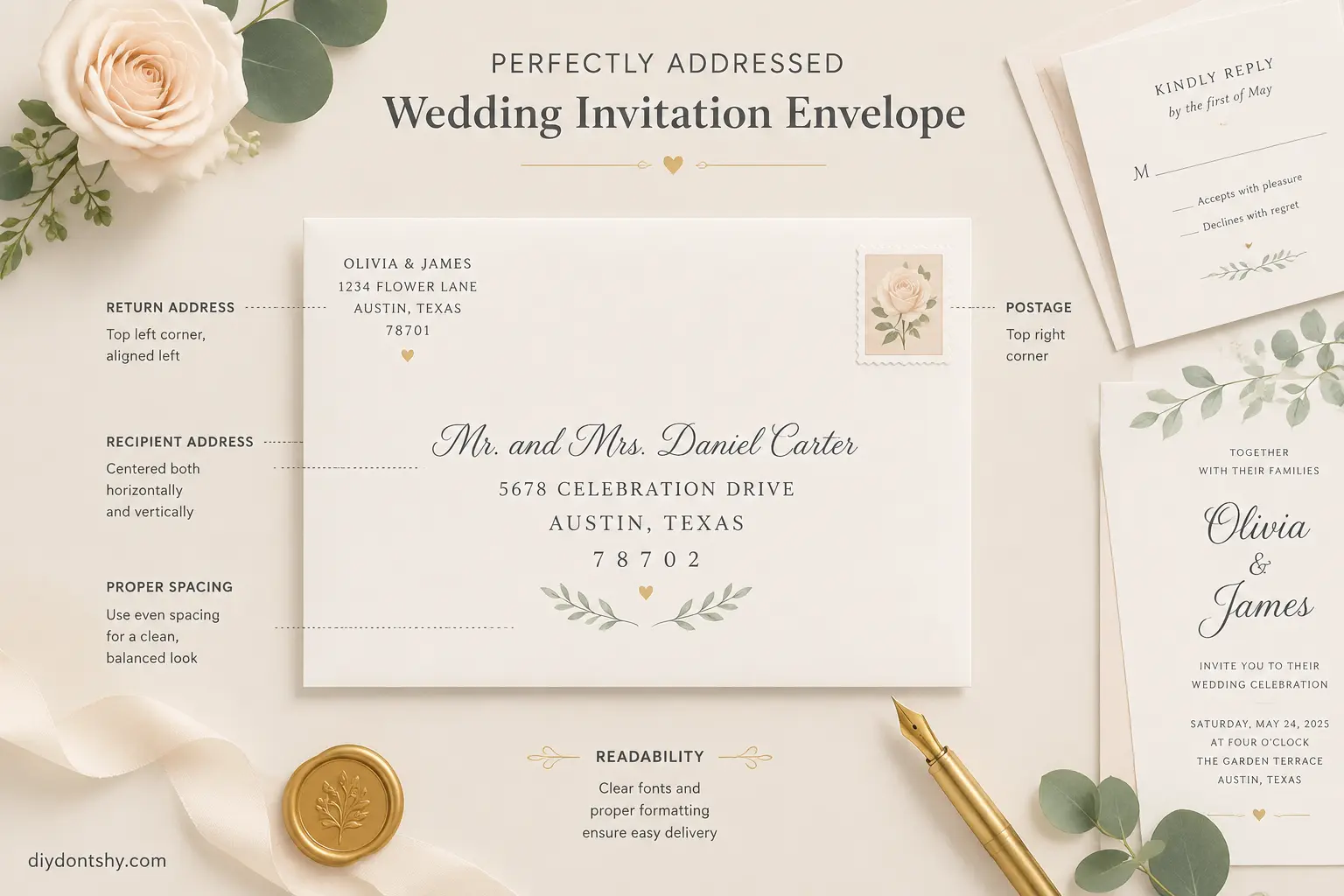
Proper Line Spacing and Alignment
Elegant envelope formatting relies heavily on spacing and balance. Even the most expensive stationery can look awkward if the lines feel crowded or uneven.
Most invitation designers recommend centered alignment with consistent spacing between each line. Names should sit slightly above the visual center of the envelope, creating a balanced appearance.
Example formatting:
Mr. and Mrs. Christopher Miller
1250 Willow Creek Lane
Charleston, South Carolina 29403
Keep each line centered with even spacing and avoid crowding the text near the edges of the envelope. A balanced layout improves readability and gives the invitation a refined, professional appearance.
Traditional etiquette typically spells out:
- Street
- Avenue
- Apartment
- State names
Modern etiquette often allows abbreviations for practicality. According to current wedding etiquette guides, both approaches are acceptable as long as the formatting remains consistent throughout the guest list.
For highly formal weddings, spelling everything out still creates the most polished appearance.
Return Address Placement
Traditional etiquette places the return address on the back flap of the envelope. Modern invitations frequently place it in the upper-left front corner for convenience.
Both styles are acceptable today. The choice usually depends on the overall aesthetic of the invitation suite.
What to Include on Inner and Outer Envelopes
Purpose of the Outer Envelope
The outer envelope functions as the mailing envelope. It includes:
- Full names
- Complete mailing address
- Return address
- Formal titles when appropriate
Its job is practical but also decorative. It protects the invitation suite while presenting the wedding’s visual style.
Purpose of the Inner Envelope
Inner envelopes are more traditional and slightly less common today, though they remain popular for luxury weddings. They usually include:
- Guest names only
- Children’s names
- Informal versions of names
Inner envelopes protect the invitation contents and clarify exactly who is invited. According to recent discussions among wedding planners and couples, many modern weddings now skip inner envelopes entirely unless the event is especially formal.
Handwritten vs Printed Envelope Styles
The Timeless Appeal of Handwritten Envelopes
Handwritten envelopes carry emotional warmth that printing sometimes lacks. They feel personal and intimate, almost like receiving a handwritten letter from a loved one.
Professional calligraphy remains highly desirable for luxury weddings because it instantly elevates the invitation suite. Calligraphy experts note that beautiful envelope lettering transforms the envelope itself into part of the guest experience.
That said, handwriting only works if it is legible and consistent. Messy handwriting can unintentionally make invitations look rushed rather than romantic.
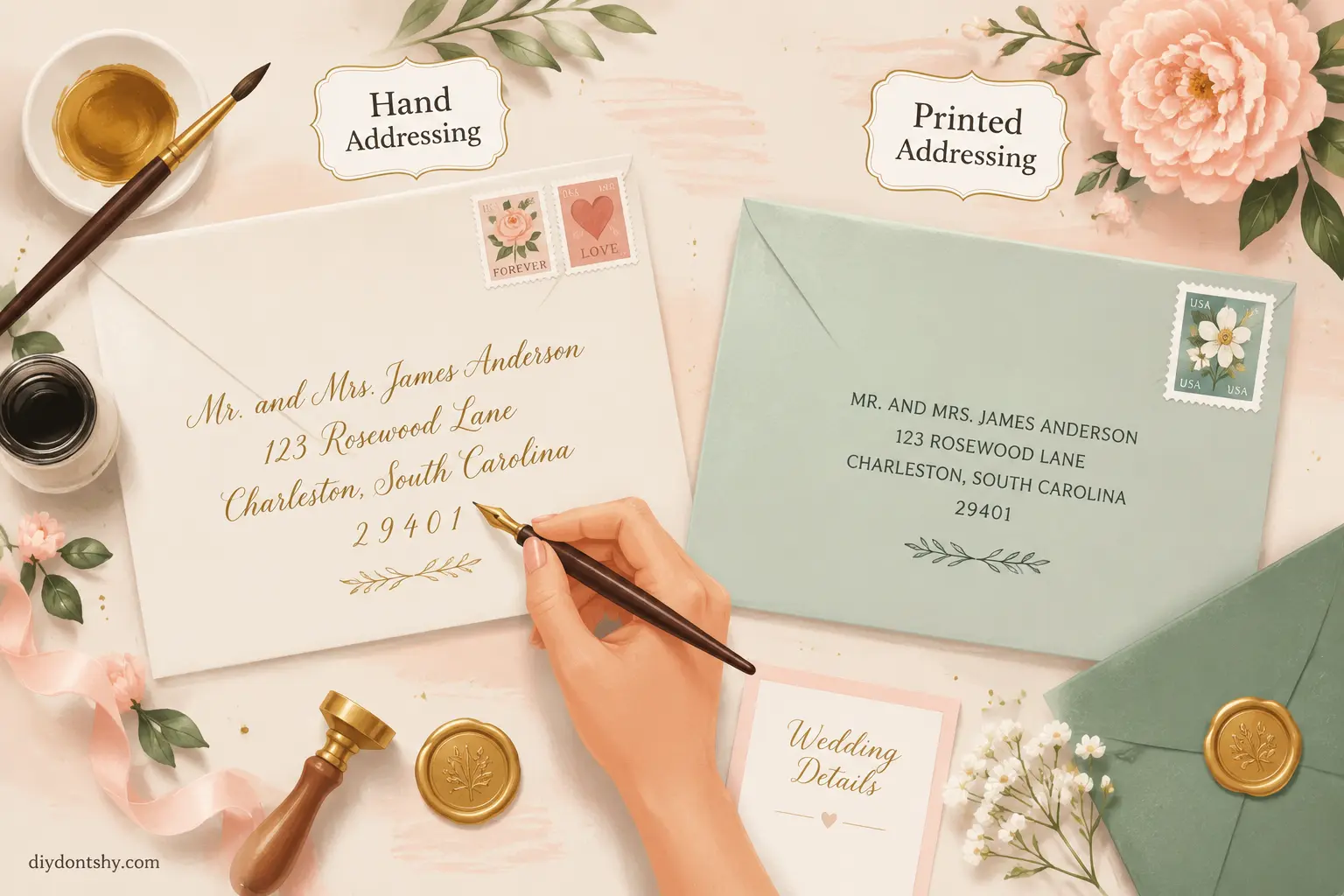
Modern Printing and Digital Calligraphy
Digital calligraphy has become one of the biggest wedding stationery trends in recent years. It combines the appearance of handwritten script with the consistency of professional printing.
Couples increasingly prefer digitally addressed envelopes because they are:
- Faster
- More affordable
- Easier to correct
- Highly polished
Reddit wedding discussions also show strong support for printed envelopes among modern couples, especially for large guest lists. Many guests barely notice whether addresses are handwritten or printed as long as they look elegant and readable.
The smartest approach is choosing the method that best fits your wedding style, timeline, and budget.
Common Addressing Mistakes That Can Look Unpolished
Misspelled Names and Incorrect Titles
Nothing undermines elegance faster than spelling errors. Always verify:
- Guest spellings
- Preferred names
- Titles
- Addresses
Double-checking your spreadsheet before printing saves embarrassment later.
Uneven Formatting and Poor Spacing
Crooked labels, inconsistent spacing, and crowded text immediately reduce the visual impact of an invitation suite. Even minimalist designs require careful alignment and proportional spacing.
A clean layout almost works like architecture. Every line supports the visual structure of the envelope.
Mixing Formal and Casual Styles
One of the most common mistakes is inconsistency. For example:
- Using “Doctor Samantha Reed” on one envelope
- Then “Jake and Ashley” on another
Mixing formal and casual styles makes the invitation suite feel disconnected. Decide on a tone early and apply it consistently across every envelope.
Read Also: How to Sign a Bridal Shower Card
Conclusion
Writing on a wedding invitation envelope may seem like a tiny detail in the middle of wedding planning chaos, but it quietly shapes the entire guest experience. The envelope acts like the front door to your celebration. It introduces the mood, style, and personality of the wedding before guests ever unfold the invitation inside.
The best wedding envelopes balance beauty with clarity. They respect etiquette without feeling robotic. They make guests feel seen and welcomed rather than processed through a mailing list. Whether you choose formal calligraphy, modern digital printing, minimalist layouts, or traditional inner envelopes, the goal remains the same: thoughtful presentation.
Wedding etiquette today is far more flexible than it once was. Couples can embrace tradition, modern simplicity, or a blend of both. The most elegant choice is usually the one that feels intentional and consistent with the wedding itself. A carefully addressed envelope tells guests something powerful without saying a word: this occasion matters, and so do they.
Continue Reading: What to Write on Thank You Cards for Wedding
FAQs
1. Should wedding invitation envelopes be handwritten?
Handwritten envelopes are traditional and elegant, but professionally printed or digitally calligraphed envelopes are now widely accepted, especially for modern weddings.
2. Is it necessary to use inner envelopes for wedding invitations?
No. Inner envelopes are mostly used for formal weddings today. Many modern couples skip them entirely to reduce cost and simplify the invitation suite.
3. How do you address unmarried couples on wedding invitations?
List both names on the envelope, either on the same line or separate lines. Modern etiquette treats unmarried couples with the same courtesy as married couples.
4. Can you abbreviate street names and states on wedding invitations?
Yes, especially for modern weddings. Formal weddings often spell everything out completely for a more polished appearance.
5. Are printed address labels considered inappropriate?
Not necessarily. While traditional etiquette favors handwriting or direct printing, modern weddings commonly use professionally printed addresses for convenience and consistency.

Kareem Sallam is an Egyptian special writer based in Australia, with a strong interest in practical ideas and creative content that focuses on everyday solutions. He writes clear, engaging articles designed to be easy to follow and useful for a wide range of readers.
His work centers on DIY projects, handmade ideas, simple crafts, and home based creativity. Kareem aims to deliver content that is practical, inspiring, and accessible, helping readers turn simple materials into smart and enjoyable projects.