How to Get Spray Paint to Dry Faster in Any Weather

Spray paint can completely change the look of furniture, metal, bikes, and other surfaces, but the waiting period can be frustrating when the finish stays tacky for hours. If fingerprints appear easily or dust keeps sticking to the surface, the problem is often the drying environment or application method rather than the paint itself.
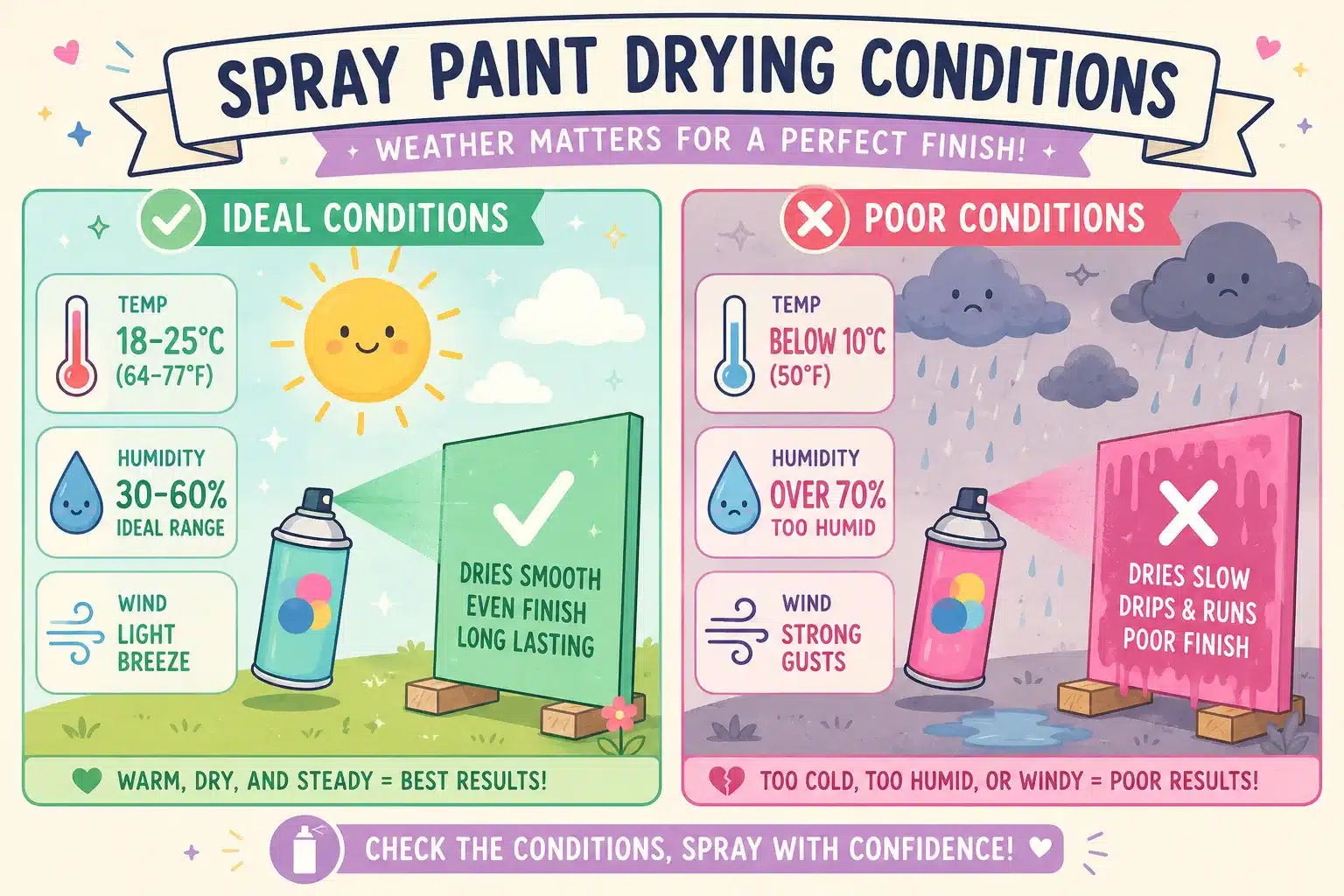
How quickly spray paint dries depends on several factors, especially airflow, temperature, humidity, coat thickness, and paint formulation. Many spray paints perform best around 65°F to 85°F (18°C to 29°C), while lower humidity generally supports faster, more consistent evaporation. Poor conditions can lead to prolonged tackiness, bubbling, wrinkling, or an uneven finish.
Heat alone is not a reliable solution. Spray paint needs solvents to evaporate gradually, while the coating also needs enough time to harden throughout its layers. Excessive heat can dry the outer surface too quickly and leave solvents trapped underneath. The goal is balanced evaporation, not simply the highest possible temperature.
This guide explains practical ways to speed up spray paint drying without sacrificing the finish. You will learn how to improve ventilation, manage temperature and humidity, apply thinner coats, avoid common drying mistakes, and recognize the difference between paint that is touch-dry and paint that is fully cured.
Contents
Understanding How Spray Paint Dries
Spray paint drying is more complex than most people assume. At first glance, it seems simple: spray the surface, wait a while, and you are done. But underneath that glossy layer, several chemical processes are happening simultaneously. Solvents evaporate, binders harden, and pigments lock together into a durable film. This process can happen quickly under ideal conditions or drag on endlessly when conditions are poor.
One of the biggest misunderstandings is confusing drying with curing. Paint can feel dry on the surface within minutes while remaining soft underneath for days. According to recent paint industry guidance, spray paint often becomes touch-dry in as little as 15 to 60 minutes, but full curing can take anywhere from 24 hours to several weeks depending on paint type and environmental conditions. That means a project may appear finished long before it is actually durable.
Think of spray paint like ice forming over a pond. The top layer hardens first while the deeper layers remain softer beneath. If you handle the object too soon, stack items on it, or expose it to moisture, the finish can become damaged even though it seemed dry moments earlier. This is why some people end up with fingerprints embedded permanently into their paint jobs.
Another major issue comes from poor evaporation conditions. Paint solvents need somewhere to go. If the surrounding air is humid, stagnant, or cold, those solvents linger instead of escaping efficiently. That slows the entire curing process dramatically. Reddit DIY communities regularly describe projects remaining tacky for a week or longer after painting in humid garages or cold winter weather.
Understanding these fundamentals changes how you approach drying. Instead of randomly adding heat or waiting endlessly, you can control the factors that genuinely matter.
Airflow Changes That Help Paint Cure More Quickly
Air movement is one of the simplest ways to improve spray paint drying because it helps carry evaporating solvents away from the freshly painted surface. A stagnant room allows solvent-rich air to remain around the project, slowing evaporation even when the temperature seems comfortable.
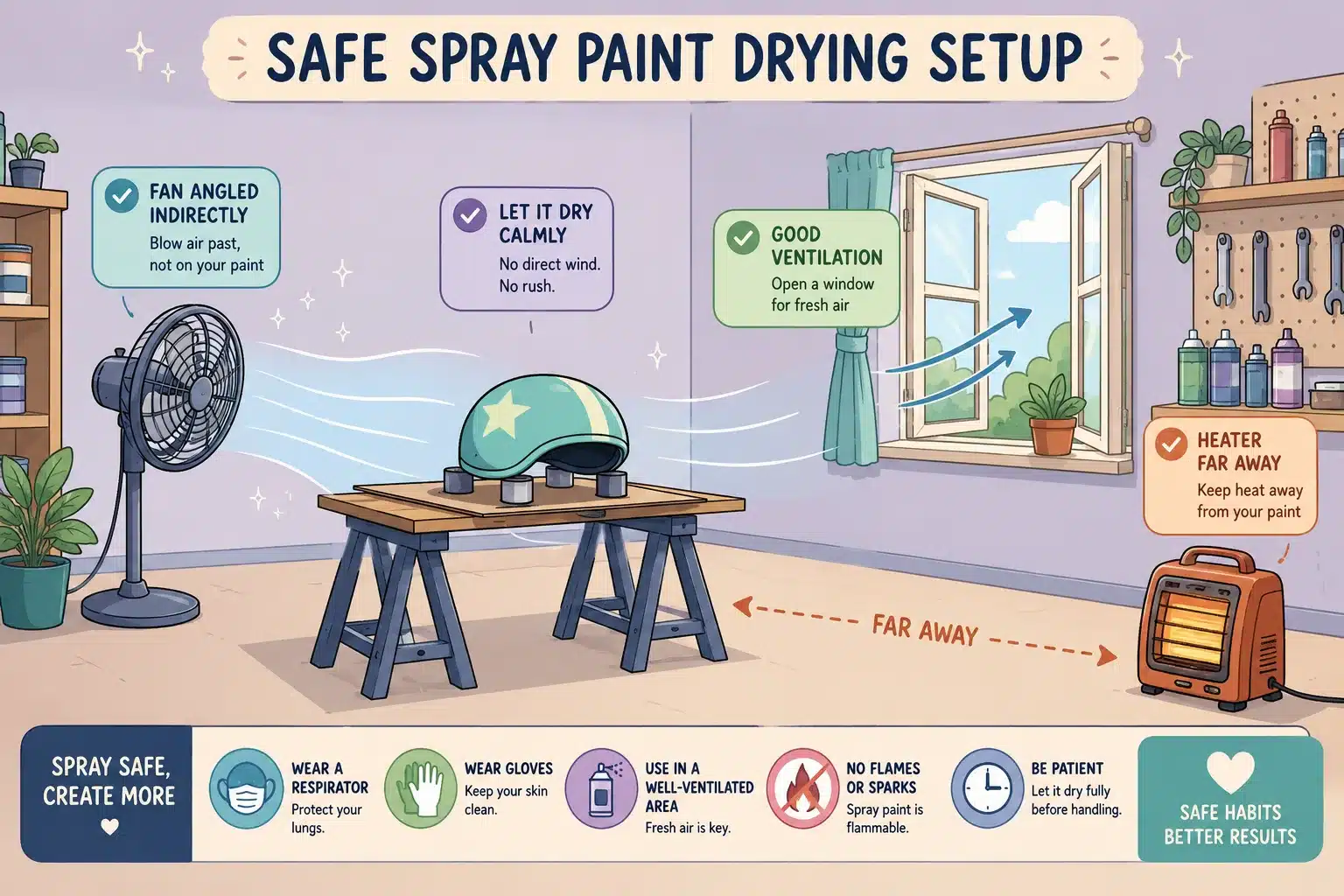
The best approach is steady, indirect airflow. Open windows or doors on opposite sides of a workspace when appropriate to create cross-ventilation. A fan positioned several feet away and aimed beside the project can circulate air without blowing directly across the wet coating.
Avoid placing a powerful fan inches from fresh paint. Strong direct airflow can disturb the wet surface, carry dust or debris into the finish, and cause the outer layer to dry faster than the material underneath. That uneven drying can contribute to wrinkles, bubbles, or persistent tackiness.
Common Fan Placement Mistakes
- Placing the fan too close to the painted object.
- Aiming high-speed airflow directly at wet paint.
- Creating airflow that blows dust, pollen, or debris toward the project.
- Using a sealed room where paint vapors cannot escape.
- Relying on intense airflow instead of applying thin, even coats.
For the most consistent results, combine gentle ventilation with suitable temperature and humidity rather than trying to force the paint dry with concentrated air. Proper circulation helps the coating dry more evenly while also reducing the chance of moisture and solvent buildup around the project.
Temperature and Humidity Conditions That Affect Drying
Temperature and humidity are the hidden forces controlling almost every spray paint result. You can use premium paint, perfect technique, and excellent ventilation, but if the environment is wrong, the finish may still fail. That is why professional painters constantly monitor weather conditions before spraying.
Most current spray paint guidance recommends temperatures between 65°F and 85°F (18°C–29°C) for ideal drying performance. Within that range, solvents evaporate at a controlled pace and coatings cure evenly. Below 50°F, drying slows dramatically and paint can remain tacky for days. Above 90°F, the opposite problem occurs: the surface dries too fast and traps solvents underneath.
Humidity is arguably even more important. High humidity means the surrounding air already contains a lot of moisture, making it harder for solvents and water-based compounds to evaporate. Experts generally recommend keeping humidity below 65%, with many professionals preferring 40–50% for optimal curing.
Painting outdoors on a muggy summer afternoon might feel warm enough, but the moisture content in the air can turn a quick-drying project into an all-day ordeal. Some sources note that humidity above 70% can double or even triple curing times.
Indoor vs Outdoor Drying Conditions
Indoor painting gives you more environmental control, but only if the space is ventilated correctly. Garages, basements, and workshops often trap humidity. Outdoor painting provides better airflow naturally, yet introduces wind, dust, pollen, and unpredictable weather.
Here is a quick comparison:
| Condition | Indoor Painting | Outdoor Painting |
|---|---|---|
| Temperature Control | Easier | Weather-dependent |
| Humidity Control | Possible with dehumidifier | Harder to manage |
| Dust Risk | Lower if cleaned | Higher |
| Airflow | Requires fans/windows | Usually natural |
| Rain Risk | Minimal | High |
A balanced environment matters more than extreme heat. Think of spray paint curing like cooking meat slowly and evenly. Too cold and it stays raw inside. Too hot and the outside burns before the center finishes.
Applying Thin Layers for Faster Results
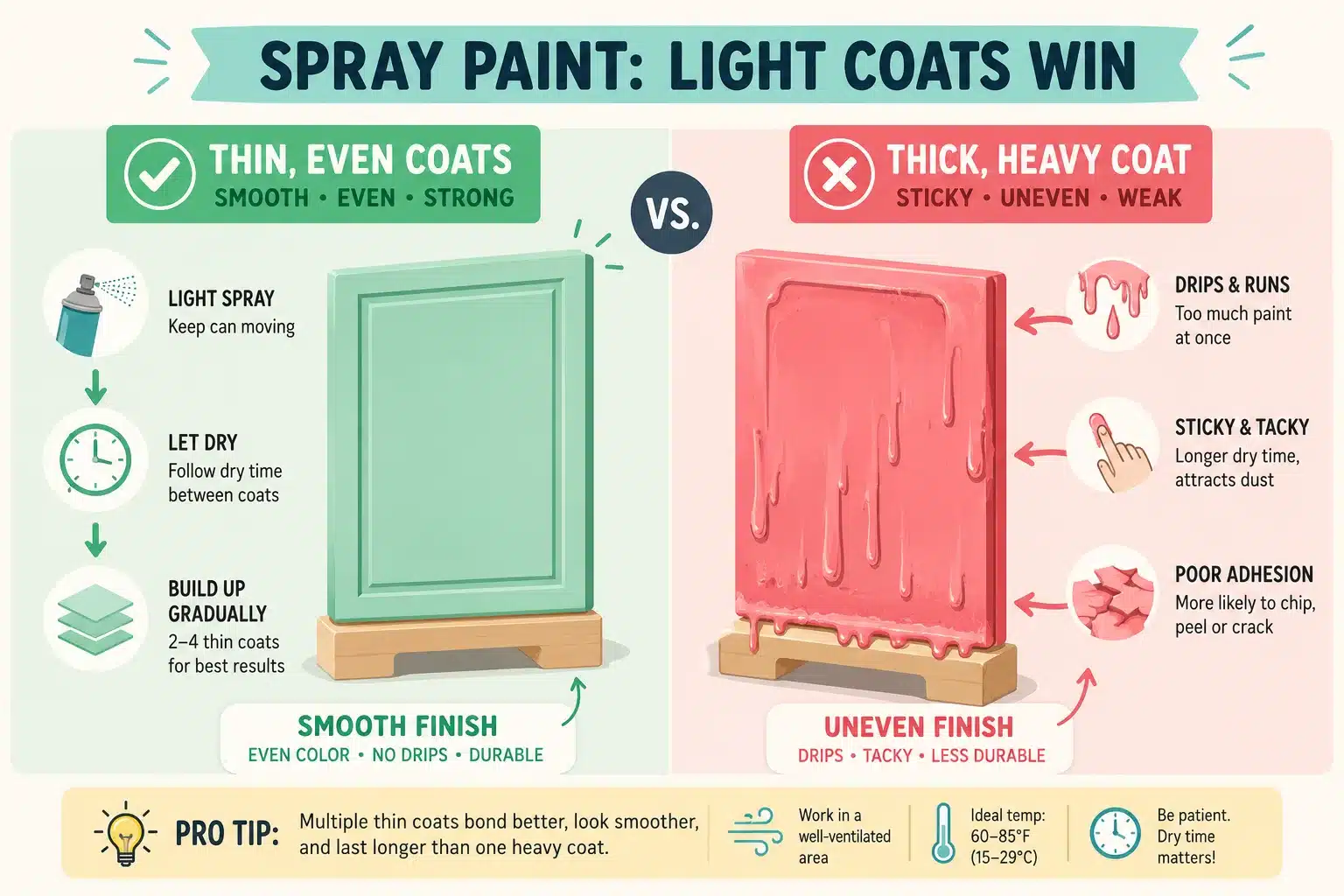
If there is one rule every spray painter should memorize, it is this: thin coats dry faster and look better. Heavy coats may seem faster because they cover more area immediately, but they almost always create longer drying times and more finishing problems.
Spray paint dries from the outside inward. Thin coats allow solvents to evaporate evenly across the entire layer. Heavy coats trap solvents underneath the top skin, slowing curing dramatically. Industry experts consistently warn that thick applications increase the risk of bubbling, sagging, wrinkling, and tackiness.
A good comparison is pouring pancake batter. A thin layer cooks quickly and evenly. A thick lump burns outside while remaining gooey inside. Spray paint behaves the same way. When painters overload a surface, the top hardens first while the deeper paint remains semi-liquid.
The best approach is using multiple light passes instead of one heavy spray. Hold the can roughly 10–12 inches away and move steadily across the surface. Recent guidance from paint specialists recommends smooth sweeping motions with overlapping passes rather than lingering in one area.
Best Spray Distance and Technique
Technique matters almost as much as environmental conditions. Here are the most effective habits for fast drying:
- Shake the can thoroughly before use
- Hold the can 10–12 inches away
- Start spraying slightly before the object
- Keep the can moving continuously
- Wait between thin coats instead of flooding the surface
Many beginners panic when the first coat looks semi-transparent. They immediately apply more paint, which creates the very problems they were trying to avoid. Patience produces smoother finishes and faster curing overall.
Professional painters often describe spray painting as building layers gradually, almost like icing a cake carefully instead of dumping frosting all at once. Thin coats provide control, consistency, and dramatically better durability.
Discover More: Easy Methods for How to Transfer Embroidery Pattern to Fabric
Why Heavy Coats Stay Sticky Longer
Heavy spray paint coats are one of the fastest ways to ruin a project. At first, they seem efficient. The color looks rich instantly, coverage appears complete, and you think you are saving time. But a few hours later the surface still feels rubbery, fingerprints appear easily, and dust sticks permanently. That sticky nightmare usually comes from trapped solvents.
When spray paint is applied too heavily, the outer layer dries first because it is exposed directly to air. Underneath, the deeper paint layers remain wet. Those trapped solvents struggle to evaporate through the hardened outer shell. This issue is sometimes called surface skinning, and it is one of the most common causes of prolonged tackiness.
The frustrating part is that thick paint may appear dry visually while remaining chemically unstable underneath. You touch it lightly and think everything is fine, but pressure leaves marks because the underlying layers are still soft.
Heavy coats also increase the chance of:
- Runs and drips
- Wrinkled textures
- Bubbling
- Orange peel texture
- Cracking during curing
Certain finishes make this even worse. Metallic paints, gloss paints, and enamel formulations tend to cure slower naturally. Some Reddit users reported metallic spray paints remaining fingerprint-sensitive for an entire week after overspraying.
The solution is usually not more heat. In fact, aggressive heating can harden the outer shell even faster, trapping solvents further. Better airflow and patience work much more effectively.
Signs you applied too much paint include glossy puddling, visible sagging, and paint that feels rubbery hours later. If that happens, resist the urge to keep touching the surface. Every fingerprint becomes a permanent texture mark while the paint remains soft.
Safe Ways to Use Fans or Heat Around Fresh Paint
People naturally reach for heaters, hair dryers, or heat guns when paint dries slowly. Sometimes that works. Sometimes it ruins the finish completely. The key is understanding how to use heat safely and moderately.
Related Reading: Certain finishes make
Gentle warmth can help accelerate evaporation. Recent paint guidance recommends slightly raising room temperatures when drying spray paint indoors. But extreme heat creates uneven curing and increases fire risks because spray paint vapors are highly flammable.
Space heaters can help if used correctly. Keep them several feet away from the project and avoid aiming concentrated heat directly at wet paint. Indirect room warming is safer and more effective than blasting hot air onto the surface itself.
Using Space Heaters Safely
Here are safe heating practices:
| Safe Practice | Why It Matters |
|---|---|
| Use indirect room heating | Prevents surface overheating |
| Keep heaters several feet away | Reduces fire hazards |
| Maintain ventilation | Prevents vapor buildup |
| Avoid open flames | Spray paint fumes are flammable |
Never place spray paint cans near heating elements. Reddit painters frequently warn against warming cans near exposed coils or flames because pressurized cans can become dangerous rapidly.
Can You Use a Hair Dryer or Heat Gun?
Hair dryers work better than heat guns because they produce gentler airflow. Even then, use the lowest heat setting and keep the dryer moving continuously. Holding hot air in one spot can soften paint unevenly and create bubbles.
Heat guns are usually too intense for fresh spray paint unless used by experienced professionals. They can scorch the surface while lower layers remain uncured.
Fans remain the safer and more reliable solution for most projects. Consistent airflow paired with moderate warmth creates balanced evaporation instead of forcing the surface to harden unnaturally fast.
Common Drying Mistakes That Ruin the Finish
Spray paint failures often come from surprisingly simple mistakes. The paint itself is not always the problem. Environmental conditions, impatience, and application habits usually cause more issues than brand quality.
One of the biggest mistakes is painting in cold or humid weather. Many DIY painters assume warm weather alone guarantees success, but humidity matters enormously. Paint experts warn that humidity above 70% can dramatically extend curing times and create cloudy or bubbling finishes.
Cold surfaces create another hidden problem. Even if the air feels warm enough, metal or plastic objects stored in garages can remain cold internally. Paint applied to cold surfaces cures unevenly and often stays tacky.
Touching paint too soon is another classic error. People test dryness repeatedly with fingertips, accidentally embedding oils and fingerprints into soft paint. Every touch interrupts the curing surface.
Other common mistakes include:
- Spraying too close to the object
- Applying second coats too early
- Ignoring manufacturer drying instructions
- Painting in dusty areas
- Using direct sunlight excessively
Direct sunlight deserves special mention. A little warmth helps, but intense sun can dry the surface too rapidly and create bubbling or cracks.
Another overlooked issue is impatience between coats. Thin layers need brief resting periods before recoating. Rushing this process overloads the surface and traps solvents beneath fresh paint.
Think of spray painting like building a brick wall. Each layer needs stability before the next goes on top. Stack everything too quickly and the entire structure weakens.
Knowing When Spray Paint Is Fully Cured
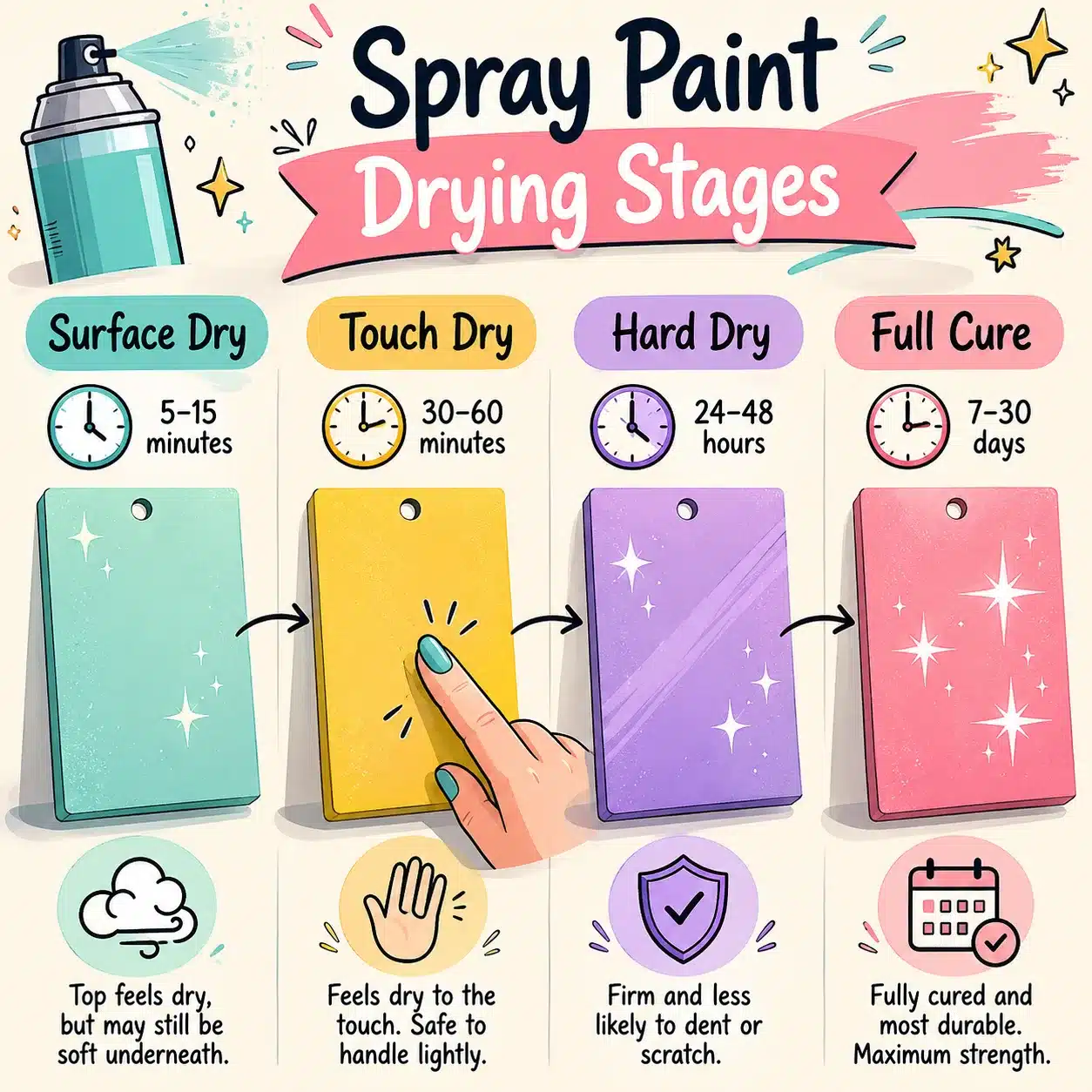
A surface that feels dry does not necessarily have the strength of fully cured paint. Spray paint typically passes through several stages as solvents leave the coating and the binder continues to harden. Touch-dry paint may tolerate light contact, while harder curing is required before the surface can withstand handling, pressure, moisture, or regular use.
Drying Stages to Understand
- Touch dry: The surface no longer feels wet during very light contact, but it may still be soft underneath.
- Hard dry: The coating has become firmer and is less likely to mark under normal handling.
- Fully cured: The paint has reached much greater hardness and durability according to the product’s formulation and manufacturer guidance.
Do not judge curing by appearance alone. A glossy surface can look finished while deeper layers are still releasing solvents. Heavy coats, low temperatures, high humidity, and slow-curing formulations can extend the time required for the coating to become durable.
How to Check the Finish
- Check the manufacturer’s stated recoat and curing times.
- Look for a firm, consistent surface without rubbery areas.
- Test pressure only in an inconspicuous location when necessary.
- Avoid applying tape, stacking objects, or subjecting the finish to heavy use before the recommended cure time.
- Allow additional curing time when conditions are cold, humid, or poorly ventilated.
If the surface still feels soft, rubbery, or unusually sensitive to pressure, give it more time rather than adding heat or repeatedly touching it. Allowing the coating to cure naturally is usually easier than repairing fingerprints, impressions, or other damage caused by handling it too soon.
Conclusion
Getting spray paint to dry faster is less about forcing the process and more about creating the right conditions for proper curing. Balanced airflow, moderate temperatures, low humidity, and thin coats all work together like ingredients in a recipe. Remove one element and the final result suffers.
The biggest lesson most DIY painters learn eventually is that heavy coats and impatience create nearly every major spray paint problem. Thin applications dry faster, cure more evenly, and produce smoother finishes with fewer defects. Good ventilation matters enormously because paint solvents need continuous airflow to escape properly.
Humidity also deserves far more attention than most beginners realize. Even warm weather can ruin a project if the air is saturated with moisture. A well-ventilated indoor setup with moderate warmth often produces better results than spraying outside on a humid day.
Safe drying practices matter too. Gentle airflow and indirect warmth outperform aggressive heating almost every time. Fans generally help more than excessive heat guns or intense sunlight.
When you understand how spray paint actually cures, the process becomes much less frustrating. Instead of guessing why paint remains sticky, you can control the variables directly and achieve smooth, durable finishes consistently.
Recommended Post: 51+ What to Write in a Sympathy Card Loss of Brother
FAQs
1. What is the fastest way to dry spray paint?
The fastest safe method is improving airflow with fans and ventilation while maintaining temperatures between 65°F and 85°F and keeping humidity low. Thin coats also dry much faster than heavy coats.
2. Can I use a fan to dry spray paint faster?
Yes, but indirect airflow works best. Pointing a fan directly at wet paint can push dust into the surface and create uneven drying.
3. Why is my spray paint still sticky after 24 hours?
Sticky paint usually comes from heavy coats, high humidity, poor ventilation, or cold temperatures. Trapped solvents underneath the surface layer can delay curing dramatically.
4. Does heat make spray paint dry faster?
Moderate warmth helps, but excessive heat can ruin the finish by causing bubbling or trapping solvents under the surface. Gentle room heating is safer than intense direct heat.
5. How long does spray paint take to fully cure?
Depending on paint type and environmental conditions, full curing can take anywhere from 24 hours to several weeks. Enamel and metallic paints often require longer curing periods.

Kareem Sallam is an Egyptian special writer based in Australia, with a strong interest in practical ideas and creative content that focuses on everyday solutions. He writes clear, engaging articles designed to be easy to follow and useful for a wide range of readers.
His work centers on DIY projects, handmade ideas, simple crafts, and home based creativity. Kareem aims to deliver content that is practical, inspiring, and accessible, helping readers turn simple materials into smart and enjoyable projects.