What to Write in a Sympathy Card Loss of Brother

Losing a brother is a profound loss that can affect every part of a family’s life. A brother may have been a lifelong friend, a source of protection, a trusted confidant, or simply someone whose presence made childhood and family memories special. When someone you care about is grieving that loss, writing a sympathy card can feel surprisingly difficult because you want your words to offer comfort without sounding forced or inadequate.
The good news is that a sympathy message does not need to be perfect. During grief, people are more likely to value genuine kindness, acknowledgment, and emotional presence than carefully polished language. A few honest sentences can mean a great deal when they remind someone that their loss has been seen and that they do not have to face it alone.
The most effective message usually does three things: acknowledges the loss, expresses sincere care, and offers appropriate support. If you knew the brother personally, you can also share a brief, meaningful memory. If you never met him, focus on the person who is grieving rather than trying to describe someone you did not know.
This guide shares practical advice and sympathy messages for different relationships and situations, including what to write when you knew the brother, what to say when you never met him, how to share a memory respectfully, and which common phrases are better avoided. The goal is simple: help you write something warm, personal, and appropriate for a difficult moment.
Contents
Why Writing a Sympathy Card Feels So Difficult

Writing a sympathy card for someone who lost a brother is emotionally complicated because grief itself is complicated. Most people are terrified of sounding awkward, insensitive, or robotic. That fear becomes even stronger when the loss is recent and emotions are raw. You may wonder whether your words will actually help or whether silence would somehow be safer. Ironically, grief experts and condolence etiquette resources consistently point out that saying something sincere is almost always better than saying nothing at all.
Part of the challenge comes from the unique role brothers often play in life. A sibling relationship is layered with years of shared memories, private jokes, arguments, traditions, and family experiences. When someone loses a brother, they are not only grieving a person. They are grieving a shared history that cannot be recreated. That emotional weight makes many people feel pressure to write the “perfect” message. The good news is that perfection is not required. Compassion is.
A heartfelt sympathy card does not need dramatic language or poetic sentences. In fact, the most comforting messages are often the most natural sounding ones. A simple line like, “I’m so sorry for your loss. I’m thinking of you and your family,” can genuinely comfort someone because it feels human instead of rehearsed. Many grieving people later remember kindness and presence far more than specific wording.
Another reason sympathy cards feel difficult is because grief makes people uncomfortable in general. Society often encourages fixing problems quickly, but loss cannot be fixed. A sympathy card is not about solving grief. It is about standing beside someone emotionally during one of the hardest moments of their life. Once you understand that, writing becomes easier and more sincere.
Finding the Right Tone for a Sympathy Card
The right tone for a sympathy card is usually warm, sincere, respectful, and uncomplicated. Grief is intensely personal, so a message that sounds overly formal can create distance, while an overly casual message may feel as though the loss is being minimized. Aim for language that sounds like genuine support from one person to another.
A useful test is to imagine that you are speaking to the grieving person face-to-face. You would probably not give them a long speech or try to explain why the loss happened. You might simply say, “I’m so sorry. I’m thinking of you and your family.” That kind of straightforward compassion often feels more meaningful than elaborate condolences.
You also do not need to offer an explanation for grief or tell someone how they should feel. Avoid trying to make the situation seem positive or suggesting that they should move on quickly. Your role is not to solve their pain. It is to acknowledge it and let them know that you care.
Match the Message to Your Relationship
Your relationship with the grieving person should guide how personal your message becomes. A close friend may appreciate a more emotional note, while a coworker, neighbor, or acquaintance may prefer a simple expression of sympathy. Both approaches can be thoughtful when the wording feels natural.
- For a close friend: Share your affection, offer specific support, and let them know you are available.
- For a coworker: Keep the message respectful and mention that you are thinking of them and their family.
- For an acquaintance: A short, sincere acknowledgment of the loss is enough.
- If you knew the brother: Consider adding one brief memory or quality that made him memorable.
Humor should generally be avoided unless you share an exceptionally close relationship with the grieving person and are certain it will be welcomed. Even then, keep it gentle and connected to a loving memory rather than using humor to distract from the loss. Above all, let the message feel supportive rather than performative.
Short Messages That Feel Genuine and Personal
Sometimes people think short sympathy messages sound lazy or impersonal. That is not true at all. In many situations, brief messages can feel more comforting because they sound honest and direct. Long emotional paragraphs can occasionally overwhelm someone who is already emotionally exhausted.
Here are some short sympathy messages that feel genuine:
- I’m so sorry for the loss of your brother.
- Thinking of you and your family during this painful time.
- Your brother will be remembered with love.
- Sending you strength, comfort, and love.
- Holding you close in my thoughts.
- Wishing you peace in the days ahead.
- I’m here if you need anything at all.
- My heart goes out to you.
Recent condolence resources continue to recommend short and sincere wording because grieving people often appreciate warmth without emotional overload.
The key difference between a cold short message and a comforting short message is personalization. Adding the brother’s name, mentioning the family, or referencing support makes the note feel real instead of copied from the internet.
Short messages work especially well in situations where:
- You did not know the brother personally
- You are signing a group card
- You are writing to a coworker
- You worry about becoming overly emotional
- You want the handwritten note to feel simple and calm
A sympathy card does not need to sound literary. Think of it like offering someone a warm blanket during a storm. The purpose is comfort, not performance. Even a few heartfelt lines can stay with someone for years because kindness becomes unforgettable during grief.
Comforting Words When You Knew the Brother Personally
If you personally knew the brother who passed away, your words can become especially meaningful because you are helping preserve his memory. One of the most comforting things you can do is remind grieving family members that their loved one mattered to other people too.
Sharing a small memory is often more powerful than writing a long emotional speech. For example, instead of saying, “He was a wonderful person,” you could write, “I’ll always remember how your brother could make everyone laugh within minutes of entering a room.” Specific details feel alive. They remind grieving people that their brother left an impact on the world.
Condolence experts frequently recommend including one personal memory because it transforms the sympathy card from generic support into meaningful remembrance.
The memory does not need to be dramatic. Sometimes the smallest details feel the most comforting:
- His kindness
- His sense of humor
- His loyalty
- His generosity
- His love for family
- A shared conversation
- A funny habit
- A meaningful moment
Here is an example:
“I was heartbroken to hear about Michael. I’ll never forget how welcoming he always was whenever I visited. He had a way of making people feel comfortable instantly, and that kindness stayed with me. I’m keeping you and your family in my thoughts.”
Notice how the message stays focused and gentle. It honors the brother without becoming excessively long. That balance matters because sympathy cards should comfort, not emotionally overwhelm.
Another important point is honesty. Do not exaggerate your relationship with the brother if you barely knew him. Authenticity always feels warmer than forced emotion. Even saying, “I didn’t know him deeply, but every interaction I had with him was kind,” can feel incredibly sincere.
What to Say If You Never Met Him
Many people panic when writing a sympathy card for someone whose brother they never met. They assume they have nothing meaningful to say. Actually, you do not need personal knowledge of the deceased to offer real comfort. Your message should simply focus on supporting the grieving person.
One of the best approaches is acknowledging the loss directly while expressing care. Avoid pretending familiarity with the brother because it can sound unnatural. Instead, center your words around compassion and support.
For example:
- I’m deeply sorry for your loss.
- Thinking of you and your family during this heartbreaking time.
- I cannot imagine how difficult this must be for you.
- Wishing you comfort and strength in the days ahead.
Online grief discussions repeatedly show that grieving people appreciate sincere acknowledgment more than elaborate wording.
In fact, many people remember who reached out, not whether the message sounded profound.
If you are close to the grieving person, you can also offer practical support:
- Please let me know if you need anything.
- I’m here whenever you want to talk.
- You don’t have to go through this alone.
That said, only offer help you genuinely intend to provide. Empty offers sometimes feel performative. A smaller but real offer often means more. Something like, “I’ll check in with you next week,” can feel more authentic than vague promises.
One important thing to avoid is making the card about your discomfort. Do not write things like:
- I never know what to say in these situations.
- This is awkward to write.
- I hope this card helps somehow.
Those statements unintentionally shift emotional attention toward you instead of the grieving person. Keep the focus gentle, compassionate, and centered on their loss.

Sharing Memories Without Making the Message Too Long
A common mistake in sympathy cards is turning the message into a full life story. While memories are meaningful, overly long messages can become emotionally exhausting for grieving readers. The best sympathy memories are usually brief, vivid, and connected to emotion.
Think of a sympathy card memory like lighting a candle instead of setting off fireworks. Quiet warmth matters more than dramatic storytelling.
A strong memory message often follows this structure:
- Mention the brother by name
- Share one meaningful detail
- Connect it to comfort or gratitude
For example:
“I’ll always remember how Jason stayed late after everyone else left just to help clean up after the fundraiser. That kind of generosity says everything about the person he was.”
Short memories work because they feel specific and believable. Generic praise like “He was amazing” feels emotionally flat compared to a real image or moment.
Recent sympathy etiquette advice also recommends avoiding stories that unintentionally redirect attention toward yourself.
If the entire message becomes about your own emotions or experiences, the grieving person may feel emotionally sidelined. Keep the memory connected to honoring the brother or comforting the family.
You should also avoid overly cheerful storytelling that ignores grief entirely. Sympathy cards are not celebration speeches. They can include warmth and love, but they should still acknowledge sadness respectfully.
The ideal sympathy memory leaves the grieving person feeling:
- Seen
- Supported
- Understood
- Reminded that their brother mattered
That emotional effect is far more important than the length of the message.
Phrases That Often Sound Unintentionally Cold
Sometimes people accidentally write phrases that sound dismissive even when they mean well. Grief is sensitive, and certain common expressions can feel emotionally distant or frustrating.
Here are some
Phrases That Can Sound Unintentionally Cold
Even when a sympathy message is written with good intentions, certain phrases can make grief feel minimized or misunderstood. The safest approach is to avoid explaining the loss, predicting how the person will feel, or suggesting that they should quickly find a positive side to what happened.
Common Phrases to Avoid
- Everything happens for a reason.
- He is in a better place.
- At least he lived a long life.
- You need to stay strong.
- I know exactly how you feel.
- Time heals all wounds.
These statements may be comforting to some people in specific circumstances, but they can also feel dismissive because they place an interpretation on someone else’s grief. You cannot know exactly what another person is experiencing, and you do not need to provide an explanation for their pain.
Replace Vague Offers With Specific Support
The familiar phrase “Let me know if you need anything” is kind, but a grieving person may not have the energy to decide what to ask for or reach out first. When appropriate, offering something specific can make your support easier to accept.
- I’ll bring dinner by this weekend.
- I’ll check in with you next week.
- I’m available if you want company.
- I can help with errands if you need me.
Only make offers you genuinely intend to keep. A small promise that you follow through on can be more meaningful than a broad offer that never becomes action. Likewise, avoid turning the sympathy card into a story about your own experiences with loss. Your personal experience may help you connect later, but the card should remain focused on honoring the brother and comforting the grieving person.
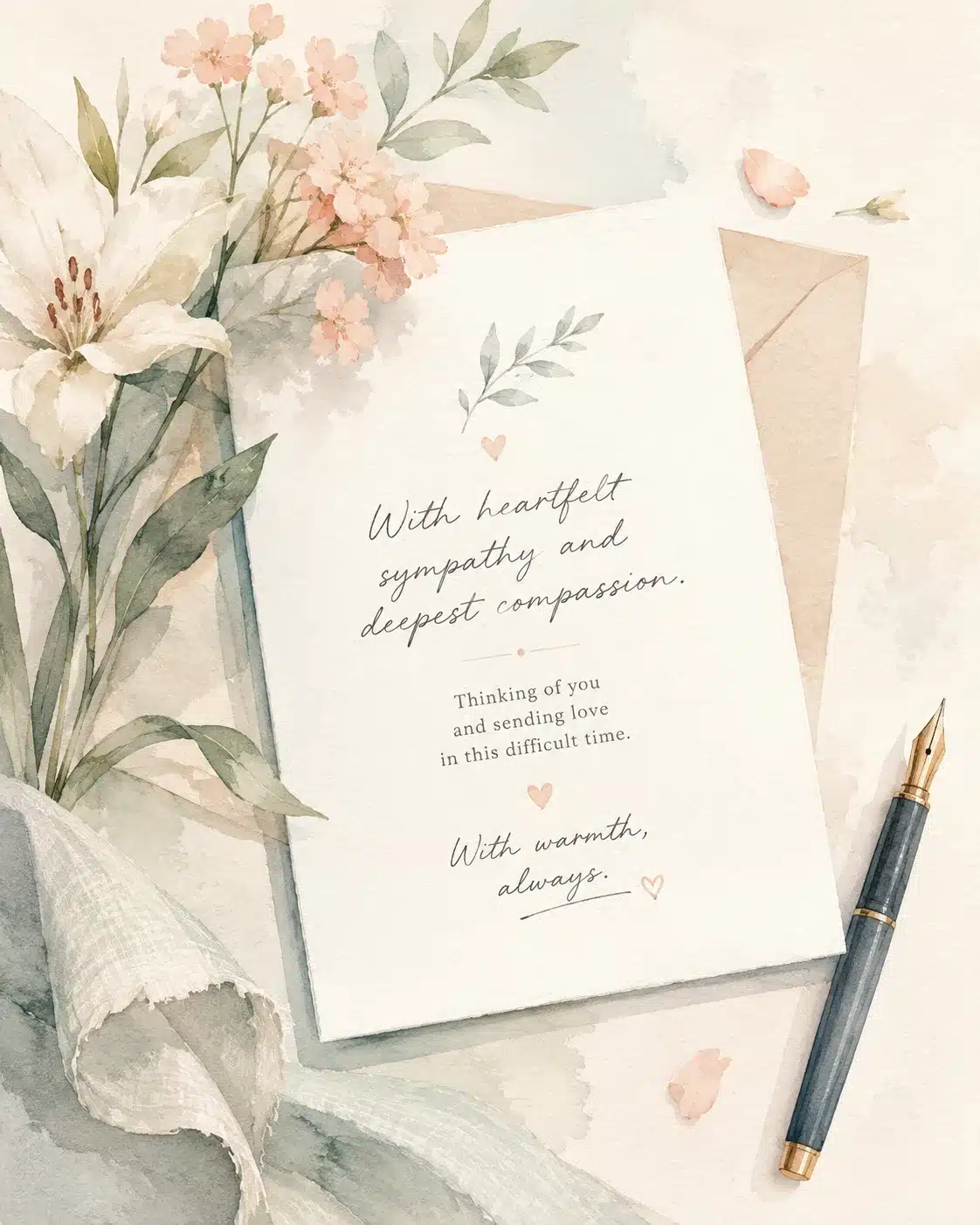
Closing a Sympathy Card With Warmth and Respect
The closing of a sympathy card may seem small, but it shapes the emotional tone of the entire message. A warm closing leaves the recipient feeling supported instead of abruptly emotionally dropped.
Good sympathy card closings include:
- With deepest sympathy
- Thinking of you always
- With love and support
- Keeping you in my thoughts
- Sending heartfelt condolences
- With caring thoughts
- With love
- Warmly and sincerely
The closing should match your relationship with the person. Close friends or family members can use more emotional closings like “With love.” Professional relationships may sound more natural with “With deepest sympathy.”
One overlooked detail is handwriting. Even in a digital world, handwritten sympathy cards often feel especially personal because they show time and effort. Many grieving people keep sympathy cards for years because they become reminders of support during difficult periods.
Before sending the card, reread it once slowly. Ask yourself:
- Does this sound human?
- Does it feel sincere?
- Is the focus on comforting the grieving person?
- Would this feel warm if I received it during grief?
If the answer is yes, your message is probably exactly what it needs to be.
Recent discussions around condolence etiquette consistently reinforce one important idea: sincerity matters more than perfect wording.
People remember kindness. They remember presence. They remember the people who cared enough to reach out.
Conclusion
Writing a sympathy card for the loss of a brother is never easy because grief itself is never easy. Many people worry endlessly about choosing the perfect words, but comforting someone rarely depends on perfection. It depends on sincerity, warmth, and emotional honesty.
Whether your message is long or short, religious or non-religious, deeply personal or gently supportive, the most important thing is making the grieving person feel less alone. A thoughtful sympathy card acknowledges pain while quietly reminding someone that love and support still surround them.
You do not need poetic language to comfort someone. You do not need flawless wording. Sometimes the most meaningful message is simply: “I’m so sorry. I’m thinking of you.”
Those small human moments often matter more than we realize.
Read Also: How to Decorate for Valentine’s Day
FAQs
What is the best short sympathy message for loss of a brother?
A simple message like, “I’m so sorry for the loss of your brother. Thinking of you and your family during this difficult time,” works beautifully because it feels sincere and compassionate.
Should I mention the brother by name in the sympathy card?
Yes, if possible. Mentioning the brother by name makes the message feel more personal and acknowledges him as an individual rather than referring to him generically.
What if I never met the person’s brother?
Focus on supporting the grieving person instead of pretending familiarity. A message like, “I’m deeply sorry for your loss and thinking of you during this painful time,” is thoughtful and appropriate.
Are religious sympathy messages always appropriate?
No. Religious messages should only be used if you know the grieving person is comfortable with faith-based wording. Otherwise, neutral compassionate language is safer.
What should I avoid writing in a sympathy card?
Avoid clichés or phrases that minimize grief, such as “Everything happens for a reason” or “I know exactly how you feel.” Gentle, sincere support is usually the best approach.

Ahmed Elhor is an Egyptian SEO specialist, pharmacist, and copywriter based in Canada. He combines strong research skills with search focused writing to create clear, helpful content that answers real questions and ranks effectively in search engines.
With a passion for practical DIY ideas, homemade solutions, and creative projects, Ahmed focuses on producing easy to follow guides that are simple, affordable, and useful for everyday life. His work blends creativity with structure, helping readers turn basic materials into meaningful results.