What Is a Serger Sewing Machine Used For in Everyday Sewing Projects
Sewing can feel a little like cooking. A regular sewing machine is your everyday kitchen stove; reliable, versatile, and capable of handling most tasks. A serger sewing machine, on the other hand, is like a high-powered professional kitchen appliance designed to make certain jobs dramatically faster, cleaner, and more polished. If you have ever looked inside a store-bought T-shirt and wondered why the seams look so neat and stretchy, there is a very good chance a serger was involved.
The popularity of home sewing and garment making has surged in recent years. Industry reports estimate the global sewing machine market exceeded USD 7.4 billion in 2025, fueled by growing interest in DIY fashion, clothing repairs, home tailoring, and beginner-friendly crafting. As more people begin sewing garments, many eventually ask the same question: Do I actually need a serger?
The answer depends on what you sew, how often you sew, and how polished you want your projects to look. A serger is not mandatory, but it can completely transform the sewing experience, especially for stretchy fabrics and professional seam finishes. This guide breaks down exactly what a serger does, how it differs from a standard sewing machine, and whether it deserves a permanent spot in your sewing room.
Contents
Understanding What a Serger Sewing Machine Actually Does
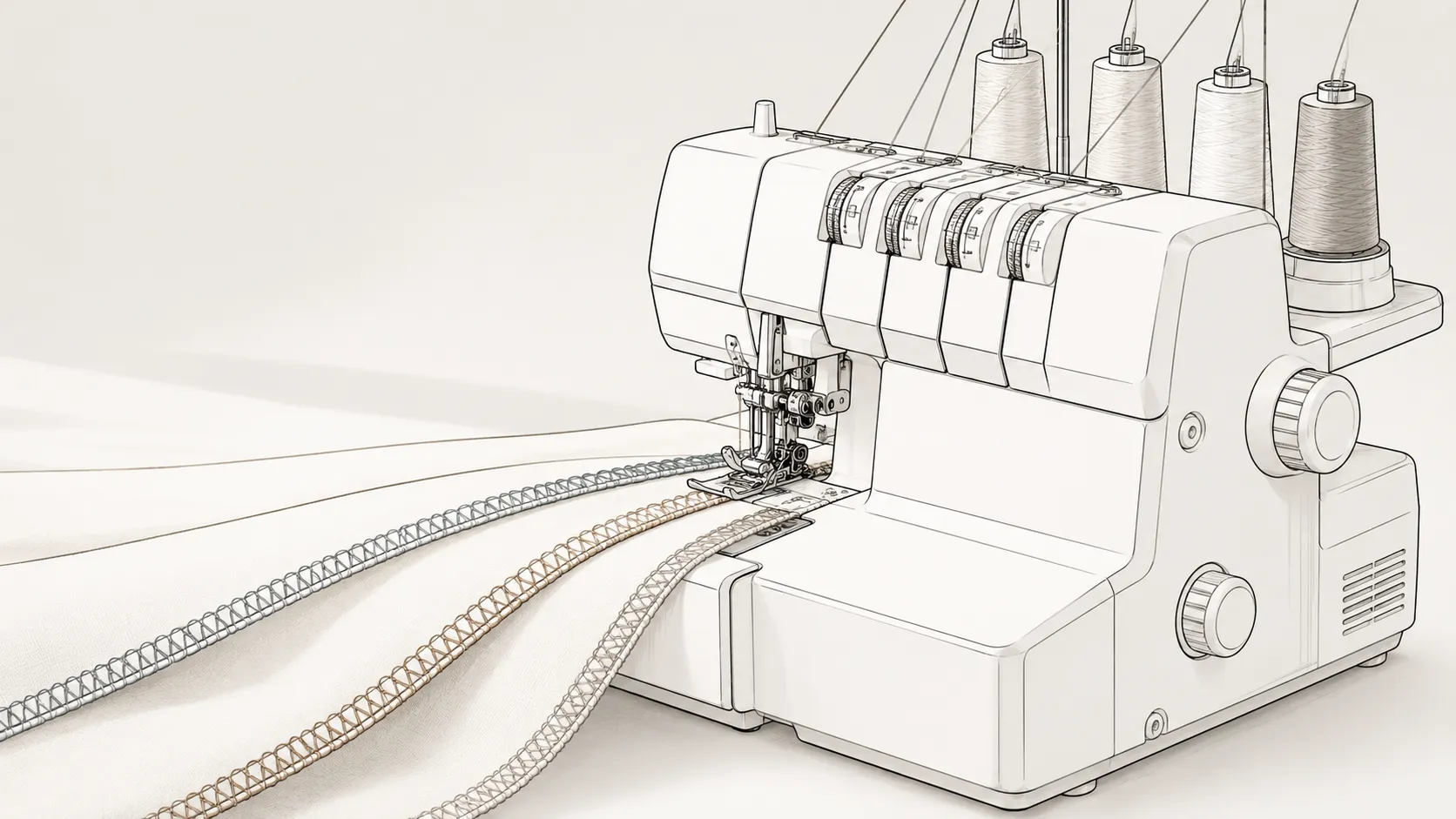
A serger sewing machine is designed to perform three jobs at the same time: stitch fabric together, trim excess seam allowance, and wrap thread around the fabric edge to stop fraying. That combination is what gives professionally made clothing its clean interior appearance. Instead of sewing first and then finishing raw edges separately, a serger completes everything in one smooth motion.
Unlike traditional sewing machines that use a bobbin underneath the fabric, sergers use multiple thread cones and looping mechanisms called loopers. Most home sergers operate with three, four, or even five threads at once. This creates the distinctive interlocking stitch pattern commonly seen inside T-shirts, leggings, hoodies, athletic wear, and stretchy garments. The result is durable, flexible seams that can stretch with the fabric instead of snapping under pressure.
One reason sewists love sergers is speed. Many sergers can sew over 1,000 stitches per minute, making them dramatically faster than many regular sewing machines. That speed becomes especially useful when working on large projects or sewing garments in batches. According to recent sewing market reports, increased demand for automated and beginner-friendly machines has pushed sewing technology forward rapidly in the past few years.
A serger also creates a professional appearance that is difficult to duplicate manually. While a zigzag stitch on a regular machine can imitate some overlock functions, the finish is usually bulkier and less durable. Sergers create tight, compact seams that look commercially manufactured. For anyone interested in garment construction, that difference can feel incredibly satisfying.
Why Sergers Are Called Overlock Machines
The terms serger and overlock machine are often used interchangeably. The word “overlock” describes the way the machine loops thread over the raw edge of fabric while trimming and enclosing it. Industrial garment factories rely heavily on overlock stitching because it speeds up production and strengthens seams simultaneously.
The Basic Mechanism Behind Serger Stitching
A serger uses knives to trim fabric edges while loopers wrap thread around those edges in real time. This synchronized action creates seams that resist unraveling while remaining flexible enough for movement and stretch fabrics.
How a Serger Differs From a Regular Sewing Machine
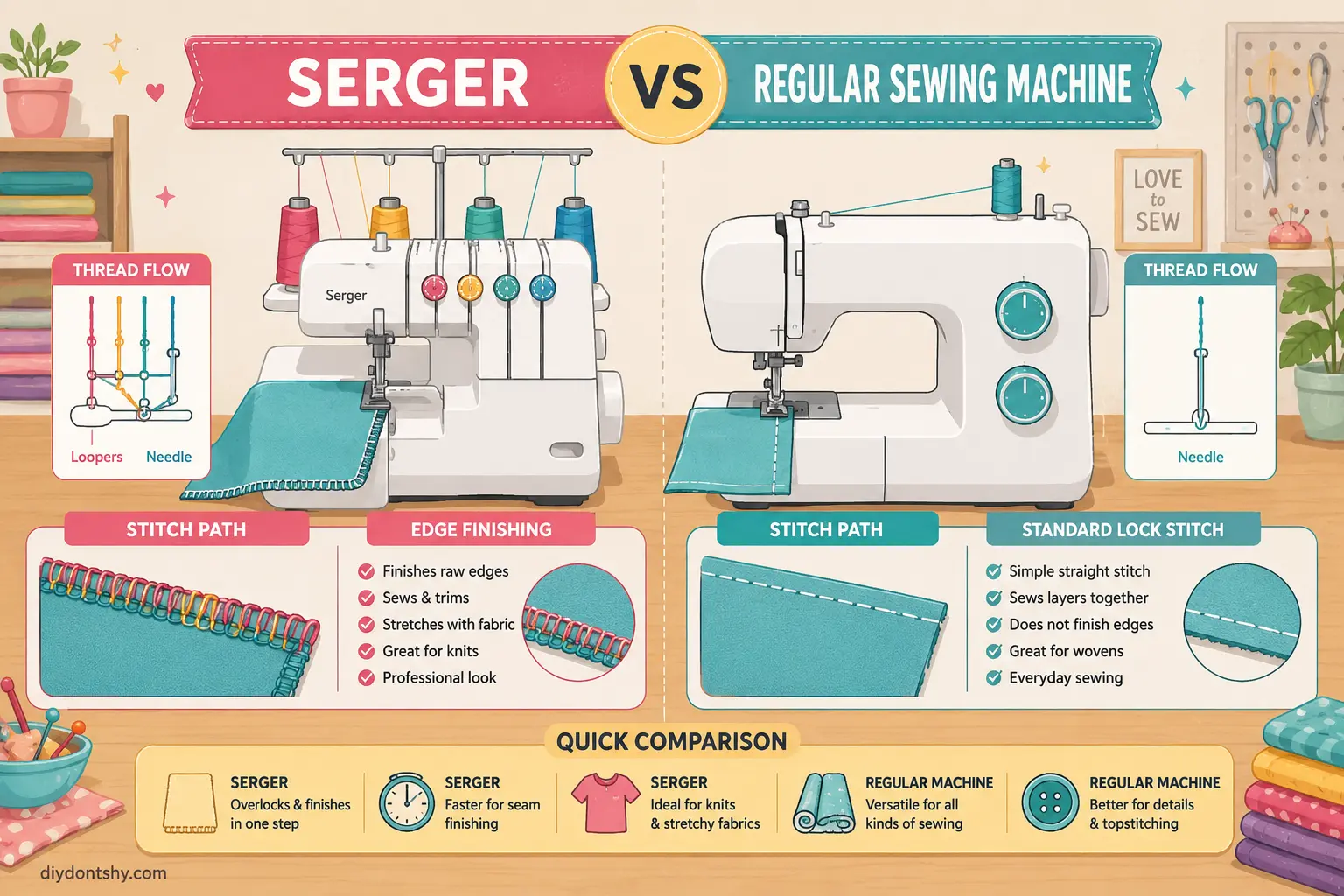
At first glance, a serger may look intimidating compared to a regular sewing machine. There are more thread cones, more moving parts, and more threading paths. But once you understand its purpose, the differences become much clearer. A standard sewing machine is built for versatility. It handles straight stitches, zigzag stitches, buttonholes, decorative embroidery, quilting, and topstitching. A serger is more specialized. Its main mission is fast seam construction and edge finishing.
One of the biggest differences is how stitches are formed. A regular machine typically uses one top thread and one bobbin thread. A serger often uses three or four threads at once without a bobbin. This produces stretchy, durable seams ideal for knit fabrics. If you have ever tried sewing jersey fabric with a straight stitch on a standard machine, you probably discovered the seam pops when stretched. Sergers solve that problem beautifully.
Another major difference is cutting capability. Sergers include a built-in blade that trims excess seam allowance as you sew. That feature can feel magical for beginners because it produces perfectly even seam edges instantly. Many sewists describe the first time they use a serger as a moment where homemade clothing suddenly starts looking store-bought.
Despite these advantages, sergers do not replace regular sewing machines. Most experienced sewists use both. Think of them as teammates rather than competitors. A standard machine handles precision work, buttonholes, zippers, and decorative stitching, while the serger handles seam finishing and knit construction.
Interestingly, beginner sewing communities often emphasize this exact point. Many experienced sewists on sewing forums explain that while sergers are extremely helpful, they are not essential for every project. That balance is important for new sewists to understand before investing in another machine.
Stitch Formation and Speed Differences
Regular sewing machines create lock stitches using a bobbin system, while sergers use loopers and multiple threads. Sergers also operate at much higher speeds, making garment construction dramatically faster.
Why Most Sewists Use Both Machines Together
A sewing machine handles detailed tasks, while a serger specializes in clean seams and fabric edge finishing. Using both together creates professional-quality garments with stronger construction and cleaner interiors.
Finishing Fabric Edges for a Cleaner Look
Raw fabric edges have a nasty habit of unraveling over time. Wash a garment enough times, and unfinished seams can start looking messy and weak. One of the biggest reasons people buy sergers is to prevent this exact problem. Sergers wrap thread tightly around fabric edges, locking fibers in place and creating a polished finish that survives repeated washing and wear.
Professional clothing manufacturers almost always finish seams in some way. Sergers are one of the fastest methods available. When you turn a T-shirt or sweatshirt inside out, the neat thread loops running along the seams are typically overlock stitches created by industrial sergers. That clean interior finish is one reason professionally made clothes feel more durable and refined.
Beginners often underestimate how much seam finishing affects the overall appearance of a project. Even beautifully sewn garments can look amateurish if the interior seams are fraying. A serger instantly upgrades that appearance. It is a little like painting a room and finally adding trim around the edges; suddenly everything looks complete.
Fabric type matters too. Some fabrics fray aggressively, especially linen, rayon, woven cotton, and loosely woven materials. Sergers contain those fibers effectively while keeping seams flexible and lightweight. Traditional seam finishes like pinking shears or zigzag stitches work, but they often require more time and produce bulkier results.
There is also a psychological advantage. Many sewists say using a serger makes projects feel more “real” and professional. That motivation matters because sewing can have a steep learning curve. When your projects start resembling store-bought garments inside and out, confidence grows quickly.
Preventing Fraying and Loose Threads
Sergers trim and seal raw fabric edges simultaneously. This prevents fabric fibers from unraveling after repeated washing, stretching, or wear.
Why Professional Garments Use Overlock Seams
Overlock seams are durable, fast to produce, and flexible enough for modern clothing construction. That combination makes them the industry standard for many apparel manufacturers.
Stretch Fabrics Become Easier to Sew With a Serger
Stretch fabrics can make beginners question their sanity. Fabrics like jersey, spandex, athletic knits, and rib knit tend to curl, shift, and stretch unpredictably while sewing. A regular straight stitch often snaps when the fabric stretches during wear. Sergers solve this problem by creating flexible seams that move naturally with the fabric.
This is where sergers truly shine. Many experienced sewists say the machine becomes most valuable once you start sewing knit garments regularly. T-shirts, leggings, underwear, pajamas, activewear, baby clothes, and hoodies all become significantly easier to construct with a serger. Instead of fighting the fabric, the machine works with it.
One especially important feature is the differential feed. This mechanism controls how fabric moves through the machine. Stretch fabrics often become wavy or distorted during sewing, but differential feed allows you to adjust fabric movement to prevent stretching or puckering. It sounds technical at first, but once understood, it becomes one of the most useful features on the machine.
Online sewing communities consistently highlight this benefit. Many beginners who primarily sew knit fabrics report that switching to a serger dramatically improved their sewing experience. That is why sergers are especially popular among garment sewists who prefer comfortable, stretchy clothing.
Modern sergers are also becoming more beginner-friendly. Market research shows increasing demand for automatic threading systems and simplified controls because many consumers find traditional threading intimidating. Manufacturers clearly recognize that easier usability helps more beginners embrace sergers confidently.
Why Knit Fabrics Challenge Beginners
Stretch fabrics move unpredictably under standard presser feet and can distort during stitching. Straight stitches also lack flexibility, causing seams to pop under tension.
Differential Feed and Stretch Control
Differential feed adjusts how fabric layers move through the machine. This prevents stretching, rippling, or puckering when sewing knits and delicate materials.
Common Projects Where Sergers Save Time
Some sewing projects benefit enormously from sergers because of speed alone. Clothing construction is probably the most obvious example. Imagine sewing an entire T-shirt while simultaneously stitching, trimming, and finishing seams in one pass. That efficiency can cut project time dramatically.
Garments made from knit fabrics are especially serger-friendly. Pajama pants, leggings, workout clothes, baby clothing, and casual tops come together quickly with overlock seams. Many sewists who produce handmade clothing for small businesses rely heavily on sergers because the machines increase production speed while maintaining consistent seam quality.
Home décor projects can also benefit from sergers. Curtains, pillow covers, table linens, and lightweight blankets often require long seams that need clean finishing. Sergers handle these efficiently while preventing fraying along exposed fabric edges.
Craft sewing is another surprising category. Fleece blankets with rolled hems, fabric bins, reusable shopping bags, and soft toys often look cleaner with overlock finishing. Sergers are also useful for costume making because stretchy performance fabrics behave much better under overlock stitching.
There is also the simple issue of energy and momentum. Sewing projects can become exhausting when every seam requires multiple finishing steps afterward. Sergers eliminate several repetitive tasks, making sewing feel smoother and faster overall. That convenience explains why many experienced sewists say they rarely want to sew garments without one after getting comfortable using it.
Clothing Construction
Sergers excel at sewing T-shirts, leggings, hoodies, baby clothing, pajamas, and activewear because these garments rely heavily on stretch seams and clean edge finishing.
Home Décor and Craft Projects
Curtains, fleece blankets, decorative pillows, and fabric organizers benefit from fast seam construction and fray prevention provided by overlock stitching.
Understanding Overlock Stitches and Their Purpose
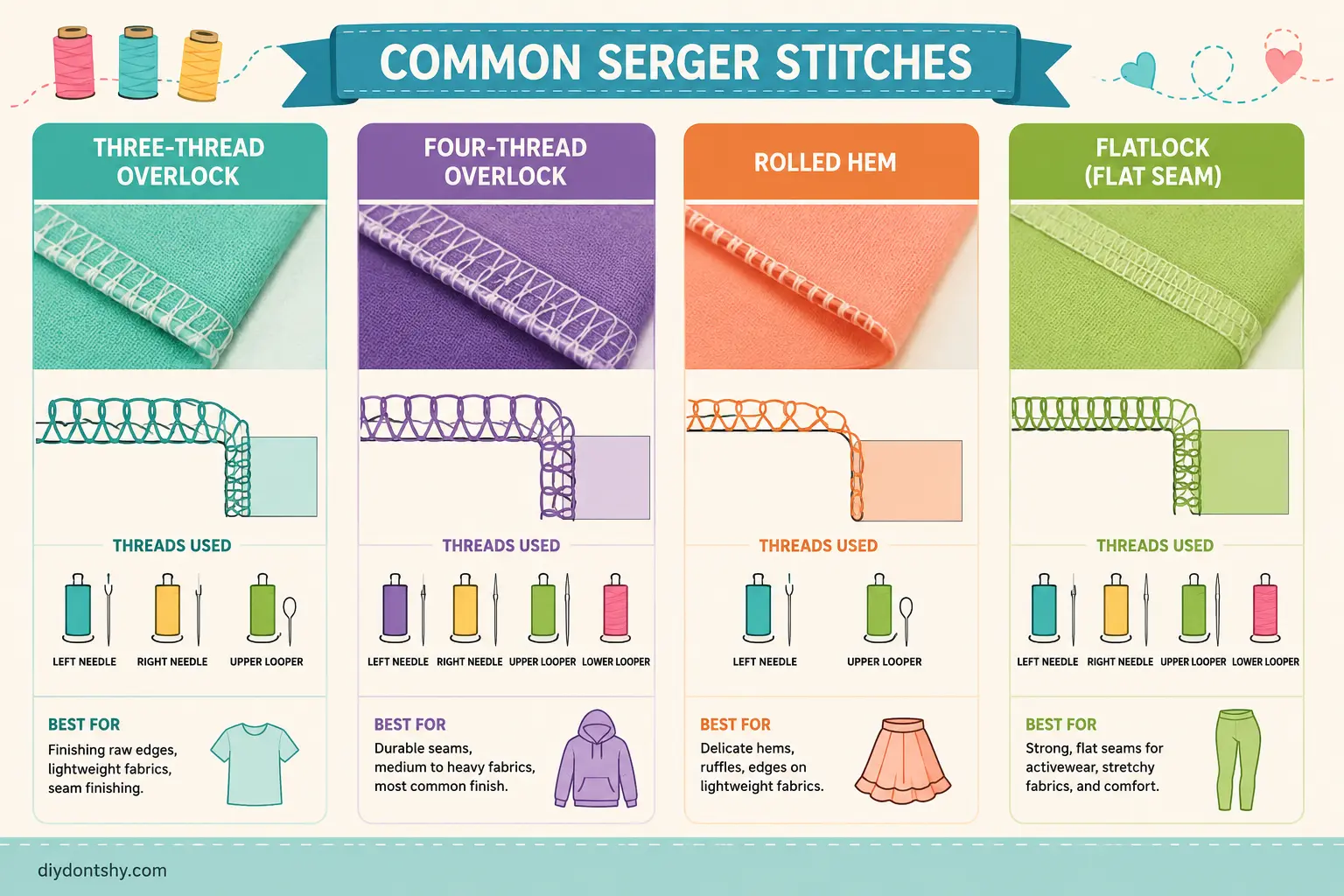
Overlock stitching is not just one stitch type. Sergers can create several stitch variations designed for different fabrics and sewing goals. Understanding these stitch types helps beginners avoid confusion and choose the correct settings for each project.
The most common stitch is the four-thread overlock stitch. This stitch uses two needles and two loopers to create strong, stretchy seams ideal for garment construction. It is the go-to choice for knit fabrics because it combines durability with flexibility.
A three-thread overlock stitch is lighter and often used for seam finishing rather than structural construction. It works well for woven fabrics that mainly need fray protection rather than stretch strength. Because it uses fewer threads, it also creates less bulk.
Rolled hems are another popular serger feature. These tiny tightly wrapped hems appear frequently on scarves, napkins, dance costumes, and lightweight garments. The finish looks delicate and professional while requiring very little fabric folding.
Some advanced sergers also perform flatlock stitches, coverstitches, and decorative edge finishes. These specialty stitches open creative possibilities for decorative garments and sportswear. Beginners do not need every advanced feature immediately, but understanding the options helps explain why sergers vary so much in price.
Three-Thread vs Four-Thread Overlock Stitches
| Stitch Type | Best Use | Strength | Stretch Capability |
|---|---|---|---|
| Three-Thread Overlock | Edge finishing | Medium | Moderate |
| Four-Thread Overlock | Garment construction | High | Excellent |
| Rolled Hem | Decorative hems | Light | Minimal |
Rolled Hems and Decorative Finishes
Rolled hems create narrow, elegant edges perfect for lightweight fabrics. Decorative threading can also transform sergers into creative design tools instead of purely functional machines.
What Beginners Often Find Confusing at First
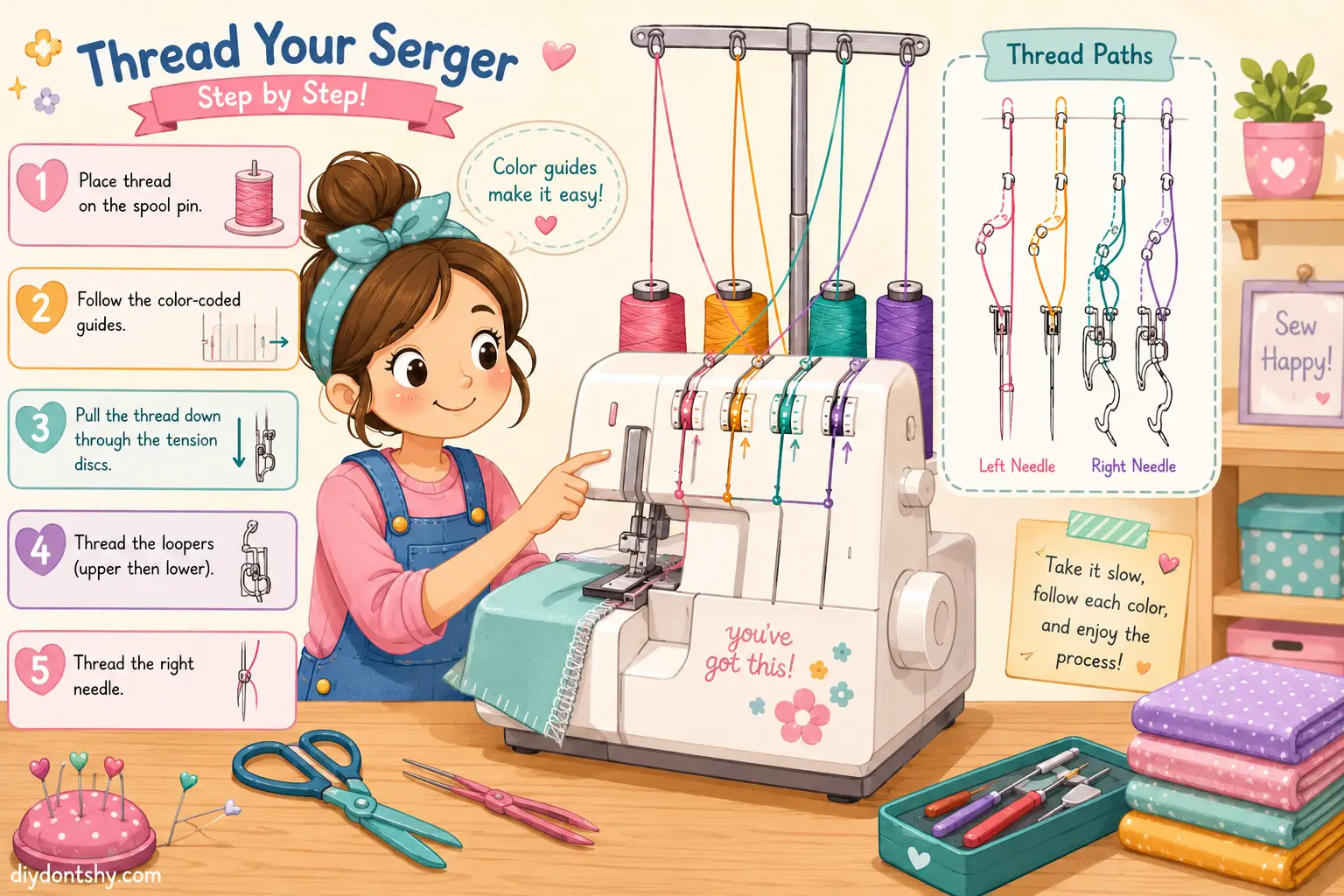
Let’s be honest: sergers can look terrifying initially. Multiple thread cones, color-coded threading paths, tension dials, cutting blades; it can feel like operating a tiny industrial factory instead of a home sewing machine. This intimidation factor is one reason many beginners hesitate to buy one.
Threading is usually the first major frustration. Unlike standard sewing machines, sergers must be threaded in a very specific order. Missing one threading point can cause the entire stitch chain to fail. Fortunately, modern sergers increasingly include color-coded guides and automatic threading systems to simplify the process.
Tension settings are another learning curve. Each thread requires proper tension balance to create neat stitches. Beginners often see looping, puckering, or loose threads and assume something is broken. In reality, most serger problems come from incorrect threading or tension imbalance.
Speed can also surprise beginners. Sergers move incredibly fast compared to standard sewing machines. That speed is wonderful once mastered but intimidating during early practice sessions. Many sewists recommend practicing on fabric scraps extensively before starting real projects.
The encouraging news is that most users eventually adapt faster than expected. Beginner sewing communities frequently mention that the learning curve looks worse than it actually is. After enough practice, threading and adjusting a serger becomes routine rather than stressful.
Threading Challenges
Sergers require precise threading order and multiple thread paths. Incorrect threading is the most common reason beginners experience stitching problems.
Tension Settings and Practice Curves
Balanced thread tension creates clean stitches. Beginners often need experimentation and practice before learning how adjustments affect seam appearance.
Situations Where a Standard Sewing Machine Still Works Better
Despite all the praise sergers receive, there are still many situations where a regular sewing machine remains the better tool. Sergers are specialized machines, not universal replacements. Understanding their limitations prevents unrealistic expectations.
Precision sewing tasks are one example. Installing zippers, sewing buttonholes, topstitching, and attaching buttons are all jobs better suited to standard sewing machines. Sergers cannot perform many decorative stitches either, which limits their flexibility for creative embellishment.
Quilting is another area where standard sewing machines dominate. Quilting often requires careful seam alignment, controlled stitch length, and detailed piecing techniques. Sergers are simply too aggressive and fast for many quilting applications.
Heavy-duty fabric handling can also vary depending on the serger model. While some advanced sergers handle denim and fleece beautifully, cheaper entry-level models may struggle with very thick seam intersections.
Cost matters too. Beginner sergers typically start around a few hundred dollars, while premium machines can exceed a thousand dollars. Recent market analysis shows consumers increasingly prioritize ease of use and durability when choosing models. For beginners who only sew occasionally, a standard machine with zigzag stitching may still be perfectly adequate.
Many experienced sewists recommend mastering a regular sewing machine first before adding a serger. That advice appears repeatedly across sewing communities because foundational sewing skills transfer directly into serger use.
Precision Sewing and Buttonholes
Regular sewing machines handle delicate detail work more accurately, especially tasks requiring controlled stitch placement or specialty presser feet.
Quilting and Decorative Stitching
Decorative stitches, quilting patterns, embroidery, and structured piecing remain strengths of traditional sewing machines rather than sergers.
Features Worth Knowing Before Using One Regularly
Not all sergers are created equally. Some are beginner-friendly and straightforward, while others are advanced machines packed with industrial-level features. Understanding the most important features helps prevent expensive buying mistakes.
Differential feed should be near the top of the priority list. This feature dramatically improves stretch fabric handling and prevents wavy seams. Most modern sergers include it, but beginners should confirm before buying.
Color-coded threading guides are another valuable feature. Since threading intimidates many new users, visual guidance simplifies setup significantly. Some newer machines even offer air-threading systems that blow thread through loopers automatically.
Adjustable stitch length and cutting width are important too. These settings allow more control over seam appearance and fabric handling. Rolled hem capability is another useful feature for decorative finishing.
Noise level and vibration matter more than many beginners realize. Cheaper sergers sometimes operate loudly at high speeds. Investing in a stable machine with smooth feeding can improve the overall sewing experience dramatically.
Online sewing communities consistently emphasize ease of use over excessive features for beginners. Many experienced users recommend simple, reliable machines rather than overly complex computerized models for first-time buyers. That advice makes sense because confidence grows faster with straightforward equipment.
Important Features for Beginners
| Feature | Why It Matters |
|---|---|
| Differential Feed | Prevents stretching and puckering |
| Color-Coded Threading | Simplifies setup |
| Adjustable Tension | Improves stitch quality |
| Rolled Hem Capability | Adds decorative finishing options |
| Free Arm | Helps sew cuffs and sleeves |
Choosing Between Budget and Advanced Models
Budget sergers work well for basic seam finishing and beginner projects, while advanced models offer automation, smoother threading, and expanded stitch capabilities.
Conclusion
A serger sewing machine is not a magical replacement for a standard sewing machine, but it absolutely changes the sewing experience for many people. Its ability to stitch, trim, and finish seams simultaneously creates cleaner garments, faster workflow, and professional-looking results that are difficult to ignore.
For sewists who primarily work with stretch fabrics, make clothing regularly, or want polished interior seam finishes, a serger can become one of the most satisfying tools in the sewing room. Knit fabrics become easier to manage, seams become stronger and more flexible, and garment construction speeds up dramatically.
At the same time, beginners should remember that a serger is a specialized companion machine rather than a complete substitute. Regular sewing machines still handle precision sewing, decorative stitching, buttonholes, and quilting more effectively.
The best approach is often balance. Learn strong sewing fundamentals first, then add a serger when your projects start demanding cleaner finishes and faster construction. Once that transition happens, many sewists wonder how they ever lived without one.
FAQs
1. Can a serger replace a regular sewing machine?
No. A serger complements a regular sewing machine rather than replacing it. Sewing machines still handle buttonholes, zippers, quilting, and decorative stitching better.
2. Is a serger good for beginners?
Yes, but beginners should expect a learning curve. Threading and tension adjustments take practice, though modern sergers are becoming much more user-friendly.
3. What fabrics benefit most from a serger?
Stretch and knit fabrics benefit the most because sergers create flexible seams that stretch without breaking.
4. Do I need a serger to make professional-looking clothes?
Not necessarily. Skilled sewists can create polished garments without sergers using alternative seam finishes, but sergers make the process faster and cleaner.
5. What is the difference between a serger and an overlock machine?
They are essentially the same thing. “Overlock machine” describes the stitch type, while “serger” is the commonly used household term.

Ahmed Elhor is an Egyptian SEO specialist, pharmacist, and copywriter based in Canada. He combines strong research skills with search focused writing to create clear, helpful content that answers real questions and ranks effectively in search engines.
With a passion for practical DIY ideas, homemade solutions, and creative projects, Ahmed focuses on producing easy to follow guides that are simple, affordable, and useful for everyday life. His work blends creativity with structure, helping readers turn basic materials into meaningful results.