
Polite Ways to Ask How Do You Say No Presents on an Invitation

There is something oddly stressful about writing two tiny words on an invitation: “No gifts.” Even when your intentions are completely sincere, the phrase can feel awkward sitting there on the page like a stern school principal guarding the party entrance. You do not want guests to think you are being cold, demanding, or secretly testing their manners. At the same time, you genuinely do not want more presents piling up in the closet, more pressure on guests’ wallets, or more attention on material things instead of the actual celebration.
That is exactly why so many people search for better ways to say “no presents on an invitation.” The wording matters more than most people realize. A warm phrase can make guests feel appreciated and relaxed. A harsh phrase can accidentally create confusion or discomfort. According to modern etiquette discussions and invitation experts, today’s hosts increasingly prefer celebrations focused on experiences, relationships, and meaningful time together rather than traditional gift exchanges.
The good news is that there are countless graceful, casual, elegant, and even funny ways to communicate your wishes without sounding rude. Whether you are planning a birthday, wedding, baby shower, retirement gathering, anniversary dinner, or casual backyard celebration, the right wording can completely change the tone of your invitation. Think of it like setting the emotional thermostat for your event. A gentle sentence can instantly tell guests, “Relax. Come celebrate. Your presence matters most.”
Before jumping into examples, it helps to understand why these requests have become so common and why modern guests usually understand exactly what you mean.
Contents
Why More Hosts Are Choosing No-Gift Celebrations
A decade ago, saying “no gifts please” on an invitation still felt unusual in many social circles. Today, it has become incredibly common. People are rethinking what celebrations are actually about, and honestly, many hosts are exhausted by the pressure surrounding gift culture. Between crowded homes, rising costs of living, and increasingly busy schedules, people are prioritizing meaningful moments over wrapped boxes.
Minimalism also plays a huge role in this trend. Many families simply do not want extra clutter. Parents especially understand this feeling. One more toy truck, one more stuffed animal, one more puzzle with missing pieces, and suddenly the living room looks like a department store exploded overnight. Adults feel it too. By the time someone reaches a milestone birthday, anniversary, or retirement, they often already own everything they need.
Modern etiquette experts increasingly recognize that politely requesting no gifts is perfectly acceptable when done warmly and respectfully. People also appreciate the financial sensitivity behind the request. Attending events already requires money for travel, clothing, babysitters, hotel stays, and time away from work. Removing gift expectations can feel like a genuine act of kindness toward guests.
There is also a deeper emotional shift happening. Many hosts want guests focused on laughter, memories, conversations, and togetherness instead of comparing gift bags or wondering whether their present is “good enough.” In many ways, a no-gift invitation quietly says, “You matter more than what you buy.” That message can feel surprisingly powerful.
The Secret to Polite No-Gift Wording
Here is the real secret: the best no-gift wording does not focus on banning gifts. It focuses on appreciating people.
That single shift changes everything.
Compare these two examples:
- Do not bring gifts.
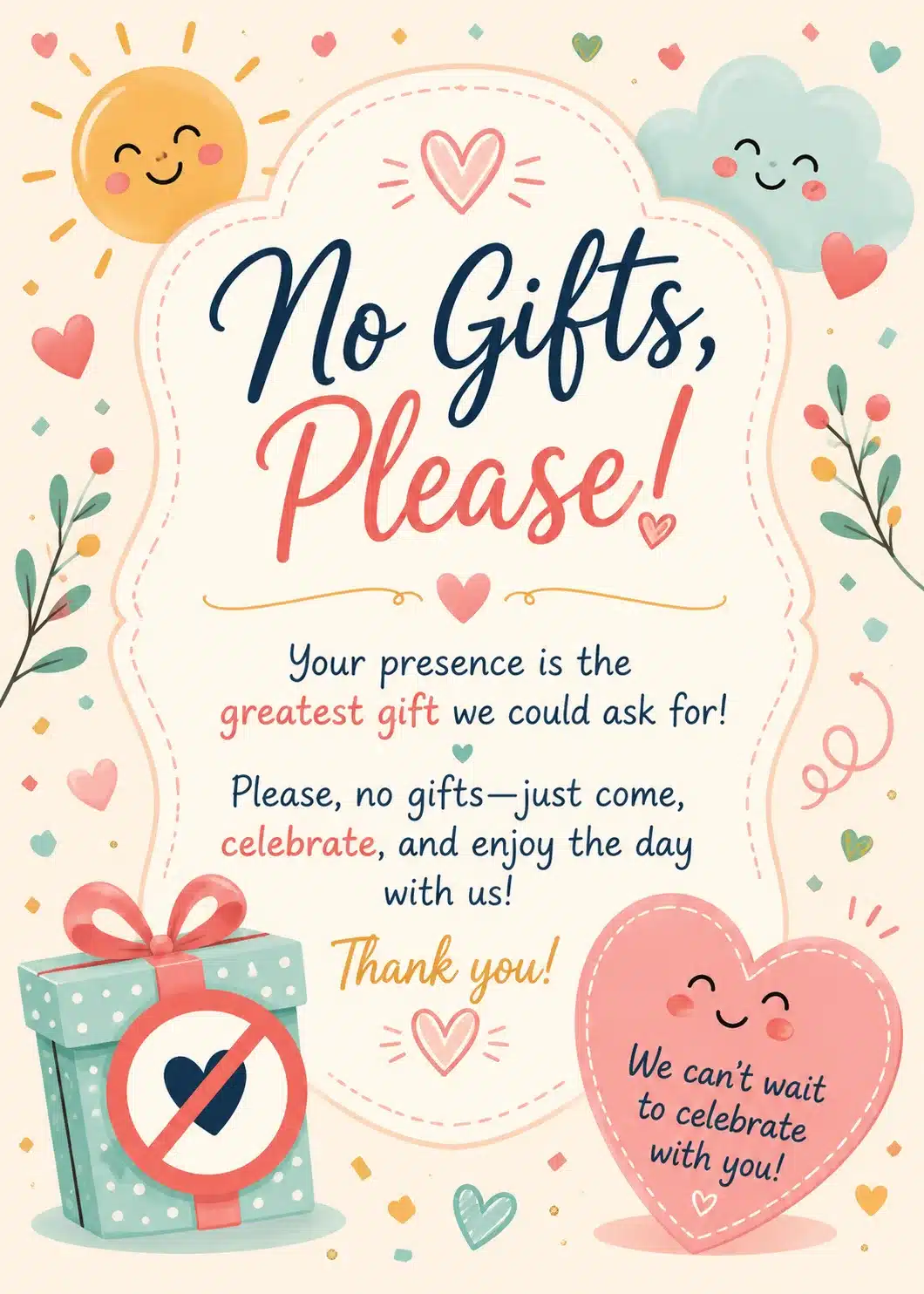
- Your presence is the greatest gift.
The meaning is almost identical, but emotionally they feel worlds apart. One sounds like a rule posted on a fence. The other sounds welcoming and gracious. That is why invitation specialists consistently recommend emphasizing warmth, gratitude, and celebration rather than restrictions.
Another important detail is brevity. Long explanations often make things more awkward. You do not need a paragraph defending why you do not want gifts. Most guests are not demanding a courtroom-level justification. A short, thoughtful sentence is usually enough.
The phrases that tend to sound awkward are overly forceful statements like:
- No gifts allowed.
- Please do not bring anything.
- We do not want gifts.
- Gifts will not be accepted.
Those lines can unintentionally sound rigid or even irritated. Invitations should feel like open doors, not legal contracts. The best wording keeps the emotional tone soft and appreciative.
Humor can work beautifully too, especially for casual gatherings. A playful line can remove tension instantly. Think of humor like adding lemon to sparkling water; it lightens everything without overwhelming the message.
Casual Phrases That Keep the Message Friendly
Casual celebrations give you more freedom to sound conversational and relaxed. You do not need perfectly formal etiquette language for a backyard barbecue or a child’s birthday party. In fact, casual wording often feels more authentic because it matches the tone of the event itself.
Some of the most effective casual phrases include:
| Casual No-Gift Phrase | Best For |
|---|---|
| “Your presence is present enough!” | Birthdays, casual parties |
| “No gifts please; just come hungry.” | Dinner parties |
| “Just bring yourself and your good vibes.” | Informal gatherings |
| “We already have everything we need; except more time with you.” | Adult birthdays |
| “No presents, please. Your company means the most.” | Family celebrations |
These phrases work because they feel human. They sound like something a real person would naturally say in conversation rather than corporate policy language pasted onto cardstock.
Funny wording can also soften the request beautifully. According to invitation and etiquette sources, lighthearted phrasing often helps guests feel relaxed while still understanding the message clearly.
Examples include:
- Presents? Nah. Dessert and laughter? Absolutely.
- No gifts please; our closets are begging for mercy.
- Your smiling face is the only present we need.
- Save your money for the dance floor snacks.
For children’s birthdays, playful wording is especially effective because parents immediately understand the practical reason behind the request. Most parents secretly feel relieved not having to rush through another toy aisle trying to guess what a seven-year-old stranger likes.
Elegant Ways to Focus Attention on the Celebration
Formal celebrations require slightly different wording because the tone of the event is more refined. Weddings, anniversary dinners, engagement parties, and milestone celebrations benefit from elegant language that feels polished without sounding stiff.
Traditional etiquette once discouraged mentioning gifts on invitations altogether. Some etiquette discussions still reflect that viewpoint today. Yet modern celebrations increasingly use tasteful no-gift wording because guests often appreciate the clarity.
Elegant wording usually works best when it sounds gracious and understated. Instead of loudly announcing “NO GIFTS,” the message quietly shifts focus back to the celebration itself.
Beautiful examples include:
- Your presence at our celebration is the only gift we desire.
- We kindly request no gifts and look forward simply to celebrating with you.
- Your company is the greatest gift of all.
- Please honor us with your presence rather than presents.
- The joy of celebrating together is more than enough.
Wedding invitations often benefit from especially subtle wording. Many couples choose to place the no-gift request on a wedding website or details card instead of the main invitation itself. That approach preserves the elegance of the formal invitation while still communicating expectations clearly.
Anniversary celebrations are another perfect example. Couples celebrating decades together usually already own plenty of household items. Guests generally understand that these events are about honoring memories, relationships, and milestones rather than exchanging physical gifts.
The emotional tone matters tremendously here. Elegant wording should feel like an embrace, not an instruction manual.
Best No-Gift Invitation Examples by Event Type
Different celebrations naturally call for different wording styles. What sounds charming on a child’s birthday invitation may feel strange at a retirement dinner. Matching the wording to the mood of the event makes everything feel smoother and more authentic.
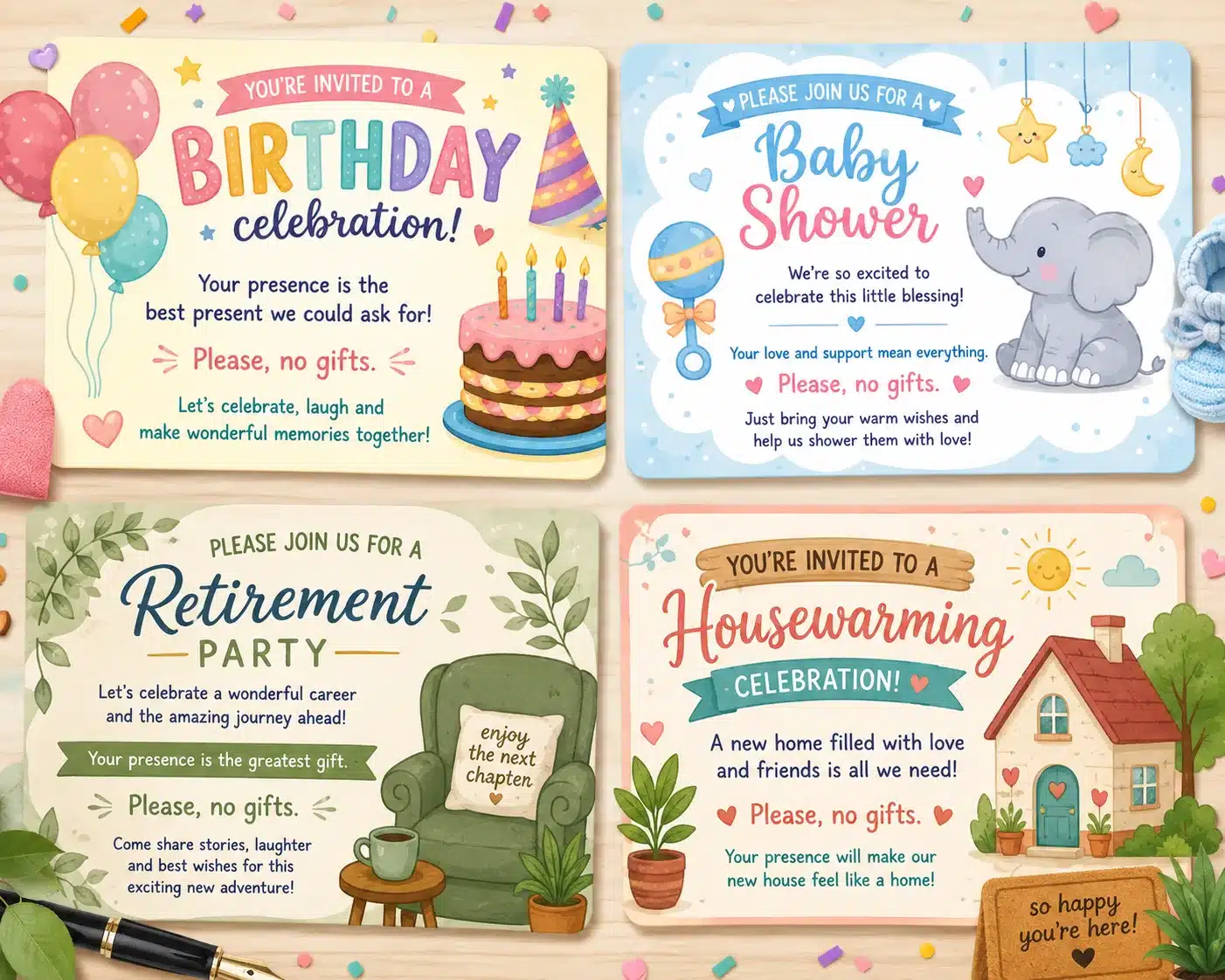
Birthday Party Examples
For adult birthdays:
- Your presence is the only birthday gift needed.
- Come celebrate, laugh, and eat cake; no presents required.
- Good friends and good memories are the best gifts.
For kids’ birthdays:
- No gifts please; your friendship is enough.
- Just bring your party spirit!
- No presents needed. We’re excited just to celebrate together.
Baby Shower Examples
Baby showers can be tricky because gift-giving is traditionally expected. Soft wording helps tremendously here.
Examples include:
- Your support and love mean more than gifts.
- We’re keeping things simple; your presence is enough.
- Please celebrate with us, no gifts necessary.
Retirement Party Examples
Retirement events often benefit from reflective, appreciative language.
Examples include:
- Your stories and memories are the greatest gift.
- Please join us in celebrating this milestone; no presents needed.
- Your company is all we ask for.
Housewarming and Dinner Party Examples
Ironically, housewarming parties often create the most pressure around gifts. Many hosts now prefer skipping that expectation entirely.
Try wording like:
- No house gifts please; just bring yourselves.
- Your presence will warm the house more than any present.
- Good food and good company are more than enough.
The best invitation wording feels aligned with the personality of the event itself. Imagine your invitation speaking aloud. Does it sound warm? Relaxed? Genuine? That instinct usually guides you toward the right choice.
What Most Guests Understand About No-Gift Requests
One fascinating thing about no-gift invitations is that guests often interpret them differently. Some people take the request literally and arrive empty-handed. Others believe bringing something small is still polite no matter what the invitation says. Social expectations around gifting are surprisingly emotional and deeply cultural.
Recent etiquette discussions show this divide very clearly. Some guests feel strongly that hosts’ wishes should always be respected exactly as written. Others still feel uncomfortable arriving without anything at all.
This means one important thing: even if you request no gifts, some people will probably still bring them.
And honestly? That is okay.
The goal is not perfect compliance. The goal is reducing pressure and shifting focus away from material expectations. Most guests understand that intention immediately. Many are genuinely grateful for it.
If someone does bring a gift, the best response is simple gratitude. Do not embarrass them. Do not refuse the item dramatically at the front door like a movie scene involving royal protocol. Just thank them warmly and move on. Hospitality matters more than enforcing the request like security staff at a concert venue.
Some hosts quietly donate extra items later. Others accept sentimental or consumable gifts like wine, flowers, handwritten notes, or homemade treats. What matters most is preserving the warmth of the celebration itself.
Interestingly, many people today see no-gift requests as thoughtful rather than rude because they reduce social and financial pressure. Social etiquette evolves constantly, and modern celebrations increasingly prioritize comfort, sustainability, and emotional connection over formal traditions.
Alternative Ideas Guests Can Participate In Instead
Sometimes hosts still want guests to feel involved without bringing traditional presents. That is where alternatives can work beautifully. Instead of focusing on material gifts, you can redirect attention toward experiences, memories, or meaningful gestures.
One popular option is charitable giving. Some hosts invite guests to donate to a favorite cause instead of bringing presents. This approach works especially well for milestone birthdays, memorial celebrations, and retirement parties. Still, etiquette opinions on donation requests can vary widely, so soft wording is important.
Gentle examples include:
- In lieu of gifts, consider supporting a cause close to our hearts.
- Your presence is enough, but donations to [charity] are appreciated.
- Please celebrate with us; kindness shared elsewhere is gift enough.
Memory-based alternatives often feel even more personal. Guests love participating in activities that create emotional keepsakes instead of physical clutter.
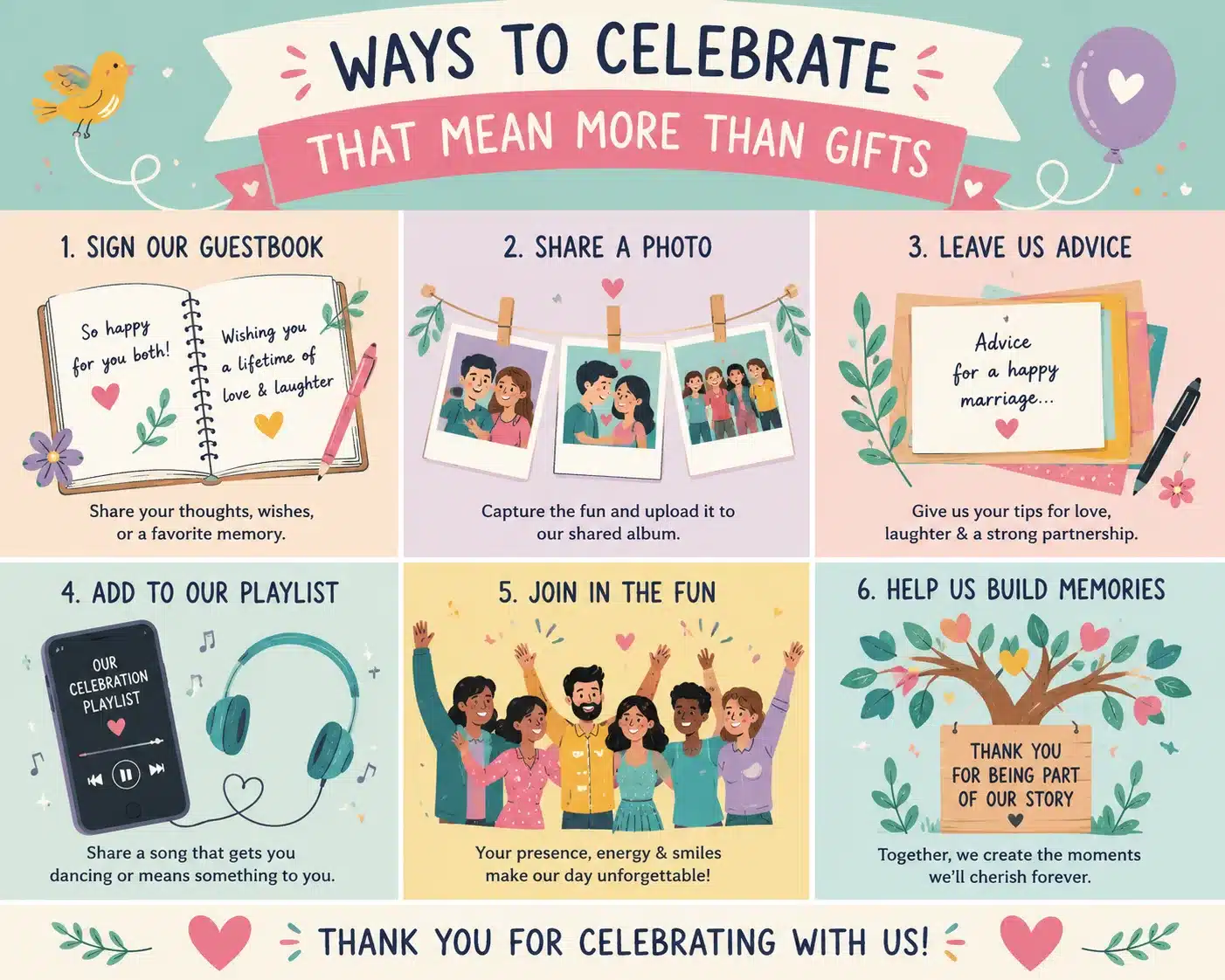
Ideas include:
| Alternative to Gifts | Why Guests Enjoy It |
|---|---|
| Writing favorite memories in a guestbook | Creates meaningful keepsakes |
| Bringing a favorite photo | Encourages storytelling |
| Sharing advice cards | Adds humor and wisdom |
| Recording short video messages | Preserves memories |
| Contributing songs to a playlist | Makes guests part of the celebration |
These ideas transform guests from shoppers into participants. Instead of spending hours browsing stores, they contribute stories, laughter, creativity, and emotional connection. Those are often the things hosts remember years later anyway.
Think about it this way: physical gifts eventually wear out, break, expire, or get donated. Shared memories tend to last much longer.
Avoiding Language That Sounds Demanding or Awkward
Sometimes the problem is not the idea of requesting no gifts; it is simply the wording. Tiny phrasing choices can accidentally make invitations sound controlling or uncomfortable.
For example, phrases like:
- No gifts allowed
- Do not bring presents
- We expect no gifts
- No exceptions
can unintentionally create tension. They sound more like event regulations than hospitality.
A better approach is focusing on appreciation rather than restriction. Invitation experts repeatedly emphasize that guests respond best to warmth, gratitude, and clarity combined together.
Here is a simple comparison:
| Awkward Wording | Better Alternative |
|---|---|
| “Do not bring gifts.” | “Your presence is enough.” |
| “No presents allowed.” | “Please, no gifts.” |
| “Gifts are unnecessary.” | “Celebrating together is the best gift.” |
| “We do not want gifts.” | “Your company means the world to us.” |
The softer alternatives feel welcoming instead of restrictive. That emotional difference matters more than many people realize.
Placement also affects tone. Tiny wording tucked gently near RSVP information often feels far more natural than giant bold text in the center of the invitation. Subtlety helps tremendously.
Where to Place the No-Gift Message on Invitations
Placement is one of the most overlooked details in invitation wording. Even a beautifully phrased message can feel awkward if it dominates the design.
For printed invitations, the best location is usually near the bottom of the invitation or on a separate details card. This keeps the main focus on the celebration itself rather than the gift policy. Formal wedding invitations especially benefit from subtle placement because traditional etiquette still tends to avoid discussing gifts too prominently.
Digital invitations give you even more flexibility. You can include a gentle note in the event details, FAQ section, or RSVP confirmation message. Wedding websites are especially useful because they allow couples to explain their wishes naturally without crowding the printed invitation design.
Good placement examples include:
- Beneath RSVP information
- On a details insert card
- In smaller italic text
- Within a wedding website FAQ
- At the end of a digital invitation description
The visual tone matters almost as much as the wording itself. Soft typography and understated placement communicate warmth automatically.
Think of it like background music at a restaurant. When done correctly, people notice the feeling without consciously focusing on the mechanics behind it.
Conclusion
Learning how to say “no presents on an invitation” gracefully is really about one thing: making people feel welcome, appreciated, and comfortable. The wording itself matters less than the emotional tone behind it. Guests do not want perfection. They want clarity wrapped in kindness.
The strongest no-gift messages focus on togetherness rather than restriction. They gently remind guests that shared experiences, laughter, stories, and connection matter more than shopping bags or wrapped boxes. Whether your style is casual, funny, elegant, or deeply sentimental, the best wording always sounds human and sincere.
Modern celebrations continue shifting away from pressure-filled traditions toward more meaningful experiences. That is why no-gift invitations have become increasingly accepted and appreciated. People understand the intention. They recognize the kindness behind it. And most importantly, they remember how your invitation made them feel.
At the end of the day, your event is not measured by the size of the gift table. It is measured by the warmth in the room, the memories created, and the people who showed up simply because they care about you.
FAQs
Is it rude to say no gifts on an invitation?
Not at all when phrased politely. Modern etiquette increasingly accepts warm no-gift wording, especially when the focus remains on celebrating together rather than restricting guests.
What is the most polite way to say no presents?
One of the most universally appreciated phrases is: “Your presence is the only gift we need.” It feels appreciative, warm, and natural without sounding demanding.
Should I still bring a gift if the invitation says no gifts?
Most etiquette experts suggest respecting the host’s wishes. Some guests still choose small consumable items or heartfelt cards, but generally the request is meant sincerely.
Where should no-gift wording appear on an invitation?
The best placement is usually near the RSVP section, on a details card, or within a wedding website rather than prominently in the center of the invitation.
Can I ask for charity donations instead of gifts?
Yes, though wording matters. A gentle suggestion is usually better received than a direct expectation. Keeping the tone optional and appreciative helps avoid awkwardness.

Kareem Sallam is an Egyptian special writer based in Australia, with a strong interest in practical ideas and creative content that focuses on everyday solutions. He writes clear, engaging articles designed to be easy to follow and useful for a wide range of readers.
His work centers on DIY projects, handmade ideas, simple crafts, and home based creativity. Kareem aims to deliver content that is practical, inspiring, and accessible, helping readers turn simple materials into smart and enjoyable projects.


