How To Hang A Wreath On A Screen Door Without Damaging It
Decorating a front entrance with a wreath instantly makes a home feel warm and welcoming. The challenge begins when that beautiful wreath has to hang on a delicate screen door instead of a solid wooden one. Screen doors are lighter, thinner, and far more vulnerable to bending, tearing, and sagging. One wrong hanging method can leave stretched mesh, scratched frames, or a door that suddenly refuses to close properly. That’s why learning how to hang a wreath on a screen door the right way matters more than most homeowners realize.
The good news is that modern hanging solutions have made this process much easier than it used to be. Home improvement experts now recommend damage-free methods like magnetic hooks, removable adhesive hooks, ribbon suspension systems, and suction hangers instead of nails or screws. According to recent decorating guides, lightweight wreaths combined with removable hanging systems are considered the safest approach for seasonal decorating. Many homeowners have also started using balancing tricks, clear fishing line stabilizers, and padded hangers to stop wreaths from banging against the door during windy weather.
A screen door behaves differently than a standard entry door. It moves more easily, reacts strongly to wind pressure, and usually cannot support much weight. Think of it like hanging a backpack on a folding chair instead of a sturdy wall hook. Even if the chair holds it temporarily, the structure was never designed for heavy strain. The same principle applies here. Choosing the wrong wreath or hook can shorten the life of your screen door over time.
This guide walks through the safest and most effective techniques for hanging a wreath without damaging your door. You’ll learn which wreath materials work best, how to compare magnetic hooks against ribbon systems, how to keep decorations centered, and how to remove everything cleanly once the season ends.
Why Screen Doors Need Special Care for Wreath Hanging
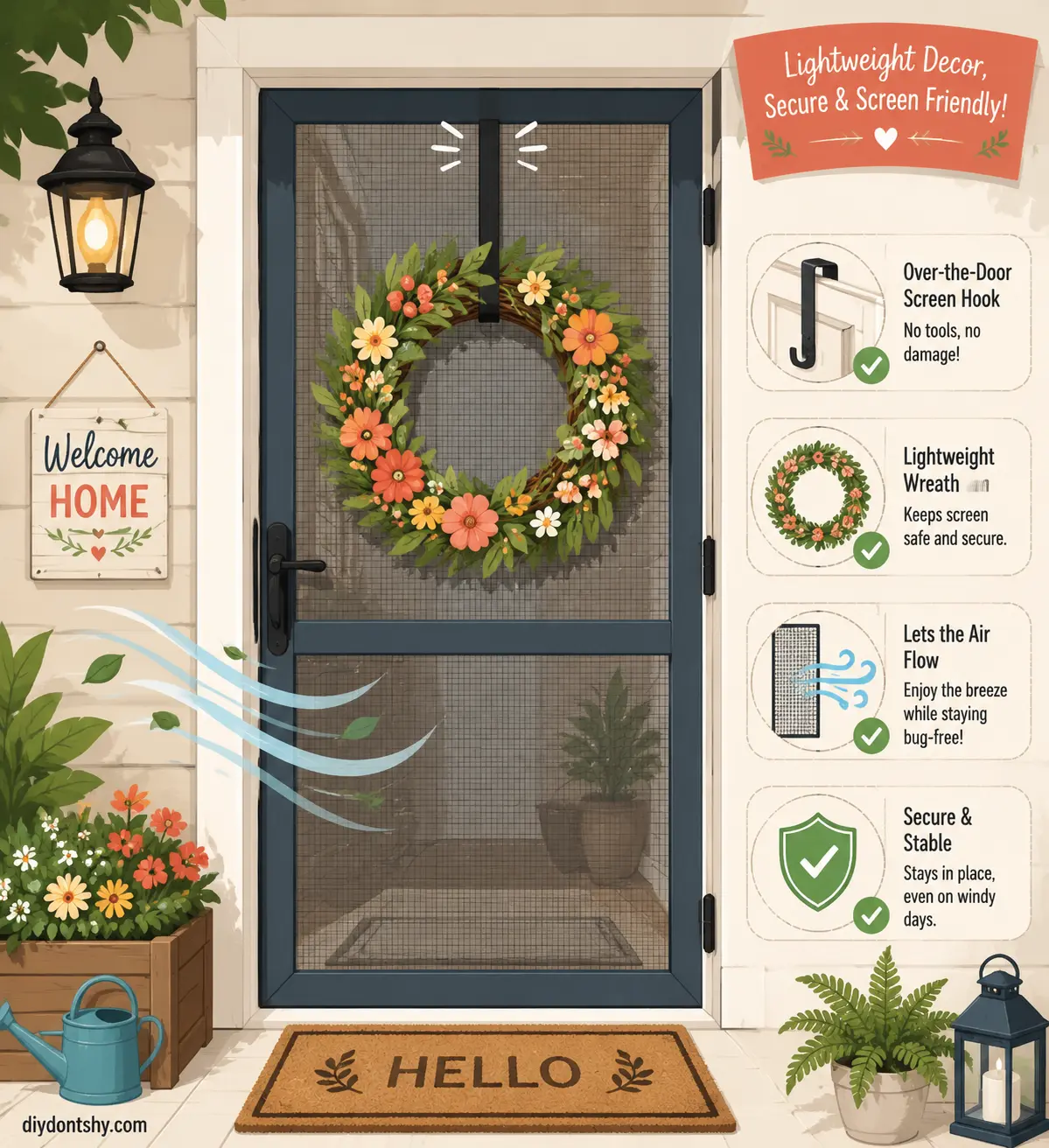
Screen doors are built for airflow and lightweight protection, not for carrying heavy decorative loads. Most modern screen doors are made from thin aluminum, lightweight steel, or vinyl frames combined with mesh inserts. These materials keep the door easy to open and close, but they also make it more fragile than a solid front door. When homeowners treat a screen door like a regular entry door, problems often begin almost immediately.
One of the most common issues is stretching or warping around the top frame. Heavy wreaths place constant downward pressure on the door, especially when attached to over-the-door hangers that pinch the frame. Over time, this pressure can slightly bend the top rail, causing the door to misalign. A door that once swung smoothly may suddenly scrape the threshold or fail to latch properly. Experts in home maintenance warn that repeated strain from seasonal decorations can weaken lightweight frames if the load exceeds two to three pounds.
Another major concern is movement. Unlike a solid wood door that feels heavy and stable, a screen door shakes every time it opens or closes. Add wind into the equation and the wreath becomes a swinging pendulum. That movement creates friction against the door surface, which may lead to scratches, chipped paint, or torn screen material. Imagine wearing a watch that constantly rubs against your wrist all day long. Even something lightweight eventually leaves a mark through repeated contact.
Traditional metal wreath hangers can also interfere with door seals. Some homeowners discover too late that thick metal hooks prevent the door from fully closing. This creates gaps that let in drafts, insects, and moisture. Decorative solutions should improve curb appeal, not reduce the functionality of the door itself. Modern decorating advice strongly favors thinner hanging systems, soft-backed hooks, or ribbon suspension techniques specifically designed for delicate entryways.
The safest approach always starts with understanding the limitations of the screen door. Once you recognize that the door needs lightweight decorations and low-pressure hanging methods, it becomes much easier to create a stylish seasonal display without accidental damage.
Choosing the Right Lightweight Wreath
The wreath itself matters just as much as the hanging hardware. Many people focus entirely on hooks and adhesives while ignoring the fact that an oversized or heavy wreath creates most of the strain. A lightweight wreath dramatically reduces the risk of sagging, swinging, and frame damage, especially on older screen doors.
Artificial wreaths made from foam, grapevine, plastic greenery, or lightweight eucalyptus tend to perform best on screen doors. These materials are attractive without adding unnecessary bulk. Dense wreaths packed with thick wood ornaments, metal signs, or heavy pinecones may look beautiful in a store display, but they can quickly become a problem outdoors. Experts generally recommend keeping screen door wreaths under three pounds whenever possible.
Fresh wreaths create another challenge because moisture adds weight over time. A fresh evergreen wreath may seem manageable at first, but after rain or humidity exposure, it can become significantly heavier. Seasonal care guides also note that fresh greenery deteriorates faster when exposed to direct sunlight and heat. Artificial wreaths often provide a better long-term solution for screen doors because they remain lightweight regardless of weather conditions.
Size matters too. A wreath that covers too much of the screen surface creates additional wind resistance. During storms or breezy days, large wreaths behave almost like sails, pulling against the hanging hardware. A medium-sized wreath usually offers the best balance between visibility and stability. If the decoration extends too close to the edges of the door, it may also interfere with handles, closers, or storm door movement.
Here’s a simple comparison of common wreath types for screen doors:
| Wreath Type | Average Weight | Screen Door Friendly | Weather Resistance |
|---|---|---|---|
| Foam Artificial Wreath | Light | Excellent | High |
| Grapevine Wreath | Medium | Good | Moderate |
| Fresh Evergreen Wreath | Heavy When Wet | Fair | Moderate |
| Wood Decorative Wreath | Heavy | Poor | High |
| Minimalist Eucalyptus Wreath | Very Light | Excellent | High |
A lightweight wreath doesn’t mean sacrificing style. In fact, many modern minimalist wreath designs look more elegant because they avoid bulky decorations. Sometimes the best curb appeal comes from simplicity rather than excess.

Best Hanging Methods That Won’t Damage the Screen
Finding the safest hanging method depends largely on the type of screen door you own. Some doors have metal frames that work beautifully with magnets, while others include glass inserts better suited for suction hooks. The goal is always the same: distribute the weight safely without stressing the mesh or bending the frame.
Using Magnetic Hooks Safely
Magnetic hooks are among the safest options for steel-framed screen doors because they avoid adhesives entirely. Instead of pulling on the screen mesh, the magnet attaches directly to the metal frame itself. This creates strong support without leaving residue or scratches. Decorating experts often recommend magnetic hangers for lightweight wreaths because they are easy to reposition and remove.
The key is choosing magnets with rubber or padded backing. Bare magnets can scratch painted surfaces when they shift slightly during windy weather. A soft-backed magnet creates a protective barrier while still maintaining grip strength. Positioning also matters. The magnet should attach to the strongest structural section of the frame rather than the thin mesh border.
Magnets work especially well for renters because they leave virtually no trace behind. There’s no adhesive cleanup, no holes, and no risk of peeling paint during removal. If your screen door contains aluminum instead of steel, however, magnets won’t work effectively since aluminum is non-magnetic.
Ribbon Hanging Techniques
Ribbon hanging remains one of the oldest and most reliable wreath methods. A ribbon loops around the wreath, passes over the top of the door, and secures on the inside using a removable hook or anchor point. Many homeowners prefer this method because it distributes weight more evenly and avoids pressure directly on the front frame.
Wide ribbons work better than thin cords because they reduce concentrated stress points. Satin, burlap, and weather-resistant polyester ribbons are all common choices. Some decorators even coordinate ribbon colors with seasonal themes to make the hanger part of the display itself.
One clever variation involves balancing decorations on both sides of the door. Some homeowners attach a second lightweight decoration indoors, using the ribbon as a balanced suspension system. This approach reduces pulling while adding decorative charm inside the house as well. Community discussions online have praised this method for stability and simplicity.
Suction Cup Solutions for Glass Inserts
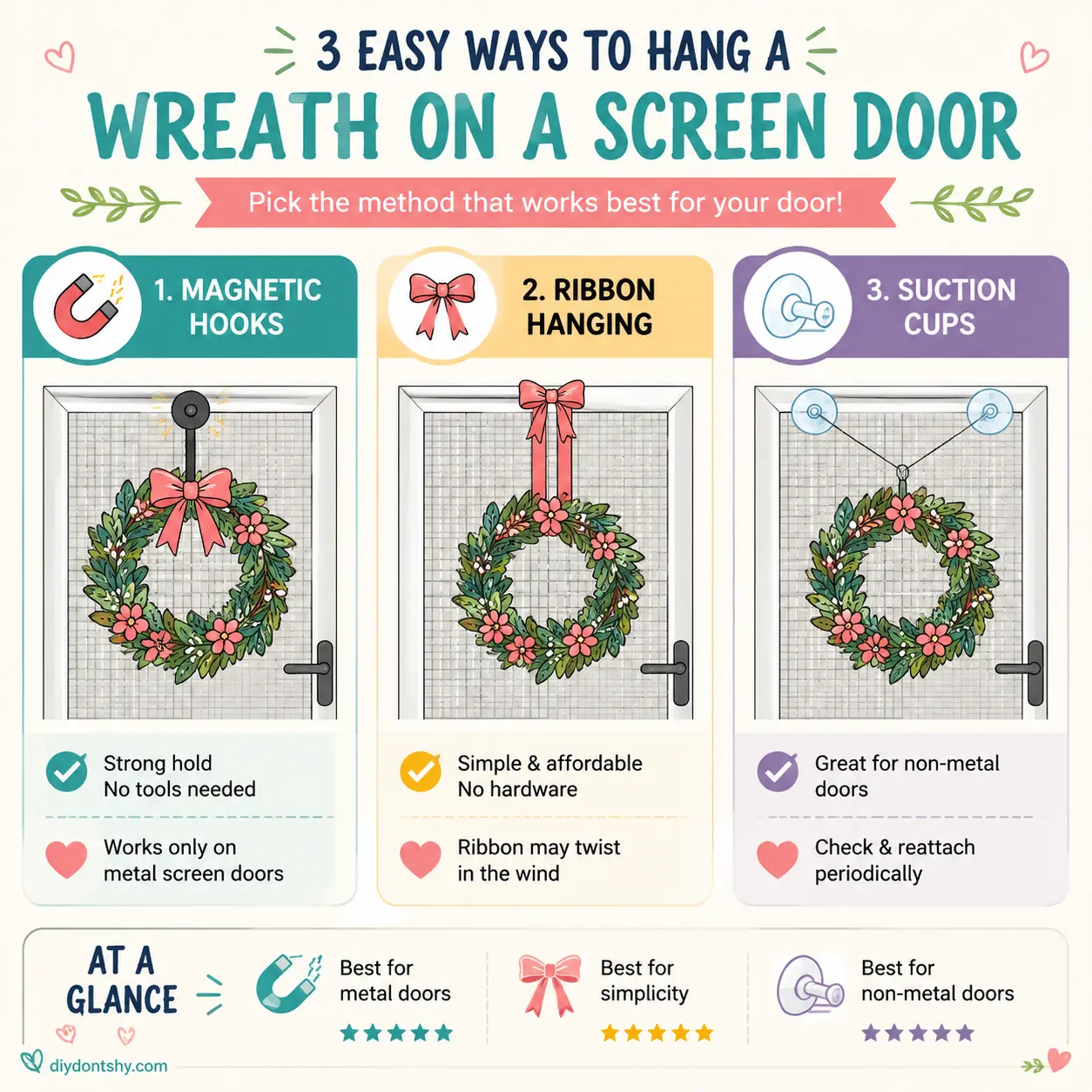
If your screen door includes a glass panel, suction hooks can provide a clean and nearly invisible hanging option. High-quality suction cups rated for outdoor use perform surprisingly well when installed correctly. The most important factor is surface preparation. Even small amounts of dust or moisture can weaken suction power dramatically.
Experts recommend cleaning the glass thoroughly with rubbing alcohol before attaching the hook. Once secured, suction hooks should cure for at least several minutes before bearing weight. Cheap suction cups tend to fail during temperature fluctuations, so investing in weather-rated models makes a noticeable difference.
When Adhesive Hooks Work Best
Removable adhesive hooks are useful when other methods aren’t practical. Modern adhesive systems can hold several pounds without damaging paint when removed correctly. Home décor professionals frequently recommend removable hooks because they combine convenience with clean removal.
Still, adhesive hooks work best on smooth, flat surfaces. Rough textures, dusty frames, or extreme outdoor temperatures can weaken adhesion over time. Removal also requires patience. Pulling adhesive strips slowly and parallel to the surface helps prevent paint damage.
Comparing Magnetic Hooks, Ribbon, and Suction Solutions
Choosing between magnetic hooks, ribbons, and suction cups often comes down to weather conditions, door material, and personal preference. Each method has strengths and weaknesses that become more obvious during daily use.
| Hanging Method | Best For | Advantages | Drawbacks |
|---|---|---|---|
| Magnetic Hooks | Steel Frames | Easy removal, no residue | Won’t work on aluminum |
| Ribbon Method | Most Screen Doors | Balanced support, decorative | Ribbon may shift in wind |
| Suction Hooks | Glass Panels | Nearly invisible | Sensitive to temperature |
| Adhesive Hooks | Smooth Surfaces | Strong hold, renter-friendly | Adhesive may weaken outdoors |
Wind resistance is usually the deciding factor. Ribbon systems often perform best outdoors because they distribute movement more naturally. Suction cups can occasionally release during rapid temperature changes, while magnetic hooks may slide if overloaded. Adhesive hooks hold well initially but may weaken after prolonged sun exposure or moisture contact.
Many homeowners combine methods for extra stability. A ribbon may hold the main weight while a clear fishing line anchor prevents swinging at the bottom. This hybrid approach keeps the wreath centered while reducing noise during windy conditions.
Think of wreath hanging like setting up a tent outdoors. The main support matters, but small stabilizers often make the biggest difference once the weather changes.
Keeping the Wreath Centered and Secure Outdoors
A crooked wreath instantly makes even the most beautiful front entrance look sloppy. Outdoor conditions constantly challenge decorative balance, especially on lightweight screen doors that move frequently. Keeping the wreath centered requires more than simply hanging it carefully at the beginning.
Wind is usually the biggest problem. Even mild gusts can push the wreath sideways or cause it to rotate slightly every time the door opens. Over time, this movement shifts the decoration off-center. One effective trick is adding a hidden stabilizer at the bottom of the wreath. Clear fishing line attached discreetly behind the wreath can hold it in position while remaining virtually invisible. Experts recommend this technique because it dramatically reduces movement without affecting appearance.
Felt pads and rubber bumpers also help prevent noise and rubbing. Small adhesive pads placed behind the wreath create a soft barrier between the decoration and the door surface. Without them, repeated tapping can scratch paint and create annoying rattling sounds whenever the wind picks up.
Centering also depends on accurate measuring. Instead of guessing visually, measure the width of the door and mark the midpoint temporarily with painter’s tape before hanging the wreath. This prevents the common mistake of slightly uneven placement that becomes obvious from the curb.
Outdoor security matters too. Strong storms can turn loose decorations into hazards. Double-check attachment points regularly during seasonal weather changes. A five-second inspection can prevent costly damage later.
Preventing Door Sagging or Pulling
One of the biggest mistakes homeowners make is assuming that if the wreath stays attached, everything is fine. Structural strain often develops slowly and quietly. A screen door rarely bends overnight. Instead, repeated stress gradually weakens hinges, stretches frames, and affects alignment over time.
Signs of strain include difficulty latching the door, uneven gaps near the frame, or scraping sounds when opening and closing. If any of these problems appear shortly after hanging a wreath, the decoration is likely too heavy or improperly supported.
The safest strategy is distributing weight as evenly as possible. Ribbon systems naturally spread pressure better than single-point hooks. Adjustable hangers also help because they allow fine positioning rather than forcing the wreath into an awkward hanging angle. Experts specifically caution against thick metal hangers that compress weather stripping or prevent proper closure.
Seasonal decorators sometimes underestimate how much extra weight accessories add. Batteries for lights, wooden signs, bows, ornaments, and moisture from rain can quickly transform a lightweight wreath into a heavy burden. Simpler decorations are usually safer for long-term outdoor use.
If your wreath feels heavy in your hands, your screen door probably agrees.
Seasonal Weather Issues That Affect Outdoor Decorations
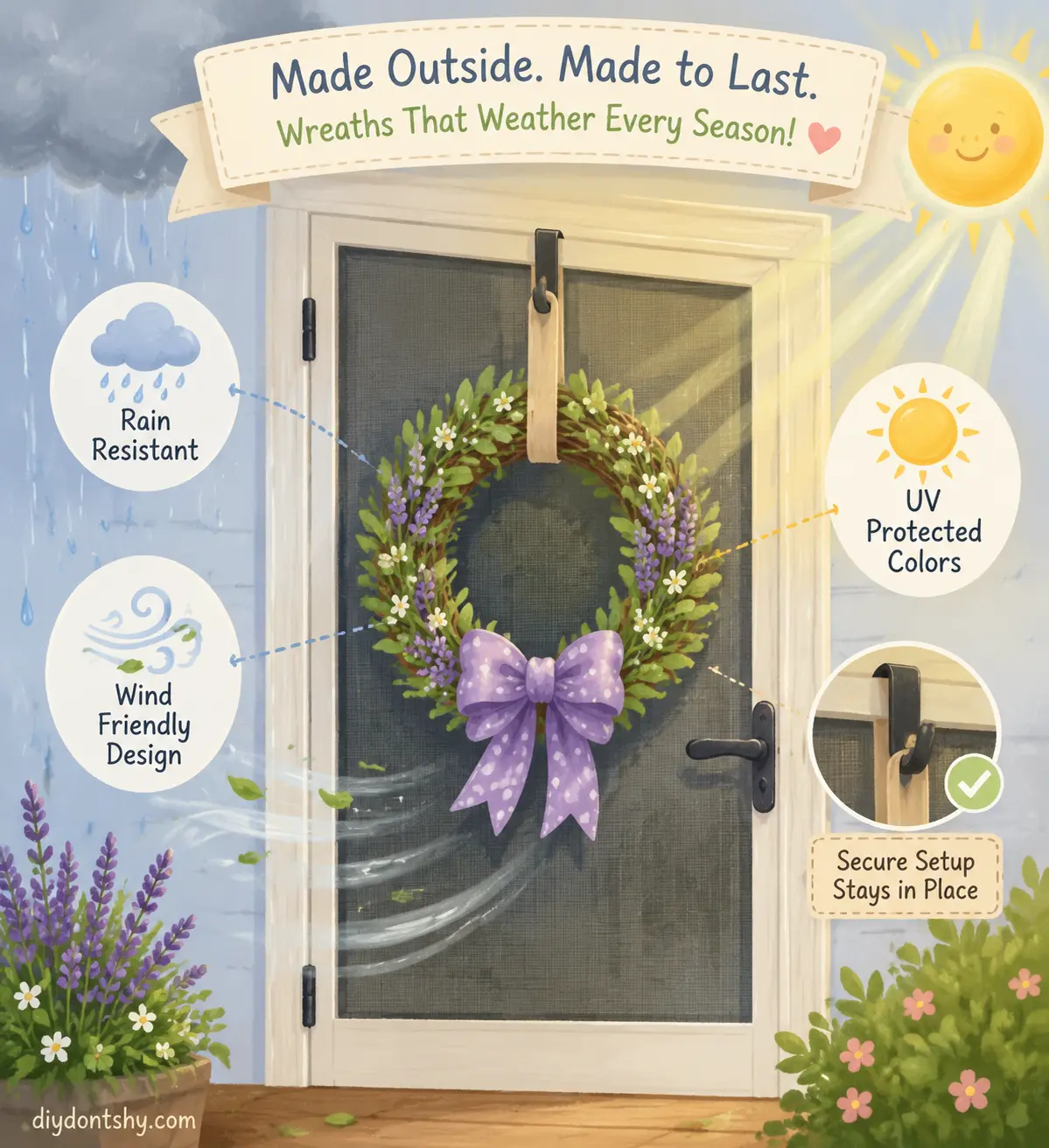
Outdoor decorations live at the mercy of weather. A wreath that looks perfect on a calm autumn afternoon may struggle during winter rainstorms or windy spring days. Understanding seasonal weather effects helps extend both the life of the wreath and the safety of the hanging system.
Rain is one of the most overlooked threats. Natural wreath materials absorb moisture, becoming heavier and harder to support. Wet greenery can also drip onto metal frames, increasing the risk of rust or staining. Some decorating experts recommend weatherproof sprays or UV-protective coatings to improve durability.
Heat creates another issue. Adhesive hooks often weaken under direct sunlight, especially on dark-colored doors that absorb heat. Suction cups may also loosen when temperatures fluctuate rapidly between day and night. This is why high-quality outdoor-rated hardware matters so much.
Wind presents the biggest challenge of all. A wreath acts like a sail, catching airflow every time the door opens or gusts pass through the entryway. Stabilizing the bottom edge dramatically reduces movement and noise. Some homeowners even reposition wreaths slightly lower on the door to reduce wind exposure near the top edge.
Here are a few smart weatherproofing tips:
- Choose synthetic greenery for rainy climates
- Use UV-resistant ribbon outdoors
- Add stabilizers during windy seasons
- Avoid oversized wreaths on storm doors
- Inspect hooks after major storms
Outdoor decorating is a little like gardening. Success depends not just on appearance, but also on understanding the environment.
Easy Ways to Remove the Wreath Without Leaving Marks
Removing the wreath properly matters just as much as hanging it correctly. Many homeowners accidentally damage paint or leave adhesive residue behind simply because they rush the process after the holidays end.
Adhesive hooks should always be removed according to manufacturer instructions. Experts emphasize pulling adhesive tabs slowly downward and parallel to the surface rather than yanking outward. This stretching motion releases the adhesive cleanly without peeling paint.
Magnetic hooks are easier because they simply lift away, though it’s still smart to wipe the area afterward to remove trapped moisture or dust. Ribbon systems usually leave no marks at all unless tape or staples were used improperly.
If residue remains, avoid harsh scraping tools. Warm water, mild soap, and a microfiber cloth usually remove leftover adhesive safely. For stubborn spots, rubbing alcohol applied gently works well on most painted metal surfaces.
Inspect the screen mesh carefully after removal. Even lightweight wreaths can occasionally create subtle tension marks around attachment points. Catching small issues early prevents larger tears later.
Decorating should leave your entryway looking better, not worse. A careful removal process ensures your screen door stays in excellent condition season after season.
Conclusion
Hanging a wreath on a screen door requires a little more strategy than decorating a standard front door, but the results are absolutely worth the effort. The right combination of lightweight wreath materials, damage-free hanging methods, and smart stabilization techniques can create a beautiful seasonal display without harming the door itself.
Magnetic hooks work wonderfully for steel frames, ribbons offer balanced support for most doors, and suction hooks provide a clean solution for glass inserts. The key is matching the method to the door type while keeping overall weight low. Small adjustments like adding felt pads, stabilizing fishing line, or weather-resistant materials can make a huge difference in long-term performance.
A well-hung wreath should feel effortless. It stays centered, moves quietly, survives changing weather, and removes cleanly when the season ends. Once you understand how screen doors respond to weight and movement, decorating becomes much simpler and far less stressful.
The best outdoor decorations aren’t just beautiful. They’re also practical, stable, and gentle on the surfaces they hang from.
FAQs
What is the safest way to hang a wreath on a screen door?
The safest method is usually a lightweight ribbon system or magnetic hook, depending on the door material. Both methods avoid drilling holes and reduce strain on the screen frame.
Can I use a heavy wreath on a screen door?
Heavy wreaths are not recommended for most screen doors. Experts generally suggest keeping decorations under three pounds to avoid sagging or frame damage.
Do adhesive hooks damage screen doors?
Quality removable adhesive hooks usually do not cause damage if removed properly. Pulling the adhesive strip slowly downward helps prevent paint peeling.
How do I stop my wreath from swinging in the wind?
Adding a clear fishing line stabilizer or a second hidden anchor point behind the wreath helps reduce movement and noise significantly.
Are suction hooks reliable outdoors?
High-quality outdoor suction hooks can work very well on clean glass surfaces, but they may weaken during extreme temperature changes or prolonged moisture exposure.

Kareem Sallam is an Egyptian special writer based in Australia, with a strong interest in practical ideas and creative content that focuses on everyday solutions. He writes clear, engaging articles designed to be easy to follow and useful for a wide range of readers.
His work centers on DIY projects, handmade ideas, simple crafts, and home based creativity. Kareem aims to deliver content that is practical, inspiring, and accessible, helping readers turn simple materials into smart and enjoyable projects.