How to Figure Out Your Hat Size Without Guesswork
Buying a hat should feel simple, yet it often turns into a guessing game. You order something that looks perfect online, wait excitedly for it to arrive, and then discover it squeezes your temples like a vise or slides around like it belongs to someone else. The truth is that many people never actually learn how to measure their head properly, which is why hat shopping becomes frustrating instead of enjoyable. A properly fitted hat is not just about style. It affects comfort, posture, confidence, and even how often you actually wear the hat you spent money on.
The good news is that finding your correct hat size is much easier than most people think. With the right measuring method and a basic understanding of sizing charts, you can confidently buy baseball caps, fedoras, cowboy hats, beanies, or bucket hats without second-guessing yourself every time. Current sizing guides from major brands and retailers consistently recommend measuring around the mid-forehead and just above the ears for the most accurate fit.
This guide breaks everything down step by step. You will learn exactly where the measuring tape should sit, how sizing conversions work, why different hat styles fit differently, and what mistakes cause people to buy the wrong size. By the end, you will know how to choose a hat that feels like it was made specifically for your head instead of settling for “close enough.”
Contents
Why Hat Size Matters More Than Most People Think
Most people underestimate how much a properly fitted hat changes the entire wearing experience. A good hat should feel almost invisible after a few minutes. You should not constantly tug it down, loosen it, or shift it around to relieve pressure. When the size is correct, the hat stays balanced naturally, like a perfectly fitted pair of shoes. The problem is that many people assume hats are universally sized when they are not. Even adjustable caps have fit ranges that work better for certain head measurements.
A hat that is too tight can create headaches, forehead pressure, and deep red marks along the hairline. Several modern hat guides warn that tight-fitting hats often become uncomfortable within an hour of wear. On the other side of the equation, loose hats slide during movement, shift in the wind, and lose their shape on your head. Instead of complementing your appearance, they look awkward and unstable. Imagine trying to carry a tray full of drinks while wearing shoes two sizes too big. That is essentially what wearing a loose hat feels like during daily movement.
There is also a major style component attached to sizing. Hats frame the face. When the fit is wrong, proportions look off immediately. A fitted baseball cap worn too high because it is too small can make the crown appear oversized. A fedora that drops too low can overwhelm facial features and make the wearer appear uncomfortable. Proper sizing helps the hat sit naturally where the designer intended, which instantly improves the overall appearance.
Confidence also plays a role here. People notice when they constantly adjust their clothing. If you keep touching your hat because it does not fit correctly, it creates visible discomfort. A properly fitted hat lets you forget about it entirely so you can focus on enjoying the occasion rather than managing the accessory.
Measuring Your Head the Right Way From the Start
The foundation of accurate hat sizing starts with correct measurement. Surprisingly, most sizing mistakes happen before the customer even looks at a size chart. They measure the wrong area, hold the tape incorrectly, or guess the number entirely. Accurate measuring is like building a house on a strong foundation. If the first step is wrong, everything after it becomes unreliable.
Tools You Need Before Measuring
The best tool for measuring your head is a flexible tailor’s measuring tape. These soft vinyl measuring tapes wrap smoothly around curved surfaces without stretching excessively. According to current sizing guides, this is the most accurate option for measuring head circumference. If you do not own one, do not panic. A simple piece of non-stretch string and a ruler can work almost as well.
Good lighting and a mirror also help more than people expect. Measuring blindly often causes the tape to tilt upward or downward around the head, creating inaccurate numbers. Some people even ask a friend or family member to help because keeping the tape perfectly level can be surprisingly tricky on your own.
Your hairstyle matters too. Thick hair, braids, curls, or tied-up hair can affect measurements significantly. If you usually wear your hair a certain way under hats, measure your head with that hairstyle in place. Otherwise, your “perfect” hat size may suddenly feel too tight once your hair adds extra volume.
Where the Measuring Tape Should Sit for Accuracy
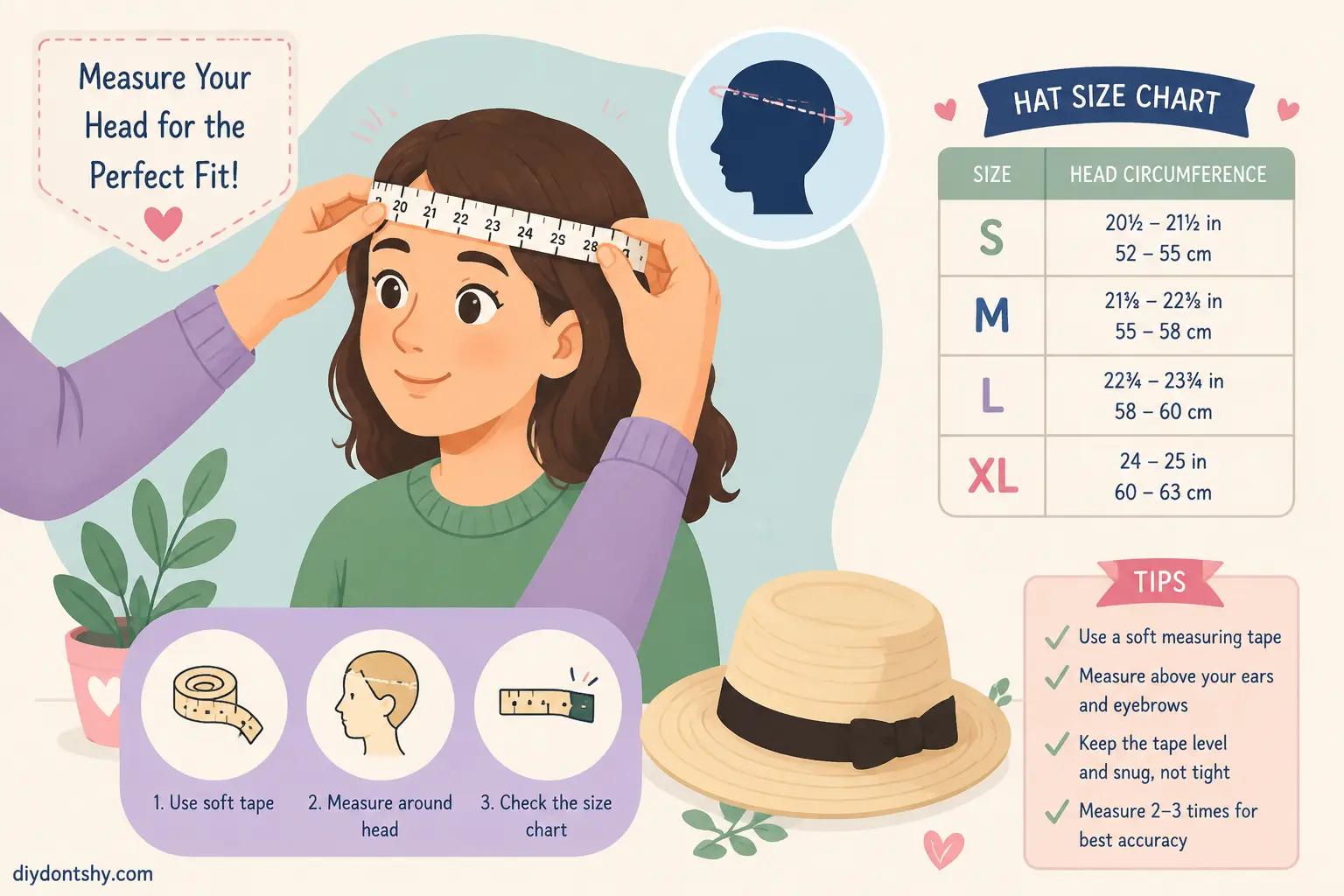
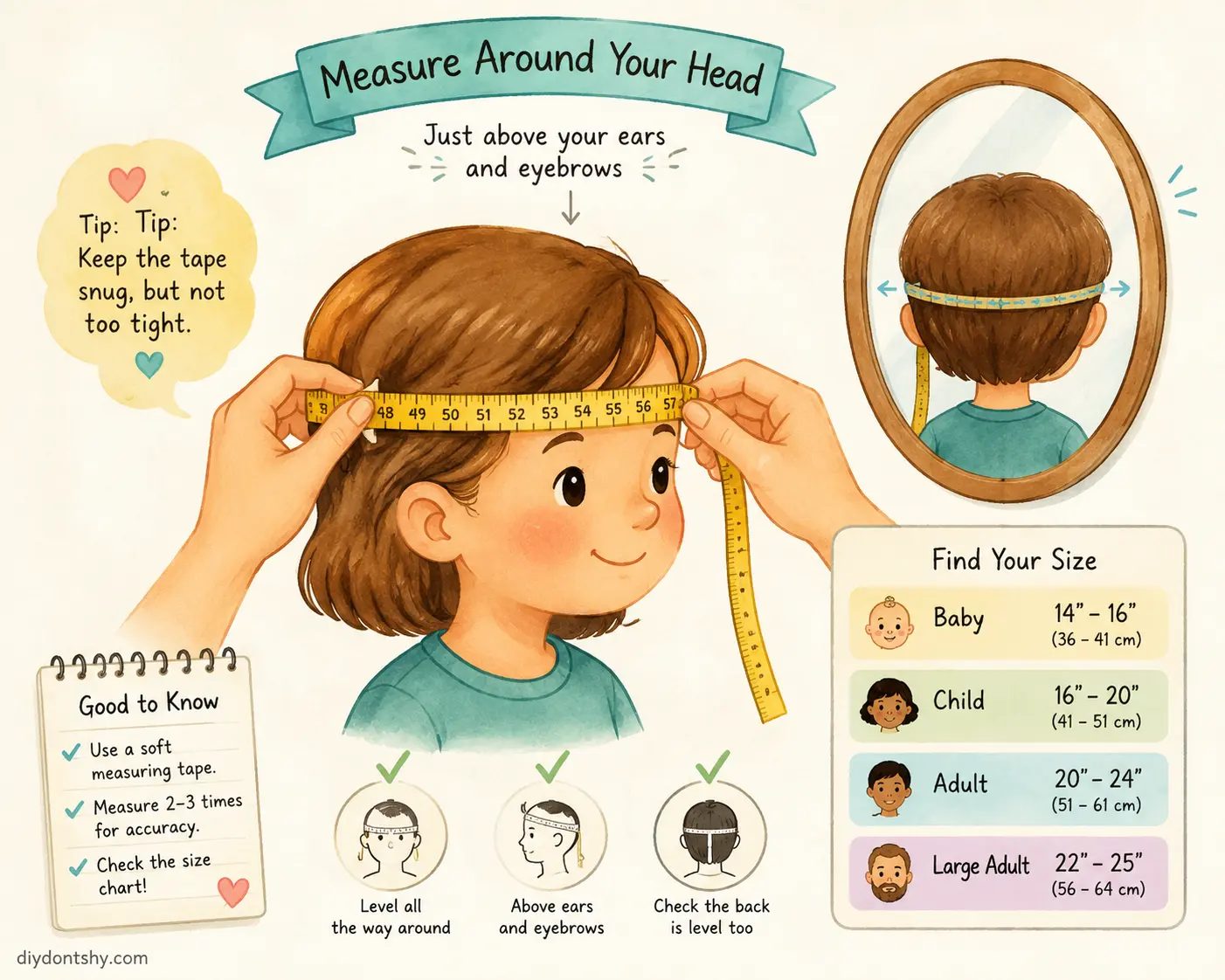
The tape should sit around the part of your head where the hat naturally rests. Most modern guides recommend placing the tape about one inch above the eyebrows, slightly above the ears, and around the widest part at the back of the head. Think of it like drawing a circle around the area where the hatband touches your skin.
Measuring With a Tape Measure
Start by standing in front of a mirror. Wrap the tape around your head while keeping it level from front to back. The tape should feel snug but not tight. If it digs into your skin, your measurement will be smaller than your actual size. If it hangs loosely, the measurement will be too large. A good trick is to imagine the feeling of a comfortable hat already resting there. That tension level is what you want while measuring.
Experts often recommend measuring two or three times because slight shifts can change the number. If your measurements vary slightly, use the average. Consistency matters more than speed during this process.
Measuring Without a Tape Measure
If you do not have a measuring tape, wrap a string around your head using the same positioning rules. Then lay the string flat against a ruler or standard measuring tape. This method is surprisingly accurate as long as the string does not stretch during measurement.
One important detail people overlook is posture. Looking downward while measuring can shift the tape position slightly. Try keeping your head level and relaxed. Small details matter because even a half-inch difference can move you into another hat size category.
Converting Measurements Into Standard Hat Sizes
Once you have your head circumference, the next step is converting that number into a standard hat size. This is where many shoppers become confused because hats use multiple sizing systems at once. You might see centimeters, inches, alpha sizes like Small or Large, and fitted sizes like 7 1/4 all on the same chart. It can look overwhelming at first, but the system is actually very logical once you understand the structure.
Understanding Inches vs Centimeters
Most international brands use centimeters because they allow for more precise measurement. American fitted hats often use fractional sizing such as 7, 7 1/8, or 7 3/8. The number represents the diameter relationship historically used in traditional hat making. Current size charts consistently show that 56–57 centimeters usually corresponds to Medium or size 7 to 7 1/8.
Centimeters are generally easier for accuracy because the units are smaller. Even modern fitting guides recommend measuring in centimeters whenever possible. A difference of just one centimeter can noticeably change how a fitted hat feels on your head.
Standard Hat Size Conversion Table
| Head Circumference (CM) | Inches | Standard Size | Fitted Hat Size |
|---|---|---|---|
| 54–55 cm | 21 1/8–21 1/2 | Small | 6 3/4–6 7/8 |
| 56–57 cm | 21 7/8–22 1/4 | Medium | 7–7 1/8 |
| 58–59 cm | 22 5/8–23 | Large | 7 1/4–7 3/8 |
| 60–61 cm | 23 1/2–23 7/8 | XL | 7 1/2–7 5/8 |
| 62–63 cm | 24 1/4–24 5/8 | XXL | 7 3/4–7 7/8 |
These ranges appear consistently across multiple current sizing guides and retailers.
What to Do If You Fall Between Sizes
This happens more often than people think. Most experts recommend sizing up rather than down when measurements fall between two sizes. A slightly larger hat can usually be adjusted using sizing tape or inserts. A hat that is too small is much harder to fix comfortably.
Think of it like airplane seats. Extra room can be managed easily, but not enough room becomes miserable very quickly. Choosing the slightly larger size gives you flexibility and avoids pressure headaches later.
Why Different Hat Styles Can Fit Differently
One of the biggest surprises for first-time hat buyers is discovering that the same numerical size can feel completely different depending on the hat style. This confuses many shoppers because they assume sizing should be universal. In reality, the structure, material, crown depth, and even the shape of the hat opening affect how it feels.
Baseball Caps vs Fedoras
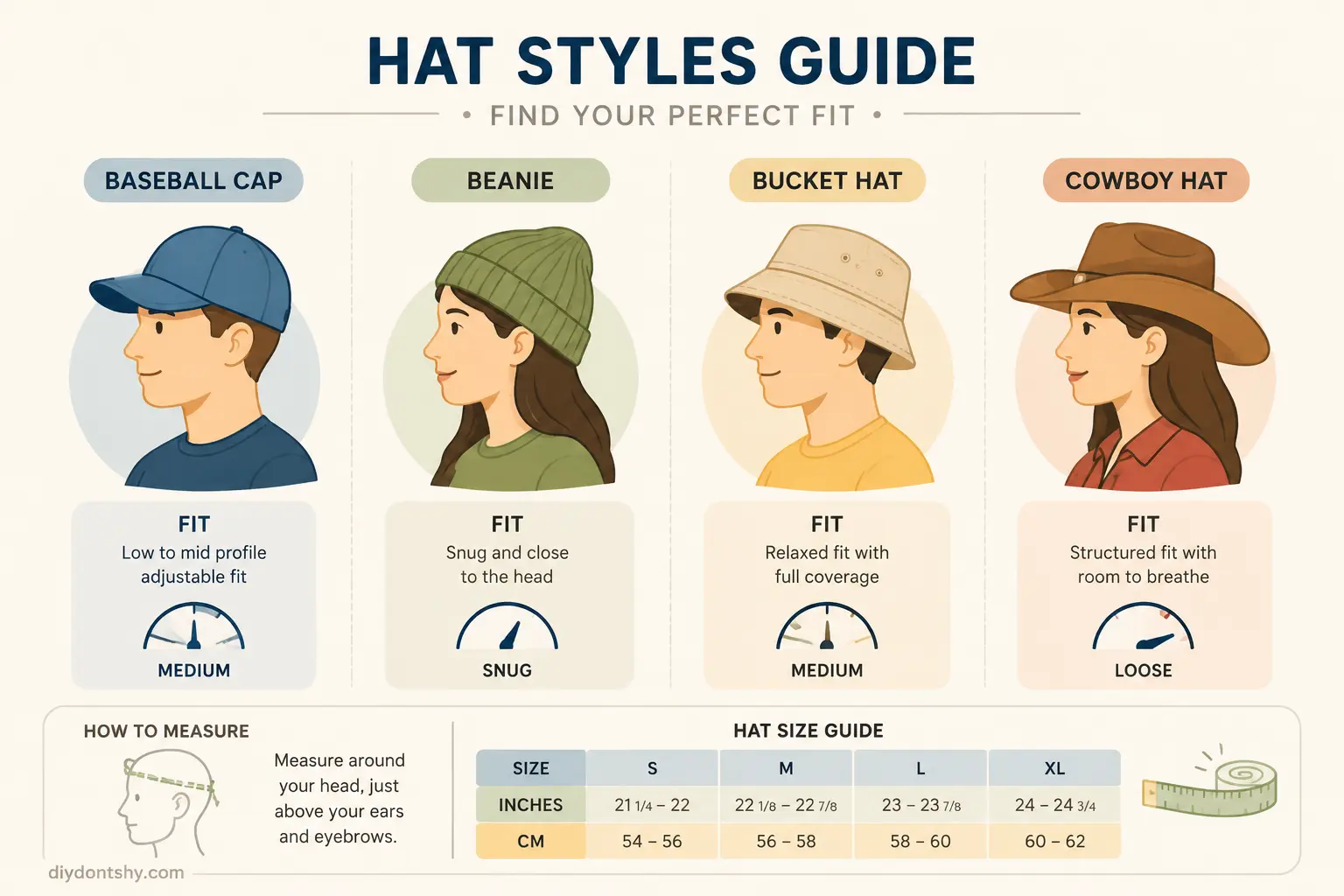
Baseball caps usually have softer construction and adjustable closures, making them more forgiving. Fedoras and structured hats are much less flexible because they maintain a rigid shape. A fitted fedora in your exact size may feel tighter than a casual cap because there is less material stretch.
The crown height also changes the experience. Low-profile hats sit closer to the scalp, while deeper crowns distribute pressure differently. That is why two hats with identical measurements may still feel completely different during wear.
Beanies, Bucket Hats, and Cowboy Hats
Beanies are naturally flexible due to knit fabric construction. Many are labeled “one size fits most” because the material stretches comfortably across a wider range of head sizes. Bucket hats usually offer moderate flexibility, especially in cotton fabrics.
Cowboy hats are a different world entirely. Multiple recent discussions among hat enthusiasts explain that cowboy hats can vary dramatically depending on oval shape, stiffness, and construction. Some are designed for rounder heads while others accommodate longer oval shapes. This explains why one cowboy hat may feel perfect while another in the same size feels painfully tight.
Why Brand Sizing Is Not Always Consistent
Manufacturing inconsistencies are surprisingly common. Reddit discussions from fitted hat communities repeatedly mention that hats labeled with the same size can fit differently even within the same brand. Material thickness, production batches, and quality control variations all contribute to this issue.
This is why reading customer reviews matters so much when buying online. Real buyers often mention whether a specific brand runs small, large, shallow, or deep. Those details can save you from expensive sizing mistakes.
Common Mistakes That Lead to the Wrong Size
Even people who measure carefully can make small errors that completely change the final fit. Most sizing mistakes are surprisingly simple, but they have a huge impact on comfort and appearance.
Pulling the Tape Too Tight
This is the most common error by far. People often assume the tape should feel tight for accuracy, but that creates a smaller measurement than your actual wearing size. Your hat should sit securely, not squeeze your skull like a bike helmet.
A useful rule is that you should still feel relaxed while measuring. If the tape leaves marks on your skin, it is too tight. Current fitting guides consistently recommend a snug but comfortable measurement.
Ignoring Hair Volume and Hairstyles
Hair changes everything. Thick curls, braids, dreadlocks, or long hair tied back can add noticeable circumference. People who measure immediately after a haircut sometimes discover their hats feel tighter weeks later as their hair grows out again.
Seasonal changes matter too. Winter beanies worn over thicker hairstyles may require slightly more room than summer caps worn with shorter hair. Treat your hairstyle like part of the measurement instead of pretending it does not affect the fit.
Assuming One Size Fits All
“One size fits most” does not mean one size fits everyone. Adjustable hats still have limitations. Large or small head circumferences may fall outside the comfortable range even if the strap technically closes.
This label is more like a restaurant saying a spicy dish suits “most people.” That may be true statistically, but individual experiences still vary significantly. Always check the actual size range whenever possible.
Signs a Hat Is Too Tight or Too Loose
Your body tells you quickly when a hat does not fit correctly. The challenge is recognizing those signals before discomfort turns into frustration.
Warning Signs of a Tight Hat
Tight hats create pressure points around the forehead, temples, and back of the head. Some people develop headaches after just 30 minutes of wear. Deep forehead lines after removing the hat are another major warning sign. Modern sizing experts note that a proper hat should feel secure without causing pressure pain.
You may also notice the hat sitting too high because it cannot settle naturally around the head. This creates an awkward floating appearance that immediately looks unnatural.
Another overlooked issue is reduced airflow. Tight hats trap heat and sweat more aggressively, making long-term wear uncomfortable in warm weather.
How to Tell When a Hat Is Too Loose
Loose hats shift during movement. You may feel the brim wobbling while walking or notice the hat sliding downward unexpectedly. Wind becomes your enemy because even light gusts can move the hat around.
Loose fitted hats also lose shape visually. Instead of following the natural contour of the head, they create gaps that make the crown appear oversized. If you constantly touch or adjust your hat during wear, that is usually a strong sign the fit is not right.
An easy test recommended by some fitting experts is the one-finger rule. You should comfortably fit one finger between the sweatband and your head. Less space often means too tight, while excessive space suggests looseness.
Adjusting the Fit Without Ruining Comfort
Sometimes the fit is close but not perfect. Thankfully, there are several ways to improve comfort without damaging the hat.
Using Hat Sizing Tape and Inserts
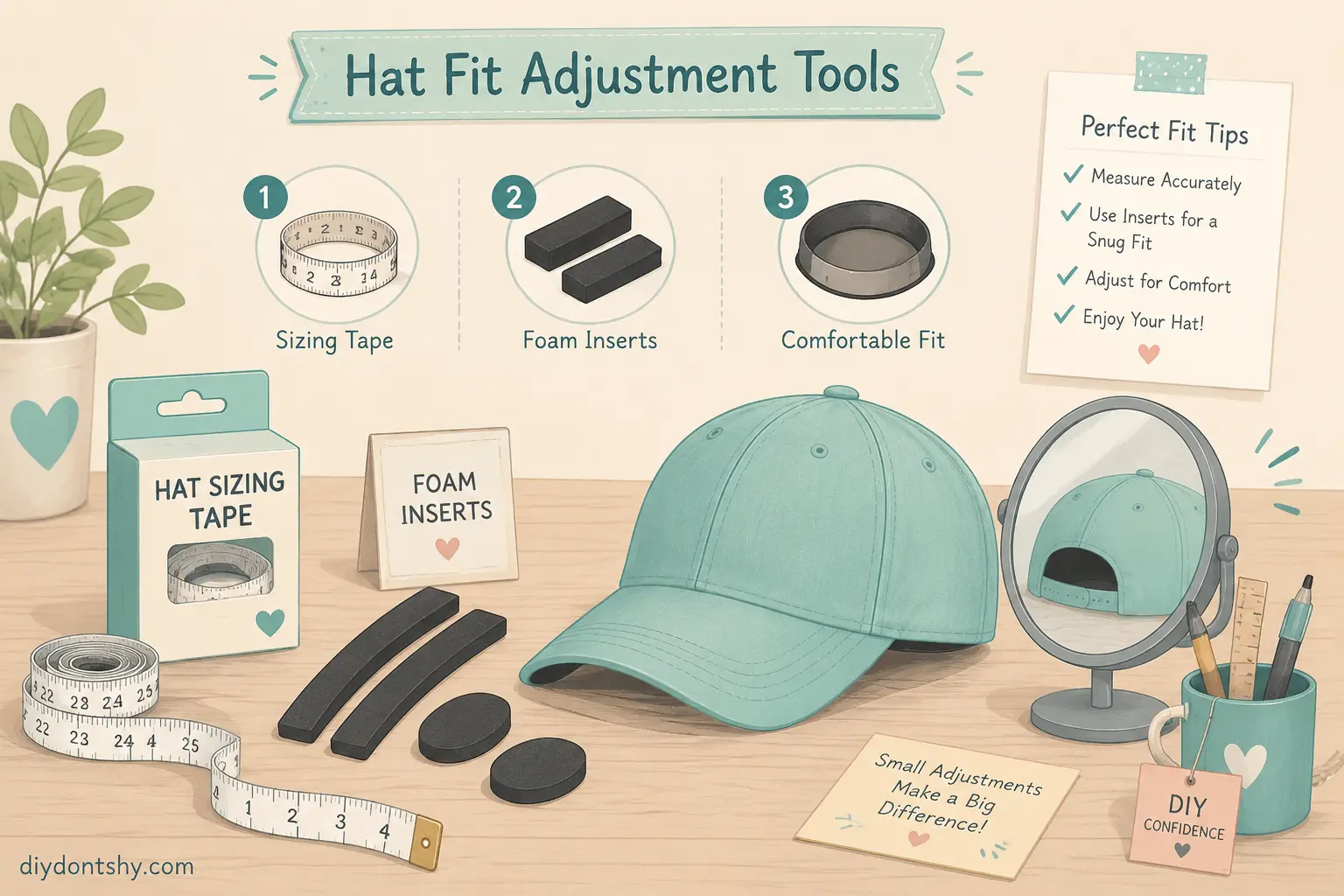
Hat sizing tape is one of the easiest and safest adjustment tools available. These adhesive foam strips attach behind the sweatband to reduce internal space slightly. Many hat enthusiasts recommend this method for fine-tuning larger hats.
The beauty of sizing tape is flexibility. You can add or remove layers gradually until the fit feels perfect. Unlike permanent alterations, inserts allow experimentation without commitment.
Foam inserts also help stabilize hats that shift during movement. This is especially useful for people whose head size falls directly between standard measurements.
Stretching a Tight Hat Safely
Some hats can be stretched slightly, especially wool or softer felt styles. Steam is commonly used to relax materials gently before stretching. Multiple hat owners discuss using professional stretching methods for minor adjustments.
Still, stretching has limits. Trying to force a significantly undersized hat into fitting is like trying to squeeze into jeans two sizes too small. You may technically manage it, but comfort disappears completely.
Professional hat shops often provide stretching services using specialized tools. If you own an expensive hat, professional adjustment is usually safer than DIY experimentation.
What to Consider When Buying Hats Online
Online hat shopping offers incredible variety, but it also removes the ability to try before buying. That means careful research becomes essential.
Reading Size Charts Carefully
Never assume your size is universal across every brand. Always compare your measurement directly against the company’s sizing chart. Modern retailers repeatedly emphasize that sizing varies between manufacturers.
Pay close attention to product-specific notes too. Some hats are intentionally oversized for style, while others are designed with tighter athletic fits. Reading descriptions carefully prevents surprises later.
Photos can also reveal clues. If the hat sits high on every model, the crown may run shallow. If reviews repeatedly mention tightness, believe them.
Checking Return Policies and Reviews
A flexible return policy is your safety net. Even accurate measurements cannot completely eliminate fit variations across styles and brands.
Customer reviews are often more valuable than official descriptions because buyers discuss real-world experiences. Reddit communities and review sections regularly mention issues like inconsistent sizing or unusual fit shapes.
If possible, buy from retailers that allow exchanges instead of final-sale purchases. This reduces risk dramatically, especially when trying unfamiliar brands for the first time.
Conclusion
Finding your correct hat size is not complicated once you understand the process. Accurate measuring starts with placing the tape around the mid-forehead, above the ears, and around the widest part of the head. From there, standard size charts help convert those measurements into fitted or general hat sizes. Current sizing guides consistently recommend choosing the larger option if you fall between sizes because small adjustments are easier than dealing with painful tightness.
The most important thing to remember is that fit varies between styles, brands, and materials. A baseball cap, fedora, beanie, and cowboy hat may all feel completely different even with identical size labels. Paying attention to customer reviews, measuring carefully, and understanding your personal comfort preferences makes the entire shopping experience smoother.
A great hat should feel effortless. It should stay secure without squeezing, frame your face naturally, and disappear from your thoughts once you put it on. When the fit is right, the hat becomes part of your personality instead of a constant annoyance. That is the real goal of proper sizing.
FAQs
1. How do I measure my head for a hat without a measuring tape?
You can use a non-stretch string or ribbon. Wrap it around your head where the hat normally sits, mark the overlap point, then measure the string against a ruler for an accurate circumference measurement.
2. Should I size up or down if I am between hat sizes?
Most modern sizing guides recommend sizing up. A slightly larger hat can usually be adjusted with sizing tape or inserts, while a tight hat is harder to fix comfortably.
3. Why do two hats with the same size feel different?
Different materials, crown depths, head shapes, and manufacturing variations affect fit. Even hats from the same brand may vary slightly according to customer reports and online communities.
4. What is the most accurate place to measure for a hat?
Measure around the mid-forehead, slightly above the ears, and around the widest part at the back of the head. This matches where most hats naturally rest.
5. Can a hat stretch over time?
Some materials like wool, cotton, and softer felt may loosen slightly with wear. Structured fitted hats usually stretch very little, so starting with the correct size remains important.

Ahmed Elhor is an Egyptian SEO specialist, pharmacist, and copywriter based in Canada. He combines strong research skills with search focused writing to create clear, helpful content that answers real questions and ranks effectively in search engines.
With a passion for practical DIY ideas, homemade solutions, and creative projects, Ahmed focuses on producing easy to follow guides that are simple, affordable, and useful for everyday life. His work blends creativity with structure, helping readers turn basic materials into meaningful results.