
How to Make a Fabric Gift Bag for Handmade Presents
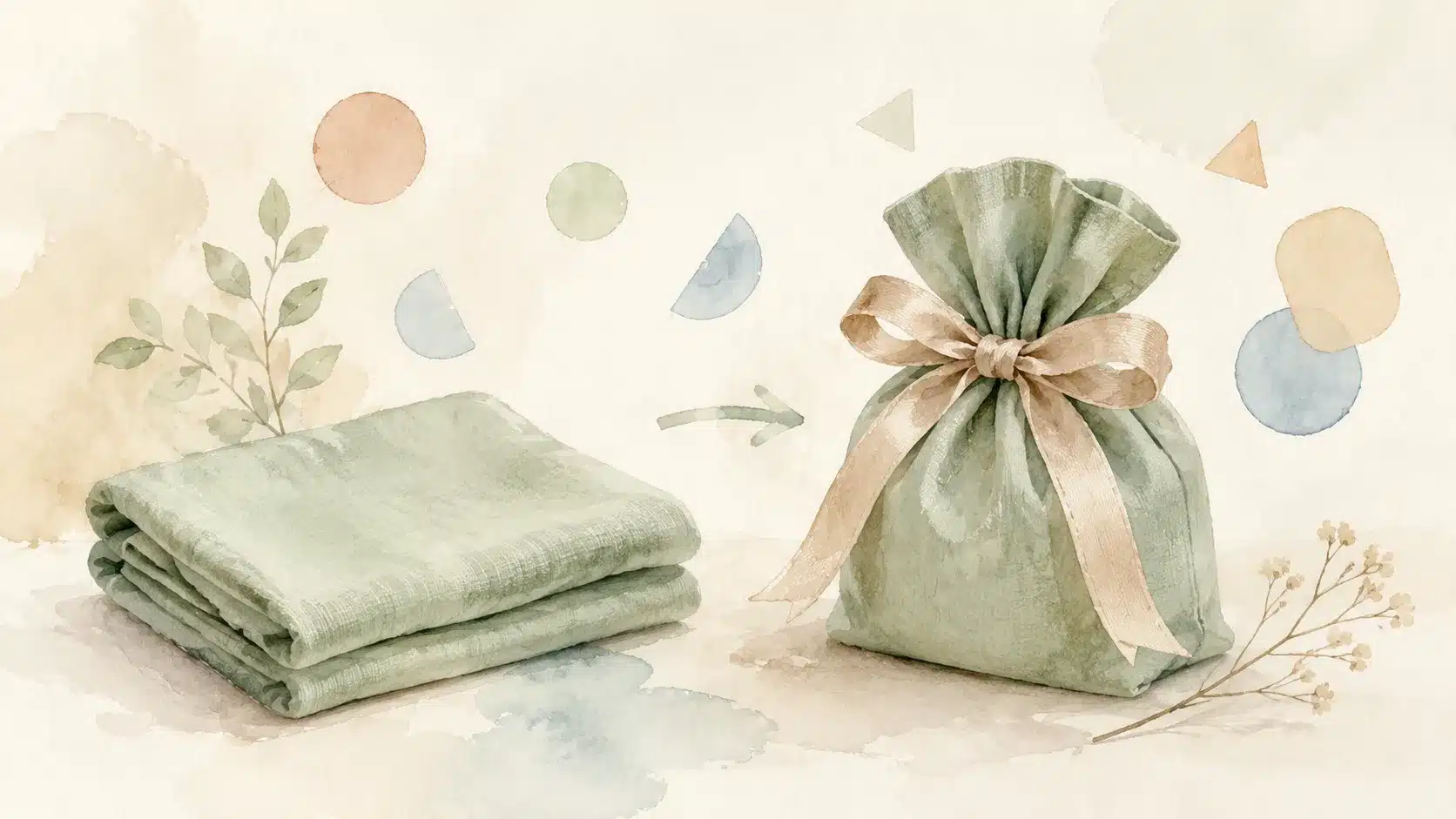
Fabric gift bags have quietly become one of the smartest alternatives to disposable wrapping paper. They look elegant, feel personal, and can be reused again and again. Even better, making one yourself is surprisingly simple. You do not need a fashion design degree or an industrial sewing machine to create a fabric gift bag that looks polished and gift-ready. With the right fabric, clean seams, thoughtful closures, and a few decorative touches, you can turn basic fabric into packaging that feels just as special as the gift inside.
Recent sewing and fabric industry guides show a growing interest in reusable drawstring and canvas-style bags because they combine sustainability with durability. Cotton canvas and medium-weight cotton fabrics remain among the most recommended choices because they hold shape well while still being easy to sew.
Before jumping into the sewing process, it helps to understand how every small detail affects the final look. Fabric choice changes the structure. Measurements change how luxurious the bag feels. Even the type of closure can make a handmade bag look rustic, modern, elegant, or playful. The good news? Once you learn the fundamentals, you can create bags for birthdays, holidays, weddings, baby showers, and almost any occasion.
Contents
Why Fabric Gift Bags Are Becoming More Popular
Fabric gift bags have moved far beyond being a niche craft project. Today, they are part of a bigger movement toward reusable packaging and thoughtful gift presentation. Wrapping paper often gets ripped apart within seconds and thrown away immediately afterward. Handmade fabric bags feel different. They become part of the gift itself. Many people reuse them for storage, travel organization, or future gift-giving, which gives them far more value than standard wrapping materials.
There is also a strong emotional element attached to handmade packaging. Imagine receiving a gift in a soft linen pouch tied with velvet ribbon instead of glossy paper covered in tape. The experience instantly feels warmer and more personal. Handmade gift bags create anticipation before the present is even opened. That little extra effort communicates care in a way that store-bought packaging often cannot replicate.
Reusable fabric bags are also practical. Better Homes & Gardens reported that millions of pounds of wrapping paper are discarded every year, much of which cannot be recycled. Fabric bags help reduce that waste while offering a more durable solution for packaging gifts. People are increasingly drawn to projects that combine creativity with sustainability, and fabric gift bags fit perfectly into that trend.
The beauty of these bags is their flexibility. You can create luxurious velvet bags for jewelry, rustic linen pouches for handmade soaps, playful cotton bags for children’s gifts, or sturdy canvas bags for wine bottles and heavy presents. Once you learn the core process, the possibilities become nearly endless.
Choosing Fabric That Holds Shape and Looks Gift-Ready
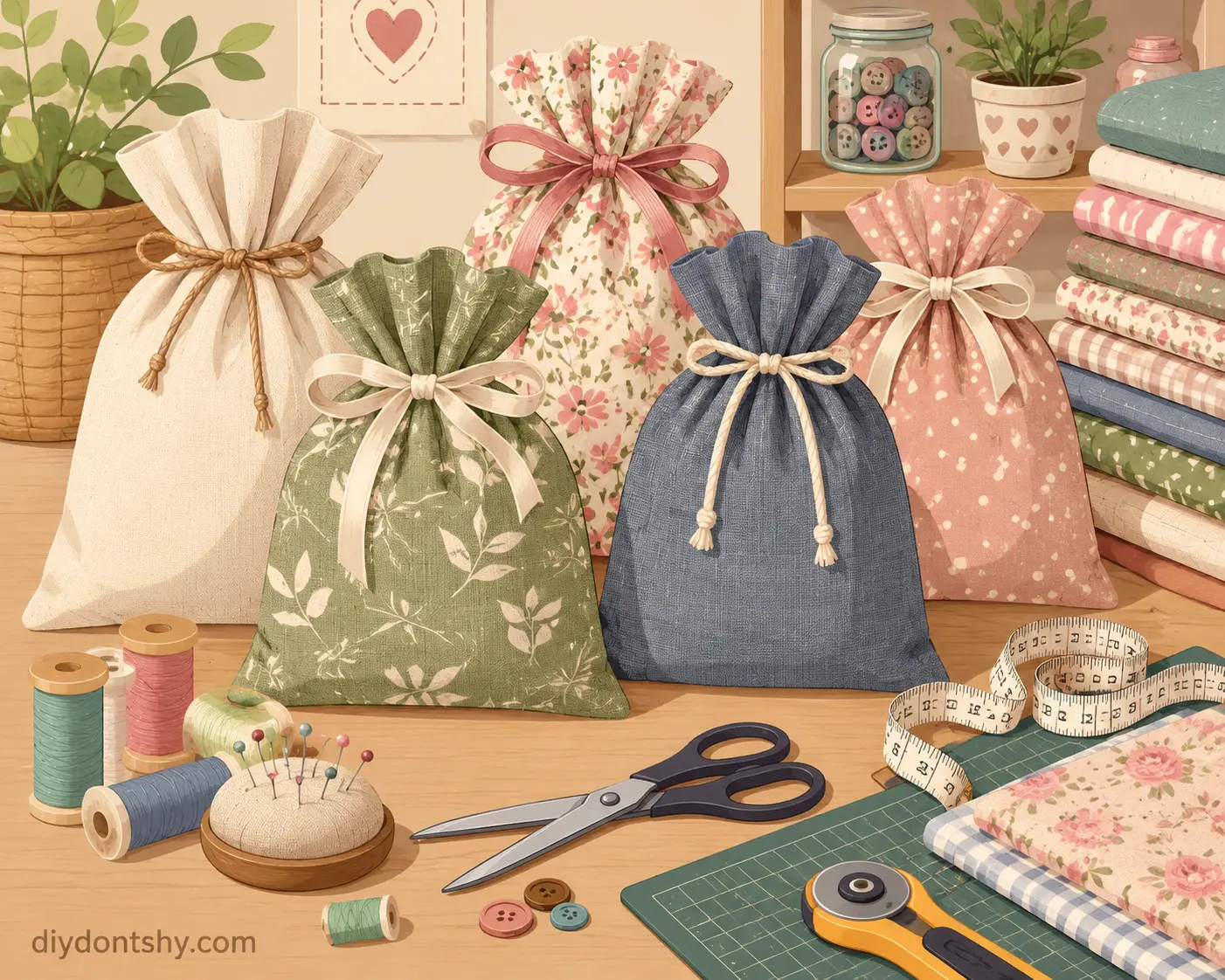
The fabric you choose determines almost everything about the final appearance of your gift bag. Structure, softness, durability, and overall elegance all begin with fabric selection. If the material collapses too easily, the bag may look unfinished. If it is too stiff, the bag can become difficult to close or sew properly. The goal is to find a balance between structure and flexibility.
Medium-weight cotton canvas is one of the best choices for beginners because it naturally holds shape while remaining manageable on most home sewing machines. Industry fabric guides consistently recommend canvas for reusable bags because it provides durability and a premium feel. Cotton twill and cotton duck fabric are also excellent choices if you want a slightly more refined or textured appearance.
Linen blends create a beautiful upscale aesthetic, especially for minimalist or rustic gift wrapping. Linen has a relaxed elegance that feels handcrafted in the best possible way. Some experienced sewists even recommend interfacing lightweight linen to stabilize it without losing its natural texture. Quilting cotton works well too, especially for seasonal prints and lightweight gift bags, though it benefits from interfacing if you want extra structure.
Here is a quick comparison of common fabric choices:
| Fabric Type | Structure | Ease of Sewing | Best For |
|---|---|---|---|
| Cotton Canvas | Strong and structured | Beginner-friendly | Reusable premium gift bags |
| Quilting Cotton | Soft and lightweight | Very easy | Decorative holiday bags |
| Linen Blend | Soft structure | Moderate | Elegant rustic gifts |
| Cotton Twill | Smooth and durable | Easy | Everyday fabric gift bags |
| Velvet | Luxurious but soft | Intermediate | Jewelry and luxury gifts |
If your chosen fabric feels too floppy, fusible interfacing can completely transform it. Think of interfacing like hidden scaffolding inside a building. Nobody sees it, but it supports the entire structure. Lightweight interfacing helps thinner fabrics maintain crisp edges and a cleaner silhouette.
Simple Measurements That Make Sizing Easier
One of the biggest mistakes beginners make is cutting fabric based only on the size of the gift itself. A gift bag needs breathing room. Without enough extra space, the bag becomes difficult to close, awkward to sew, and less visually appealing. Good sizing makes the bag look intentionally designed instead of squeezed together at the last minute.
A simple rule works surprisingly well for most projects: add at least 2 to 4 inches to the width and height of your item. This extra space accounts for seam allowances, closures, and the natural bulk created when the fabric folds around the gift. For bulky or oddly shaped items, add even more allowance.
Many reusable gift bag tutorials also recommend including seam allowances directly into your cutting measurements. That small detail saves frustration later because your finished dimensions stay predictable. A quarter-inch seam allowance works well for lightweight cotton, while heavier canvas may benefit from slightly wider seams for durability.
Standard sizes simplify the process tremendously. Small bags around 8 x 10 inches work well for jewelry, candles, and cosmetics. Medium bags around 12 x 14 inches fit books, clothing, or kitchen items. Larger bags can accommodate shoes, blankets, or boxed gifts. Once you establish a few reliable templates, you can reuse those measurements repeatedly.
Think of sizing like buying clothes. A little extra room creates comfort and elegance. Too tight, and everything feels strained. Gift bags follow the same principle. A generously sized bag drapes better, ties more attractively, and simply looks more luxurious.
Cutting Fabric Pieces Without Wasting Material
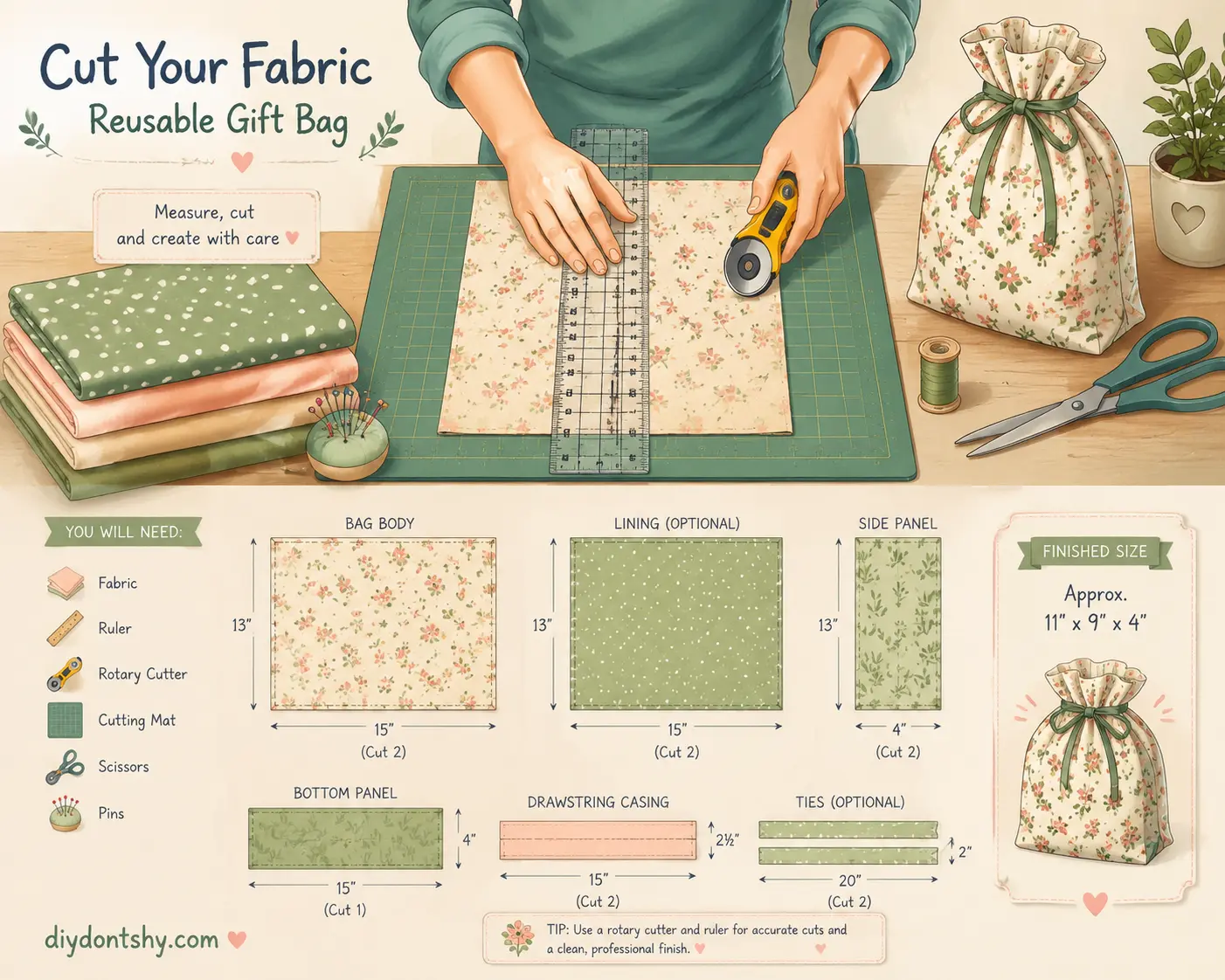
Fabric waste can quietly become one of the most expensive parts of sewing projects. Careless cutting often leaves awkward scraps that cannot be reused. Smart layout planning changes everything. Before making a single cut, it helps to arrange all pattern pieces on the fabric like puzzle pieces. This small habit can save surprising amounts of material over time.
Rotary cutters paired with self-healing cutting mats provide the cleanest and most accurate cuts, especially for straight edges. Scissors work perfectly well too, but rotary cutters are faster and help maintain sharper lines. Clean edges make sewing easier later because uneven fabric tends to shift during stitching.
Another helpful trick is folding the fabric strategically so you can cut multiple pieces at once. This speeds up production and ensures matching dimensions. When making several gift bags, batching your cuts creates consistency and reduces wasted fabric between pieces. Even experienced sewists often use rectangular layouts because rectangles maximize usable fabric space.
Some crafters also intentionally use leftover fabric scraps for smaller bags, labels, or trim details. Reddit sewing communities frequently share examples of gift bags created from leftover quilting cotton and unused project remnants. That approach not only saves money but also creates one-of-a-kind combinations that feel charming and creative.
Pattern direction matters too. Holiday prints, stripes, and floral fabrics all have visible orientation. Accidentally cutting pieces upside down creates an instantly unprofessional look. Taking an extra minute to check alignment before cutting saves a lot of disappointment later.
Sewing Clean Side Seams for a Neat Finish
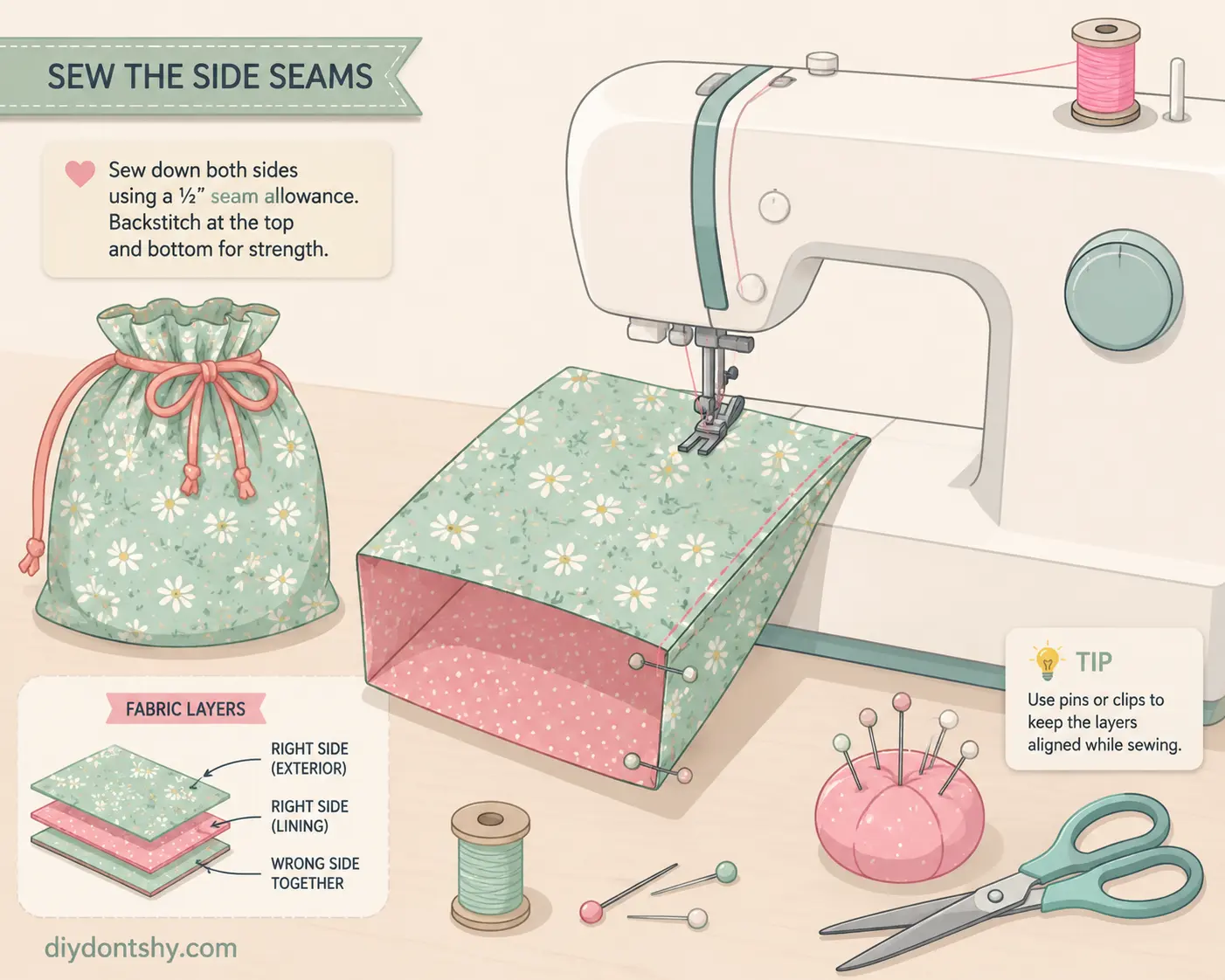
Neat seams separate amateur-looking bags from polished handmade designs. The outside appearance matters, but the inside finish matters just as much. A beautifully sewn exterior loses its charm quickly if loose threads and frayed edges are spilling out inside.
For most gift bags, a medium stitch length around 2.5 mm works well. Shorter stitches create stronger seams but can pucker lightweight fabric. Longer stitches may look too loose and decorative for structural seams. Consistency matters more than perfection. Straight, even stitching immediately elevates the overall appearance.
French seams are an excellent option if you want an especially clean interior. Instead of leaving raw fabric edges exposed, French seams encase those edges inside the seam itself. The result looks elegant and prevents fraying without requiring a serger. Lightweight cotton and linen work particularly well with this method.
Standard seams remain perfectly fine for beginners, especially when paired with pinking shears or zigzag stitching along raw edges. Better Homes & Gardens also recommends trimming raw edges carefully to reduce fraying in reusable gift bags. Small finishing details like pressing seams open with an iron can dramatically improve the final result.
Here is a quick comparison of seam finishes:
| Seam Type | Difficulty | Appearance | Best Fabric |
|---|---|---|---|
| Standard Seam | Easy | Basic clean finish | Canvas and medium cotton |
| French Seam | Moderate | Professional interior | Lightweight cotton and linen |
| Zigzag Edge Finish | Easy | Functional | Everyday gift bags |
| Serged Edge | Advanced | Store-quality finish | High-volume projects |
Ironing deserves special attention here. Pressing seams during each stage of construction makes the entire bag look sharper and more intentional. It is one of those tiny habits that creates a huge visual difference.
Drawstring, Ribbon, or Fold-Over Closures Compared
Closures completely change the personality of a fabric gift bag. A velvet ribbon creates elegance. A cotton drawstring feels casual and reusable. A fold-over flap can appear modern and minimalist. Choosing the right closure depends on both style and practicality.
Drawstring closures remain the most popular option because they are functional and reusable. Industry sewing guides often recommend cotton cords, twill tape, or ribbon threaded through sewn channels. Drawstrings work especially well for larger bags because they distribute tension evenly and allow the bag to close securely.
Ribbon closures create a softer, more decorative appearance. Satin ribbons feel festive and luxurious, while grosgrain ribbons add texture and structure. Ribbon-tied bags are particularly beautiful for weddings, baby showers, and holiday gifting. They may not be as durable as drawstrings for repeated use, but visually, they can be stunning.
Fold-over closures provide a more contemporary aesthetic. Instead of gathering the top, the fabric folds neatly over itself and closes with snaps, Velcro, or decorative buttons. This style works well for flat gifts like books, stationery, or handmade crafts.
For beginners, ribbon closures are often easiest because they require minimal sewing adjustments. Drawstring channels demand slightly more precision but reward you with a more professional and reusable design. Think of closures like the frame around a painting. They influence how the entire piece is perceived.
Easy Ways to Add Personality With Trim or Labels
Decorative details transform simple fabric bags into memorable handmade creations. Even the plainest cotton bag can become beautiful with the right trim, label, or embellishment. The trick is adding personality without overwhelming the design.
Lace trim creates vintage charm. Pom-pom trim adds playfulness. Velvet ribbon instantly increases the luxury factor. Contrast piping can give bags a surprisingly high-end appearance. Small additions often create the biggest impact because they draw attention without competing against the fabric itself.
Custom labels also make handmade bags feel incredibly polished. A tiny fabric tag with a handwritten name, embroidered initials, or a simple holiday message turns a reusable bag into a keepsake. Many crafters even attach reusable gift tags directly to the drawstring for added convenience.
Fabric paint, embroidery, iron-on vinyl, and applique designs all work beautifully on cotton and canvas surfaces. Experts frequently note that cotton fabrics hold decorative techniques especially well. This flexibility allows endless personalization options depending on the occasion.
Restraint matters here. Adding every decorative element at once can make the design feel cluttered. Think of embellishments like seasoning in cooking. A little enhances the flavor. Too much overwhelms everything else.
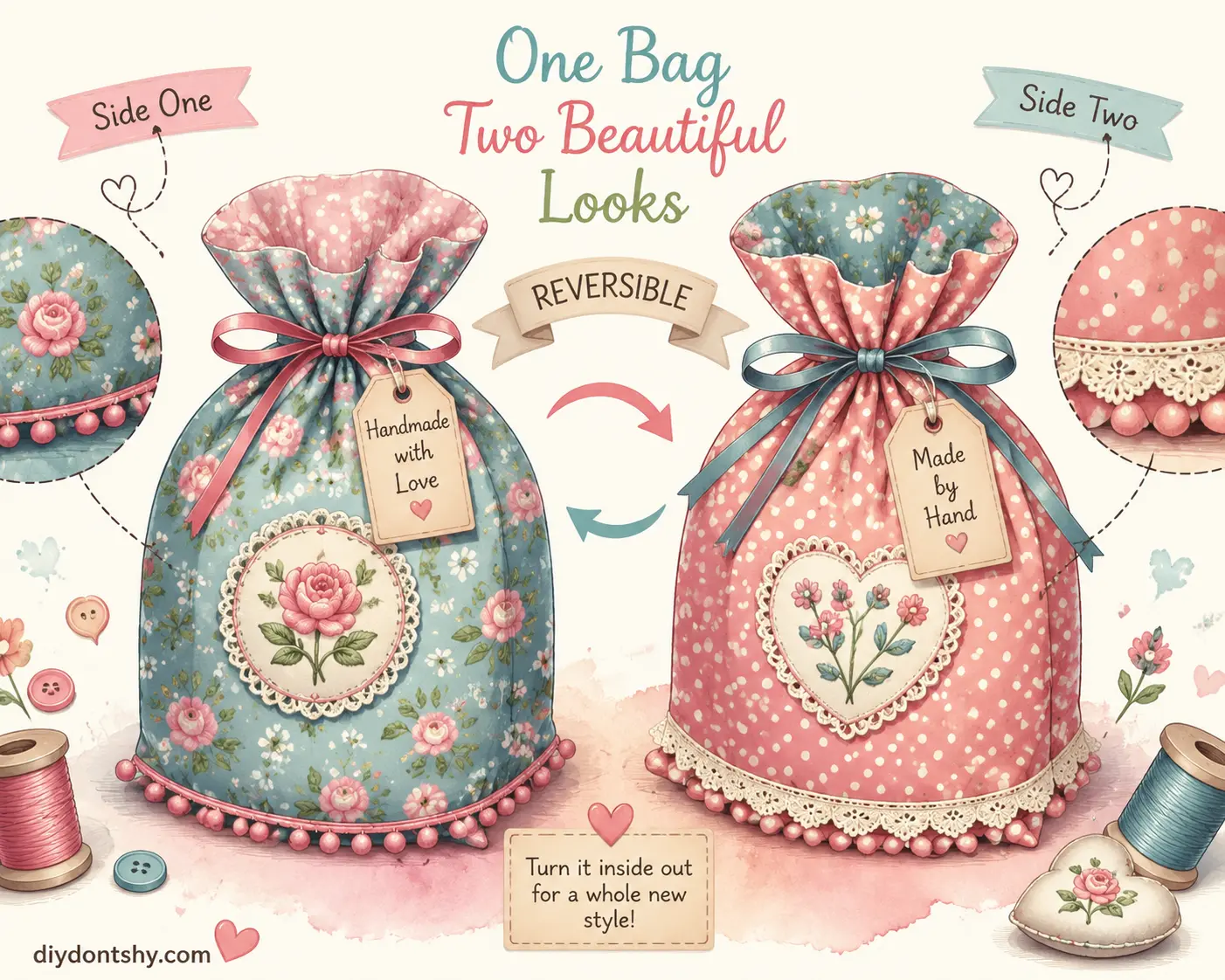
Reversible Designs That Make the Bag More Versatile
Reversible fabric gift bags are one of the smartest upgrades you can make. Instead of creating a bag with a visible inside and outside, you sew two coordinated fabrics together so both sides become usable. The result feels more substantial, more durable, and significantly more versatile.
Reversible bags also allow seasonal flexibility. Imagine one side featuring holiday prints while the other uses neutral linen or simple stripes. The recipient can reuse the bag throughout the year rather than storing it away after a single occasion. That added functionality increases the perceived value of the handmade gift.
Construction becomes slightly more advanced because seams must remain hidden between the fabric layers. Careful turning and topstitching help maintain clean edges. Lightweight interfacing between layers can also improve structure without adding excessive bulk.
The fabric combinations themselves become part of the creative process. Floral interiors paired with solid exteriors create subtle surprises. Neutral outer fabrics with bright hidden prints feel modern and sophisticated. Reversible designs invite experimentation because they allow two completely different aesthetics within a single project.
People often underestimate how luxurious lining can feel inside a bag. That hidden second fabric layer creates a smoother finish and eliminates visible raw seams. Even simple cotton bags suddenly feel more expensive when fully lined.
Finishing Touches That Give a Handmade Professional Look
The final details often determine whether a project looks homemade in a charming way or unfinished in a rushed way. Professional-looking fabric gift bags rely heavily on careful finishing work. Tiny improvements combine to create a polished result.
Thread trimming is essential. Loose threads immediately attract attention and make even well-sewn projects appear sloppy. Ironing the entire bag after completion also sharpens edges and smooths wrinkles. Many experienced sewists consider pressing almost as important as sewing itself because it defines the final structure.
<Matching thread blends seamlessly into the design, while contrast stitching can become a decorative feature. Choosing quality ribbon or cord also makes a noticeable difference. Cheap closures tend to fray quickly and weaken the overall appearance.
Packaging presentation matters too. Tissue paper inside the finished bag helps it hold shape before gifting. Small charms, wax seals, or dried floral accents can add elegant finishing touches without much expense.
One of the most overlooked details is proportion. Balanced dimensions, evenly spaced closures, and symmetrical stitching subconsciously communicate quality. People may not immediately identify why one handmade bag looks more professional than another, but those subtle details create the difference.
Handmade fabric gift bags are ultimately about creating an experience. The recipient notices the texture, the weight, the closure, and the craftsmanship before they even see the gift itself. That anticipation becomes part of the memory.
Conclusion
Making a fabric gift bag combines creativity, practicality, and thoughtful design into one rewarding project. The process is simple enough for beginners yet flexible enough for experienced sewists to personalize endlessly. From choosing structured fabrics like canvas and cotton twill to experimenting with reversible designs and decorative trims, every decision shapes the final result.
The best fabric gift bags balance beauty with usability. Clean seams, thoughtful sizing, and polished closures transform ordinary fabric into reusable packaging that feels meaningful and intentional. Unlike disposable wrapping paper, handmade bags continue living long after the gift exchange ends. They become storage pouches, travel organizers, reusable shopping bags, or future gift wrapping for someone else.
That is part of their magic. A well-made fabric gift bag is not just packaging. It becomes a small handmade object people genuinely want to keep.
FAQs
1. What is the best fabric for making reusable gift bags?
Medium-weight cotton canvas, cotton twill, and quilting cotton are among the best choices. Canvas works especially well when you want a structured, durable bag that holds its shape.
2. Do I need interfacing for fabric gift bags?
Not always. Heavier fabrics like canvas often hold shape naturally, but lightweight cotton or linen may benefit from fusible interfacing for added structure.
3. What closure is easiest for beginners?
Ribbon tie closures are usually the easiest because they require minimal construction. Drawstring closures look more professional but involve sewing channels.
4. How do I stop fabric gift bags from fraying inside?
French seams, zigzag stitching, pinking shears, or serged edges all help prevent fraying and create a cleaner interior finish.
5. Can fabric gift bags be machine washed?
Yes, most cotton and linen gift bags can be machine washed. Prewashing fabric before sewing helps minimize shrinkage later.

Kareem Sallam is an Egyptian special writer based in Australia, with a strong interest in practical ideas and creative content that focuses on everyday solutions. He writes clear, engaging articles designed to be easy to follow and useful for a wide range of readers.
His work centers on DIY projects, handmade ideas, simple crafts, and home based creativity. Kareem aims to deliver content that is practical, inspiring, and accessible, helping readers turn simple materials into smart and enjoyable projects.


