How Many Inches Is a King Size Blanket for Different Bed Types

Choosing the right blanket size sounds simple until you actually start shopping. One brand says a king blanket is 108 x 90 inches, another lists 104 x 100, and suddenly you are wondering whether your bed is somehow the wrong size. The confusion gets even worse when you throw California king beds, oversized comforters, thick mattresses, and personal sleeping habits into the mix.
A blanket is not just about covering the mattress. It affects warmth, comfort, bedroom aesthetics, and even how well you sleep with a partner. Nobody enjoys waking up at 3 a.m. because the blanket has migrated to the other side of the bed like a stubborn cat claiming territory. Understanding blanket measurements helps you avoid that nightly tug-of-war and makes online shopping far less frustrating.
Recent bedding size research shows that most standard king blankets measure around 108 inches wide by 90 to 100 inches long, though sizing varies heavily between manufacturers. The lack of strict industry standards means shoppers need to pay attention to exact measurements rather than simply trusting labels like “King” or “California King.”
Before buying your next blanket, it helps to understand exactly how blanket sizing works, why king and California king sizes differ, how mattress height changes everything, and which materials create the best drape and coverage.
Contents
Understanding Standard King Blanket Dimensions
Finding the right king blanket size requires looking beyond the label. Most standard king blankets measure around 108 inches wide with lengths commonly ranging from 90 to 100 inches. These dimensions provide the extra fabric needed to cover mattress sides and create a comfortable drape instead of stopping at the mattress edge.
How King Blanket Measurements Work
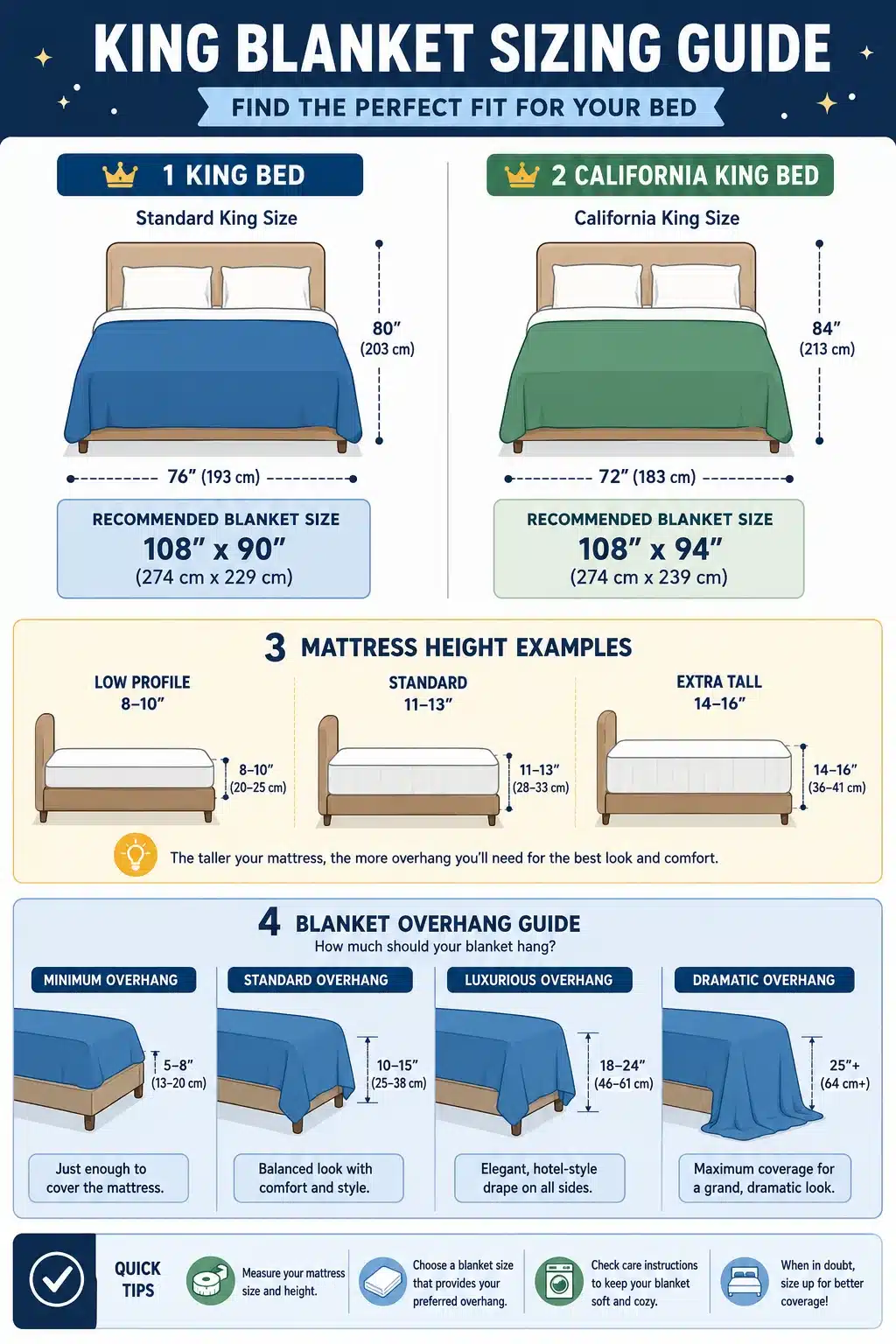
A standard king mattress measures 76 x 80 inches, so a blanket must be larger than the mattress itself. The additional width and length allow the blanket to hang naturally, improve warmth, and provide enough coverage for different sleeping positions. The amount of overhang depends on mattress thickness, bed height, and personal preference.
Many shoppers expect king blankets to follow one exact measurement, but bedding sizes are not controlled by a universal standard. Manufacturers may adjust dimensions based on fabric type, intended style, and whether the product is designed for a minimal fit or a more luxurious drape.
Why Extra Coverage Matters
A properly sized blanket improves both comfort and appearance. Enough fabric helps prevent exposed areas during sleep, creates balanced proportions on the bed, and reduces the need for constant adjustments during the night. For thicker mattresses or shared beds, choosing a slightly larger blanket often provides a better overall experience.
Why Blanket Sizes Vary Between Brands
Blanket sizing can feel inconsistent because manufacturers do not always follow identical measurements for products with the same name. A king blanket from one brand may provide a generous drape, while another may offer a tighter fit even though both are marketed as king size.
Factors That Change Blanket Dimensions
- Fabric type: Natural fibers such as cotton and wool may shrink slightly, while synthetic materials often maintain their original dimensions.
- Manufacturing process: Some brands measure products before washing, while others list finished measurements after processing.
- Design style: Decorative blankets often include extra length or width for a layered bedroom look.
- Regional standards: Imported bedding may use different sizing systems than U.S. products.
These differences make the exact measurements more important than the name printed on the package. Checking width, length, fabric composition, and care instructions helps shoppers choose a blanket that will maintain proper coverage over time.
King Versus California King Blanket Differences
Standard King Mattress Dimensions
A standard king mattress measures 76 inches wide and 80 inches long. It is the widest commonly available mattress size in the United States, making it especially popular among couples, families with children, and pet owners whose dogs somehow occupy more bed space than physics should allow.
Because the mattress is wider, king blankets prioritize horizontal coverage. Most standard king blankets emphasize width over extra length, which is why measurements like 108 x 90 inches are so common. The wider design helps prevent blanket stealing during sleep and allows for more generous side drape.
Standard king beds also work well in square-shaped bedrooms because their proportions balance room dimensions more evenly. Many people mistakenly assume California king beds are larger overall, but that is not actually true. A standard king has slightly more total surface area because it is wider.
The width becomes especially important for couples who toss and turn during sleep. Losing four inches of width may sound minor on paper, but during actual sleep it can feel surprisingly significant. That difference explains why many shoppers prefer standard king sizing unless they specifically need extra legroom.
California King Mattress Dimensions
A California king mattress measures 72 inches wide and 84 inches long, making it four inches narrower and four inches longer than a standard king. Tall sleepers often prefer California king beds because the extra length prevents feet from hanging off the edge.
Because California king mattresses are longer, their blankets need additional vertical coverage. Typical California king blanket dimensions range from 104 x 96 inches up to 108 x 100 inches depending on the manufacturer. The dimensions shift to prioritize length rather than width.
This distinction creates one of the most common online bedding shopping mistakes. Many buyers assume king and California king blankets are interchangeable because the names sound similar. In reality, using a standard king blanket on a California king bed can leave the foot area exposed. Using a California king blanket on a standard king may create awkward excess length while reducing side coverage.
Online discussions among mattress buyers repeatedly show confusion surrounding these dimensions. Reddit users frequently mention purchasing the wrong blanket size because retailers combine king and California king listings under one category. That confusion becomes especially problematic when shopping for premium bedding online.
Why the Wrong Blanket Size Causes Problems
Using the wrong blanket size affects more than appearance. Coverage problems can seriously impact sleep comfort, especially for couples. A blanket that barely reaches the mattress edges tends to shift during the night, exposing sleepers to drafts and increasing nightly adjustments.
Imagine trying to share a small beach towel after swimming. Technically possible? Maybe. Comfortable? Not even close. Blankets work similarly. Insufficient coverage creates tension between sleepers because every movement pulls fabric away from someone else.
Wrong sizing also disrupts bedroom aesthetics. Undersized blankets look stretched and awkward, while oversized blankets may pool excessively on the floor. Luxury hotel beds achieve their polished appearance largely through carefully proportioned bedding layers.
Shoppers with adjustable beds face even greater challenges because mattress movement changes blanket positioning throughout the night. Extra blanket dimensions help maintain consistent coverage as the mattress shifts angles during sleep.
How Mattress Height Changes Blanket Fit
Thick Mattresses Need Larger Blankets
Modern mattresses are dramatically taller than older models. Luxury pillow-top mattresses regularly exceed 14 inches in height, and hybrid mattresses continue trending thicker every year. According to current sleep industry data, mattress height averages have increased substantially since 2010.
Every additional inch of mattress height reduces blanket drape on both sides. If your mattress rises two inches taller, you effectively lose four inches of blanket coverage overall because fabric must travel farther down each side. That math surprises many buyers who focus only on mattress width and length.
A standard king blanket that fits beautifully on a 10-inch mattress may suddenly feel too small on a 15-inch pillow-top model. This explains why oversized king blankets have become increasingly popular. Oversized king blankets often measure around 114 x 100 inches, offering additional side coverage for thicker mattresses.
The issue becomes even more noticeable for couples sharing one blanket. A tall mattress combined with restless sleepers quickly consumes available fabric. Extra width provides flexibility and reduces nightly blanket battles.
Pillow Tops and Adjustable Beds
Adjustable beds introduce another sizing challenge because the mattress changes position throughout the night. When the head or foot section elevates, the blanket naturally shifts and redistributes fabric. Smaller blankets often slide downward or leave exposed areas during adjustment.
Pillow-top mattresses create similar complications because their rounded edges require more drape to maintain coverage. Think of wrapping a thick sandwich versus a flat cracker. The thicker object requires more material to cover completely.
Sleep experts increasingly recommend oversized blankets for adjustable bases because extra fabric accommodates movement better. Shoppers investing thousands in premium sleep systems rarely want coverage issues caused by undersized bedding.
The visual effect matters too. Thick mattresses paired with undersized blankets can make even expensive bedroom setups appear incomplete. Proper blanket sizing restores balanced proportions and creates that luxurious layered look people associate with high-end hotels.
Oversized Blankets and Extra Coverage Preferences
Oversized blankets are increasingly popular because many sleepers want more freedom, comfort, and visual appeal from their bedding. Extra fabric creates a deeper drape around the mattress and gives couples more room to move without constantly pulling the blanket away from each other.
Why Couples Choose Larger Blankets
Couples often have different sleeping habits, temperatures, and movement patterns. A wider blanket provides additional coverage for both partners, reducing interruptions caused by shifting covers during the night. This is especially useful for people who share larger mattresses or prefer a relaxed sleeping position.
Oversized Bedding for Modern Bedrooms
Beyond comfort, oversized blankets have become popular in bedroom design. The extra material creates a layered, hotel-inspired appearance and works well with tall mattresses, platform beds, and decorative bedding arrangements. Choosing additional coverage can improve both the practical function and overall style of a bedroom setup.
For shoppers unsure between standard and oversized options, selecting the larger size is often the safer choice when mattress height, partner comfort, or a luxurious draped appearance are priorities.
Luxury Bedding Trends in 2026
Luxury bedding trends in 2026 emphasize layering, oversized silhouettes, and hotel-inspired styling. Consumers increasingly view bedding as part of interior design rather than purely functional sleep equipment.
High-end bedding brands now market extra-wide blankets specifically for deep mattresses and designer bed frames. Longer blankets also help accommodate platform beds that sit higher off the ground. These trends explain why blanket dimensions continue expanding across premium bedding categories.
There is also growing awareness around sleep quality and temperature regulation. People are investing more heavily in bedding materials, blanket sizing, and customized sleep environments. Proper blanket dimensions contribute directly to uninterrupted sleep, especially for couples.
Retailers have responded by offering “oversized king,” “grand king,” and “extra drape” collections aimed at consumers who want additional coverage. While naming conventions vary, the overall trend points toward larger bedding dimensions becoming the new normal.
Materials That Affect the Way a Blanket Drapes
Cotton, Wool, and Fleece Differences
Blanket material dramatically affects how the blanket behaves on the bed. Two blankets with identical measurements can look completely different depending on fabric weight and flexibility.
Cotton blankets generally create structured drape with moderate breathability. Waffle weave cotton blankets maintain shape well and stay positioned throughout the night. Wool blankets provide heavier drape and excellent insulation, though some sleepers find them too warm.
Fleece blankets behave very differently. Lightweight polyester fleece tends to bunch, slide, and cling rather than flowing smoothly over mattress edges. According to current bedding guides, heavier materials generally create cleaner, more stable drape compared to lightweight synthetics.
Linen blankets create relaxed, airy drape with natural texture. Many luxury bedding enthusiasts prefer linen for layered aesthetics because it looks intentionally casual yet elegant. The downside is that linen sizing mismatches become more visually obvious due to its looser structure.
Material thickness also changes perceived blanket size. Puffy comforters appear larger visually even if actual dimensions match thinner blankets. That illusion sometimes tricks shoppers into believing one blanket fits better than another despite identical measurements.
Lightweight Versus Heavy Materials
Lightweight blankets suit hot sleepers and warmer climates because they allow airflow and easier movement. Heavy blankets create insulation and security but require more careful sizing consideration due to their reduced flexibility.
A heavy wool blanket with limited stretch may need larger dimensions to achieve the same coverage as a lightweight cotton blanket. Thick materials resist bending around mattress edges, reducing effective drape.
Weighted blankets introduce an entirely separate sizing category because excessive overhang can cause pulling and shifting due to gravity. Manufacturers often recommend weighted blankets that match mattress dimensions more closely than traditional blankets.
The ideal blanket material depends heavily on climate, sleeping style, and personal comfort preferences. People in colder regions may prioritize thickness and insulation, while warm sleepers often choose breathable fabrics with generous sizing for airflow flexibility.
Common Measurement Confusion When Shopping Online
Finished Size Versus Pre-Wash Size
One of the most frustrating aspects of online bedding shopping involves unclear measurement labeling. Some brands list blanket dimensions before washing, while others advertise finished dimensions after shrinkage occurs.
Cotton and natural fiber blankets frequently shrink after their first wash cycle. Industry reports suggest shrinkage rates between 3% and 5% are common depending on material type. A blanket initially measuring 108 inches wide could shrink several inches, dramatically changing fit on a king mattress.
Shoppers rarely notice these disclaimers buried deep in product descriptions. Instead, they assume listed dimensions reflect actual long-term sizing. That misunderstanding contributes heavily to negative bedding reviews online.
Another issue involves decorative photography. Retail images often show oversized styling techniques using larger blankets than the actual advertised dimensions. Strategic camera angles and mattress proportions further exaggerate apparent coverage.
Reading detailed product specifications becomes essential when shopping online. Experienced buyers focus on exact dimensions, fabric composition, shrinkage notes, and customer reviews mentioning fit after washing.
International Size Naming Differences
International bedding terminology creates enormous confusion for online shoppers. King-size measurements vary significantly between countries, and some retailers fail to clarify regional standards clearly.
United Kingdom king blankets differ from U.S. king blankets, while European duvet sizing follows separate conventions entirely. Online marketplaces selling imported bedding often combine international sizing systems without sufficient explanation.
Even within North America, retailers occasionally group king and California king products together. Reddit discussions show frequent complaints about mismatched duvet covers and blankets caused by unclear labeling.
The safest approach is ignoring marketing labels altogether and focusing strictly on inches or centimeters. Numbers eliminate ambiguity in ways category names never can.
Here is a quick comparison table for common king bedding dimensions:
| Bedding Type | Standard King | California King |
|---|---|---|
| Mattress Size | 76 x 80 inches | 72 x 84 inches |
| Typical Blanket Size | 108 x 90-100 inches | 104-108 x 96-108 inches |
| Main Advantage | Extra width | Extra length |
| Best For | Couples | Tall sleepers |
Layering Bedding Without Choosing the Wrong Size
Matching Sheets, Duvets, and Blankets
Layered bedding creates comfort and visual depth, but coordinating sizes properly matters. A fitted sheet may fit perfectly while the duvet appears too short or the blanket hangs unevenly.
The key is understanding that different bedding layers serve different purposes. Fitted sheets match mattress dimensions closely, while blankets and duvets intentionally exceed mattress size for coverage and drape.
Many interior designers recommend sizing up the top blanket layer for a luxurious appearance. For example, some king-bed owners intentionally use oversized California king or grand king comforters for dramatic draping.
Layering also affects sleep temperature management. Lightweight blankets paired with heavier duvets allow greater flexibility throughout the year. Choosing appropriately sized layers prevents bunching and uneven distribution during sleep.
Color coordination matters, but proportions matter even more. Even expensive bedding looks awkward if one layer appears too small relative to the others.
Decorative Layering Tips
Decorative bedding styling has become increasingly influential thanks to social media and home design trends. Oversized folded blankets at the foot of the bed create visual texture and hotel-inspired luxury.
Throw blankets should complement rather than compete with the primary blanket dimensions. A large bed overwhelmed by tiny decorative layers can look visually unbalanced.
Texture variation also enhances layered bedding aesthetics. Pairing linen, cotton, knit, or faux fur materials creates depth without requiring excessive decorative clutter.
Practical comfort should still remain the priority. Beautiful bedding loses appeal quickly if it constantly slides off the bed or leaves sleepers fighting for coverage overnight.

Tips for Matching Blanket Size to Sleeping Style
Blanket Choices for Hot Sleepers
Hot sleepers benefit from lightweight, breathable materials combined with generous sizing. Larger blankets allow more airflow flexibility and reduce restrictive heat buildup around the body.
Cotton, bamboo, and linen materials work especially well for temperature regulation. Oversized dimensions help hot sleepers move freely without exposing themselves completely during the night.
Some people assume smaller blankets feel cooler, but restricted coverage often creates constant readjustment and discomfort. Proper drape allows the blanket to rest naturally instead of clinging tightly.
Sleep position matters too. Side sleepers tend to pull blankets closer around the body, while back sleepers often need less coverage adjustment during the night.
Blanket Choices for Couples
Couples face the greatest blanket-sizing challenges because two people rarely sleep exactly the same way. One partner may cocoon tightly while the other sprawls across the mattress like a starfish.
Oversized king blankets solve many of these issues by providing extra side drape and movement flexibility. Couples sharing adjustable beds especially benefit from larger dimensions.
Relationship experts joke about blanket stealing, but sleep researchers acknowledge that nighttime disruptions genuinely affect sleep quality and mood. Better blanket sizing may sound minor, yet it contributes meaningfully to uninterrupted rest.
Couples should also consider individual sleep temperatures. Breathable oversized blankets often accommodate mixed temperature preferences better than smaller heavy comforters.
Conclusion
A standard king blanket usually measures around 108 x 90 to 100 inches, though exact dimensions vary significantly between manufacturers. Understanding the difference between standard king and California king sizing is essential because these blankets are not always interchangeable.
Mattress height, sleeping style, fabric type, and personal comfort preferences all influence the ideal blanket dimensions for your bed. Thick mattresses and adjustable beds often require oversized blankets, while couples generally benefit from extra width to reduce nighttime blanket battles.
Shopping for bedding becomes much easier once you stop relying solely on labels and start paying attention to actual measurements. A blanket is not just a decorative accessory. It directly affects sleep quality, warmth, comfort, and even the overall feel of your bedroom.
The right king blanket should feel generous, comfortable, and effortless. If you constantly tug, adjust, or fight over the covers, the problem may not be your sleeping habits at all. It may simply be the wrong size blanket.
FAQs
1. What is the standard size of a king blanket?
A standard king blanket usually measures between 108 x 90 inches and 108 x 100 inches, depending on the brand and material.
2. Can a king blanket fit a California king bed?
Sometimes, but not always comfortably. A standard king blanket may lack enough length for a California king mattress, especially for tall sleepers.
3. Why do king blankets sometimes feel too small?
Modern mattresses are thicker than older models, which reduces side drape. Blanket shrinkage after washing can also reduce effective coverage.
4. What size blanket works best for couples?
Many couples prefer oversized king blankets because the additional width reduces blanket pulling and improves sleep comfort.
5. Does blanket material affect sizing?
Yes. Heavy materials like wool drape differently than lightweight fleece or linen. Some natural fibers also shrink slightly after washing.

Kareem Sallam is an Egyptian special writer based in Australia, with a strong interest in practical ideas and creative content that focuses on everyday solutions. He writes clear, engaging articles designed to be easy to follow and useful for a wide range of readers.
His work centers on DIY projects, handmade ideas, simple crafts, and home based creativity. Kareem aims to deliver content that is practical, inspiring, and accessible, helping readers turn simple materials into smart and enjoyable projects.