How to Make Super Glue With Household Items
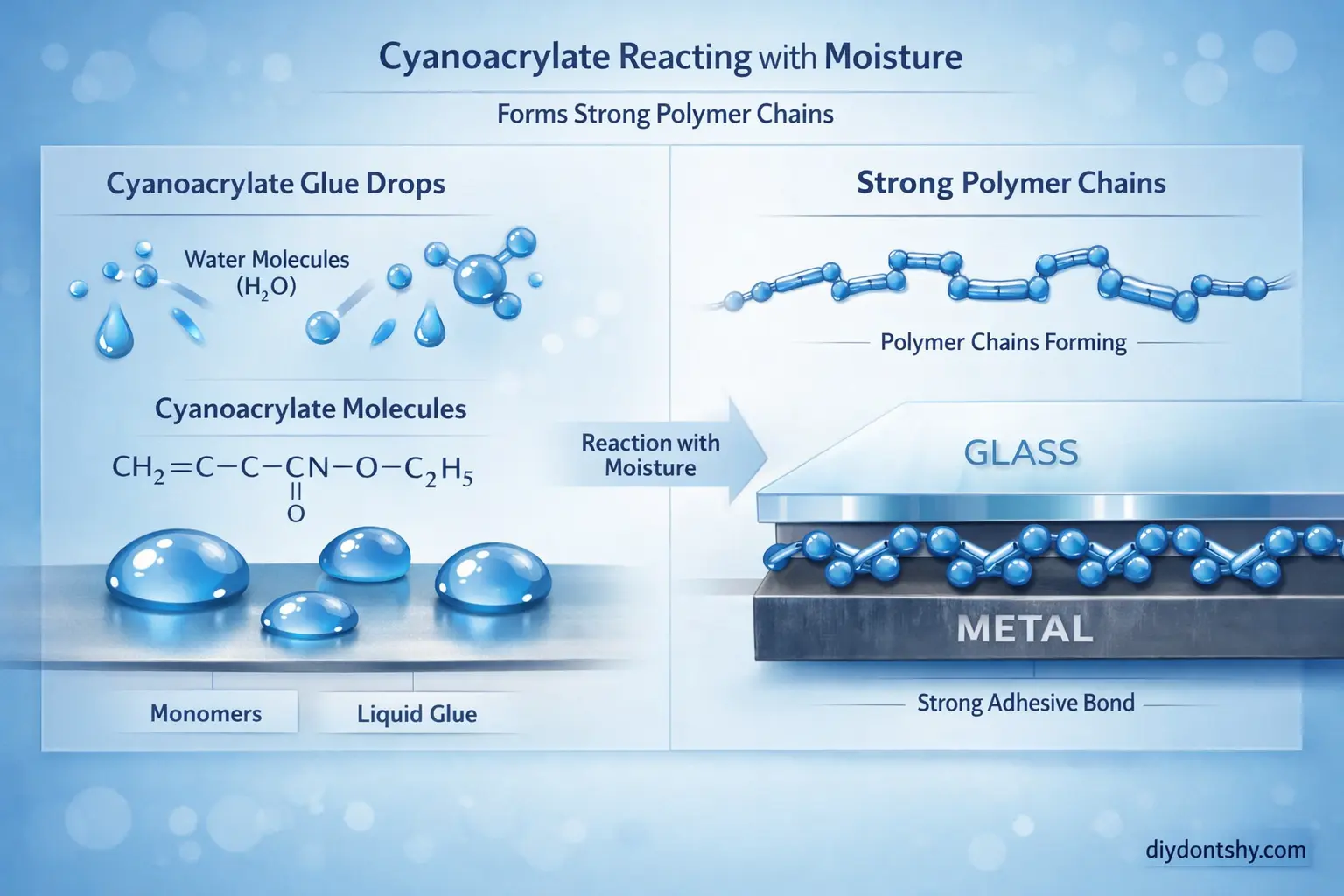
Super glue may seem simple, but its strength comes from a specific chemical process. Commercial super glue typically contains cyanoacrylate, a fast-reacting compound that begins curing when it encounters small amounts of moisture on the air or the materials being bonded.
That rapid reaction explains why a tiny drop can create a firm bond within seconds. As the cyanoacrylate cures, its molecules join together through polymerization, forming long chains that create a rigid adhesive layer between compatible surfaces.
Because it cures quickly and can produce strong bonds, commercial super glue is useful for many small repairs involving materials such as certain plastics, metal, glass, and ceramics. However, successful bonding still depends on factors such as surface condition, material type, and the amount of stress placed on the repair.
The important distinction is that this industrial adhesive chemistry cannot be reliably reproduced with ordinary kitchen ingredients. Homemade alternatives use different bonding mechanisms, which is why their performance and limitations are not the same as commercial super glue.
Why Homemade Versions Are Different
Homemade glue recipes often get labeled as “super glue,” but technically, they’re not the same thing. They don’t contain cyanoacrylate, and they don’t trigger that lightning-fast chemical reaction that makes real super glue so powerful.
Instead, DIY glues rely on physical bonding and natural adhesives; things like starch, protein, or alkaline reactions. These create decent adhesion, but they won’t match the industrial strength of store-bought options.
Still, don’t underestimate them. For light repairs, crafts, or temporary fixes, homemade glue can be surprisingly effective. In fact, many DIY mixtures can bond materials like wood, paper, and even some plastics reasonably well; just not under heavy stress.
Think of it like comparing a handmade rope to a steel cable. Both can hold things together; but one clearly has limits.
Contents
Can You Really Make a Super Glue Alternative at Home?
What DIY Adhesives Can Realistically Do
Yes, you can make simple household adhesives, but they should be viewed as super glue alternatives rather than true replacements. Homemade mixtures can provide useful bonding for crafts, paper, cardboard, wood, and other suitable materials, depending on the ingredients and surfaces involved.
Their biggest advantages are convenience and accessibility. Many recipes use common household ingredients, so they can be useful when you need a temporary repair or a basic adhesive without buying a specialized product.
However, homemade adhesives are generally unsuitable for structural, safety-critical, or heavily stressed repairs. A temporary mug-handle repair may be possible, but a broken chair, load-bearing object, or expensive electronic device requires an adhesive designed for that specific material and purpose.
Set Realistic Expectations for Bond Strength
The strength of homemade glue varies widely based on the recipe, surface preparation, drying time, and the materials being joined. Compared with commercial cyanoacrylate, DIY mixtures usually cure more slowly and provide less consistent durability.
Homemade glue typically offers:
- Moderate bonding strength for suitable materials
- Longer drying or curing times
- Lower resistance to repeated stress and moisture
- Better performance in crafts and light-duty repairs than in permanent heavy-duty applications
For everyday crafts, quick fixes, and simple experiments, these limitations are often acceptable. The key is choosing the method that matches the material and avoiding expectations that exceed what a homemade adhesive can safely handle.
Best Household Ingredients for DIY Glue
Baking Soda and Water Method
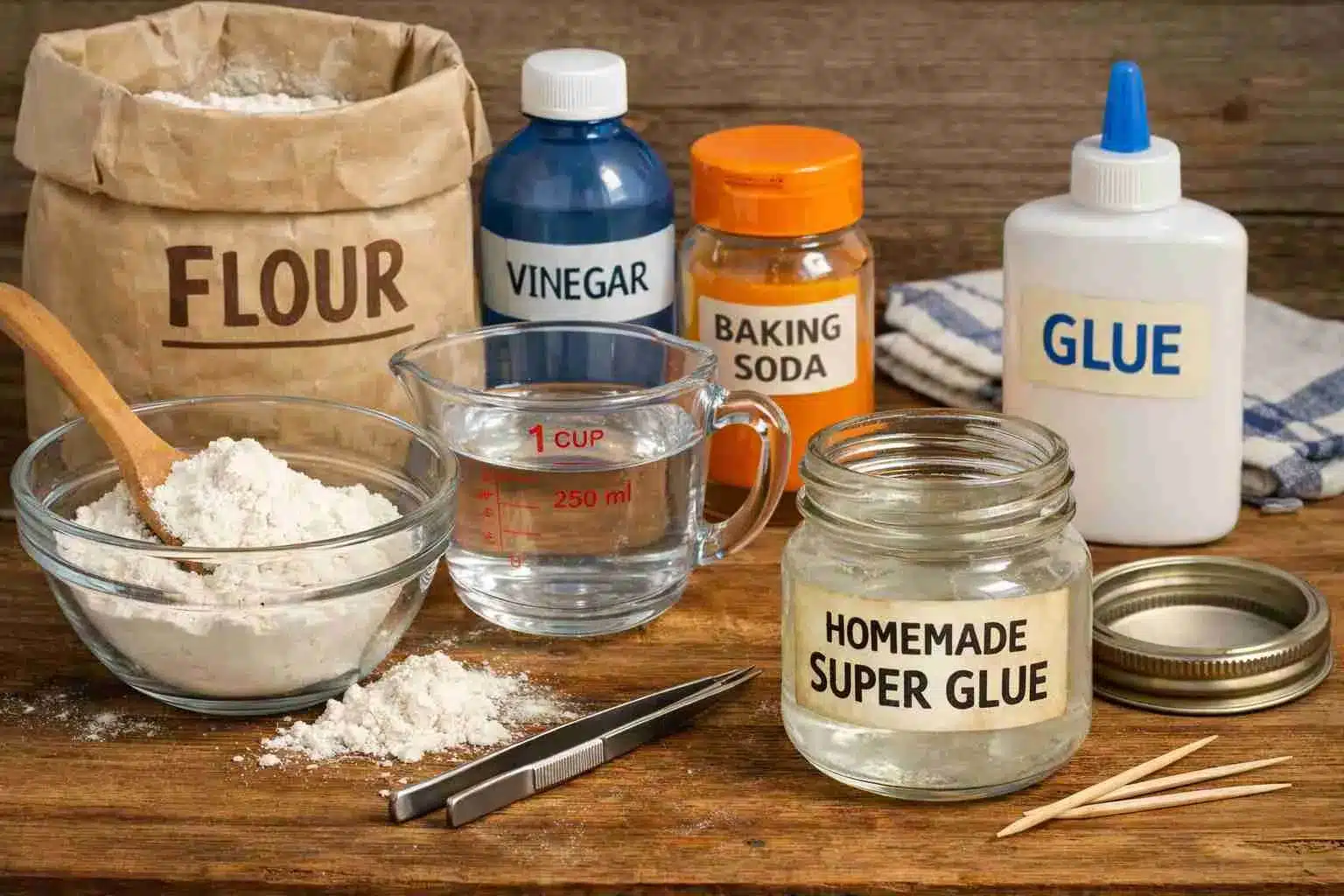
This is probably the closest thing to a “super glue hack” you’ll find at home. Baking soda acts as a filler and accelerator, helping create a quick-setting bond when combined with certain liquids.
The result? A surprisingly hard, cement-like adhesive that works well on small repairs. It’s not technically glue in the traditional sense, but it behaves like one.
Flour-Based Glue Alternative
Flour glue is one of the oldest adhesives in human history. It’s simple, cheap, and surprisingly effective for porous materials like paper and cardboard.
Mix flour with water, heat it slightly, and you get a sticky paste that dries into a firm bond. While it won’t hold metal or plastic, it’s perfect for crafts and light repairs.
Milk (Casein) Glue Method
Now this one is fascinating. Milk contains a protein called casein, which can be turned into glue when mixed with an acid like vinegar.
This method has been used for centuries; even in woodworking and art. The glue it produces is stronger than flour glue and works well on wood and paper.
Step-by-Step Guide: Baking Soda Super Glue Hack
Materials Needed
- Baking soda
- Water (or a small amount of liquid adhesive if available)
- A small container
- Stirring stick
Instructions
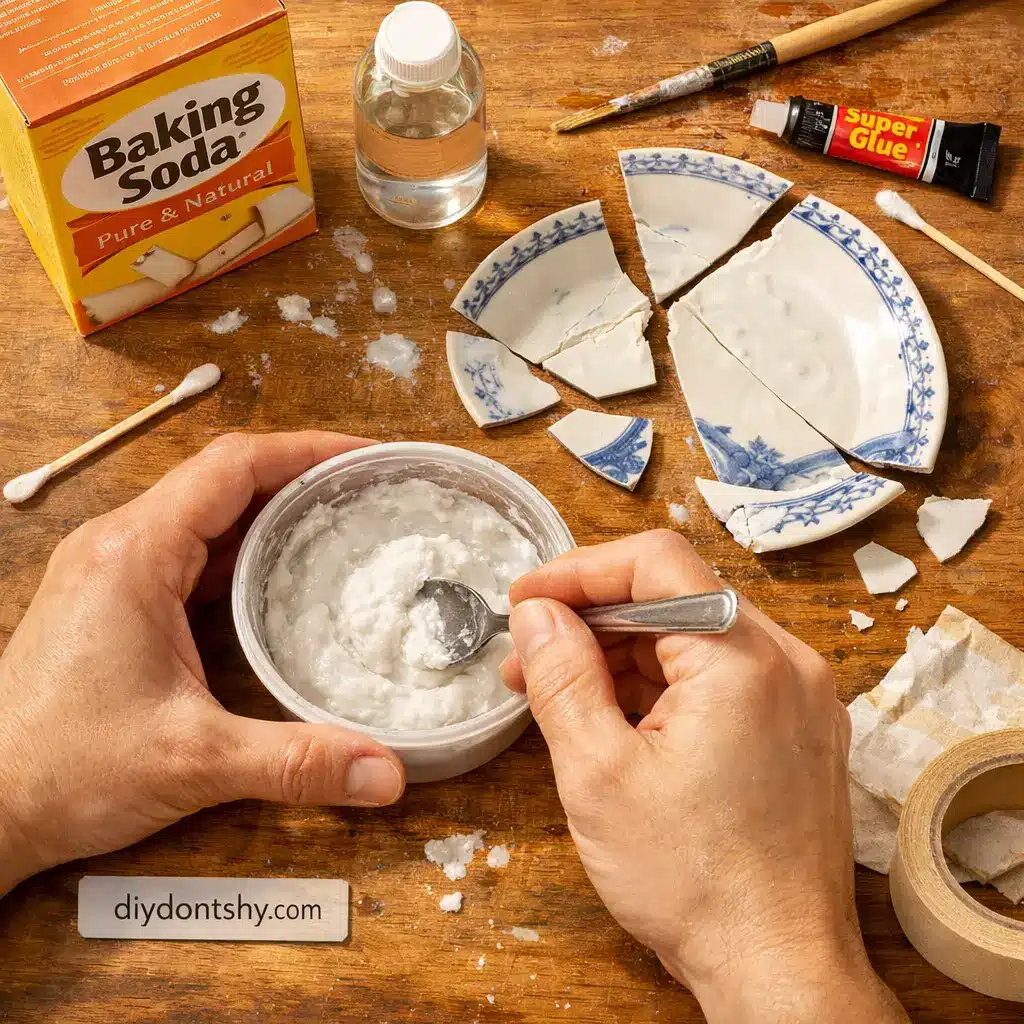
Start by placing a small amount of baking soda into your container. Add just enough water to create a thick paste; not too runny, not too dry.
Apply the mixture to the surfaces you want to bond. Press them together firmly and hold for a minute or two. As the mixture dries, it hardens into a solid structure that holds the pieces in place.
It’s surprisingly quick, and in many cases, it feels almost like working with instant glue.
Tips for Better Results
If you want stronger results, apply the mixture in layers. Let each layer dry before adding the next. This builds up a more durable bond and improves overall strength.
Also, make sure your surfaces are clean and dry before applying the glue. Even the best adhesive won’t work well on dusty or greasy surfaces.
Step-by-Step Guide: Milk-Based Strong Glue
Materials Needed
- Milk
- Vinegar
- Baking soda
- Water
- Coffee filter or cloth
Instructions
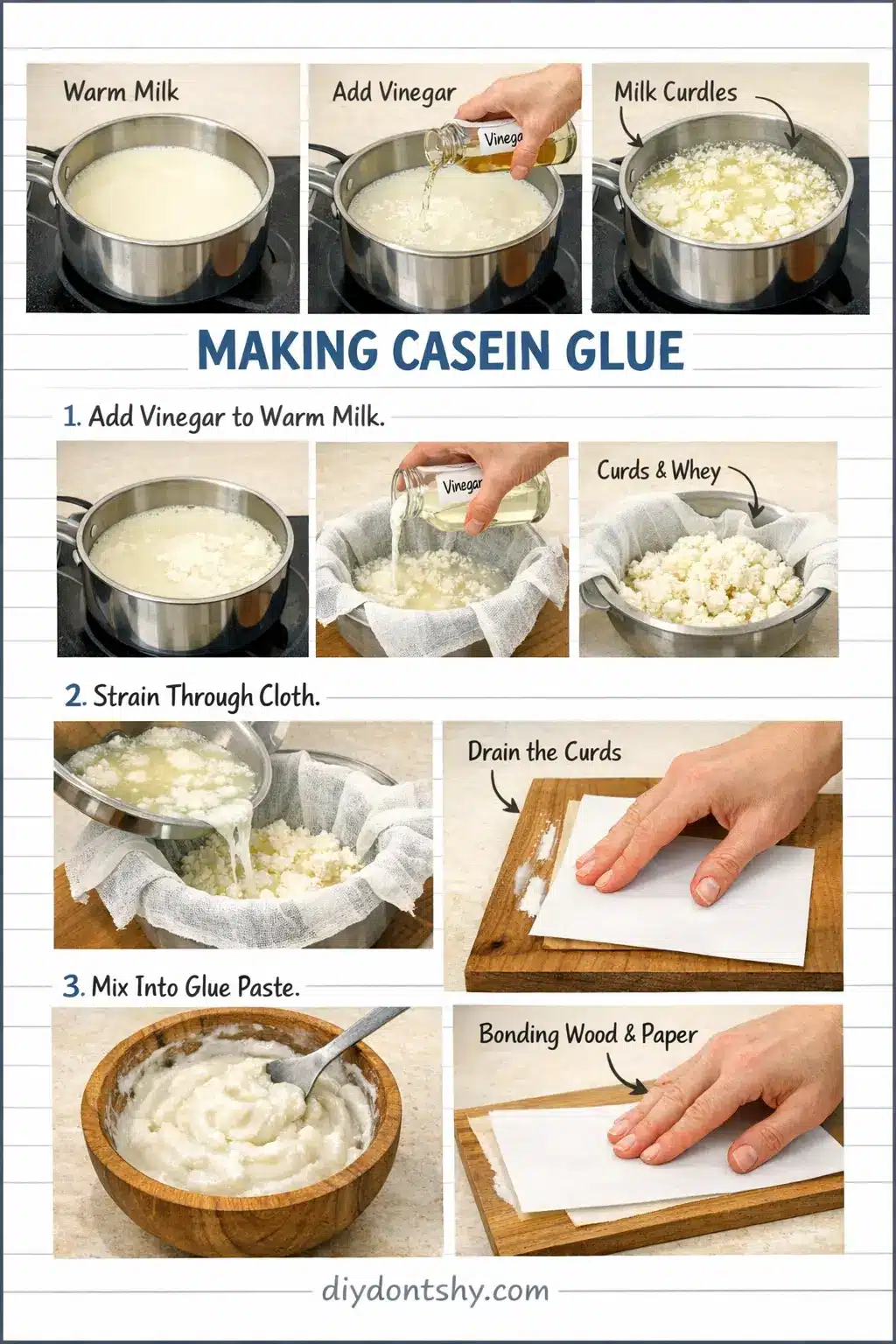
Heat the milk gently (don’t boil it), then add vinegar. You’ll notice it curdling; that’s the casein separating from the liquid.
Strain the mixture using a filter, then mix the solid curds with a small amount of baking soda and water. This creates a thick, sticky glue.
Apply it immediately, as it doesn’t store well. Once dried, it forms a surprisingly strong bond, especially on wood and paper.
Comparing Homemade Glue vs Real Super Glue
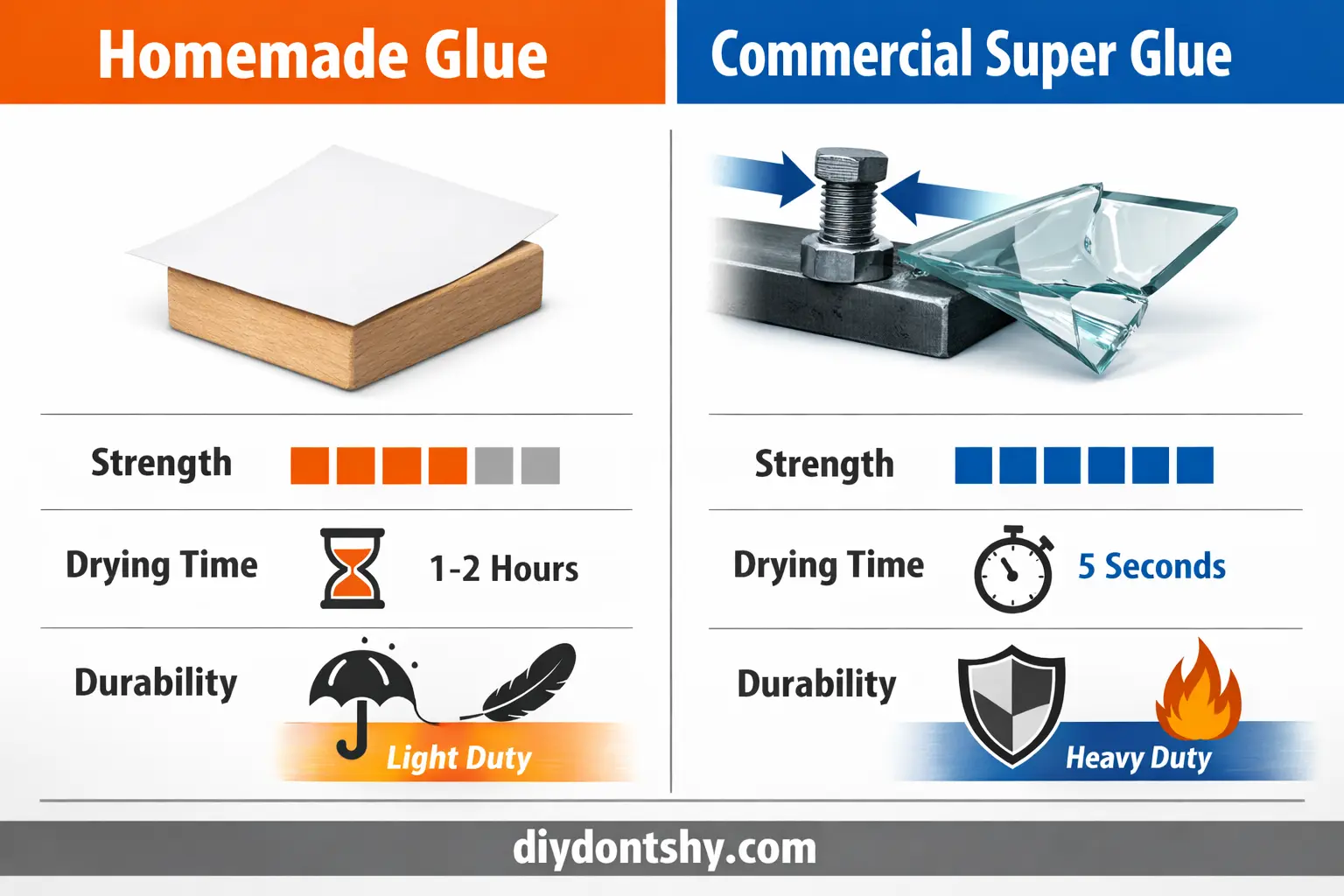
Strength Comparison Table
| Feature | Homemade Glue | Commercial Super Glue |
|---|---|---|
| Main Ingredient | Natural مواد | Cyanoacrylate |
| Drying Time | Minutes to hours | Seconds |
| Strength | Moderate | Very high |
| Durability | Low to medium | High |
| Best For | Crafts, light fixes | Repairs, heavy-duty use |
When to Use Each Type
Use homemade glue when:
- You need a quick fix
- You’re doing crafts or school projects
- You don’t have store-bought glue
Use real super glue when:
- Strength and durability matter
- You’re fixing valuable items
- The bond needs to last
Common Mistakes to Avoid
One of the biggest mistakes people make is expecting too much from DIY glue. It’s not designed for heavy-duty repairs, and pushing it beyond its limits usually leads to failure.
Another common issue is using the wrong surfaces. Some materials simply don’t bond well, even with real super glue; especially low-energy plastics.
Finally, patience matters. Many homemade glues need time to dry properly. Rushing the process weakens the bond significantly.
Safety Tips When Making DIY Glue
Even though these recipes use household items, you should still be careful. Avoid ingesting any glue mixture, and keep it away from children and pets.
Work in a well-ventilated area, especially when heating ingredients like milk. And always wash your hands after handling adhesives.
Safety might not sound exciting, but it’s what keeps your DIY projects fun instead of risky.
Creative Uses for Homemade Glue

Homemade glue isn’t just for fixing things; it’s a creative tool. You can use it for art projects, school assignments, or even simple home decor.
Imagine making your own scrapbook, repairing a favorite book, or crafting decorations without spending extra money. That’s the real beauty of DIY glue; it turns everyday items into something useful.
And honestly, there’s something satisfying about saying, “Yeah, I made that glue myself.”
Conclusion
Making a super glue alternative with household ingredients is not about reproducing the chemistry of commercial cyanoacrylate. Instead, it is about creating practical adhesives that can help with crafts, light repairs, and temporary bonding tasks.
Each homemade method has different strengths, drying characteristics, and suitable surfaces. Flour-based glue works best for many porous materials, while casein glue can provide a stronger bond for certain wood and paper projects. Results will still depend on careful preparation and allowing enough time for the adhesive to dry.
For demanding, valuable, or long-lasting repairs, a commercial adhesive formulated for the specific material remains the more reliable choice. But for simple projects and everyday experimentation, homemade glue can be an inexpensive way to explore how common ingredients work together to create useful bonding solutions.
Read Also: Best DIY Gifts Under $5
FAQs
1. Can homemade glue replace super glue completely?
No, homemade glue is weaker and better suited for light tasks rather than heavy-duty repairs.
2. What is the strongest homemade glue method?
Milk-based (casein) glue is generally stronger than flour or baking soda mixtures.
3. How long does DIY glue last?
Most homemade glues should be used immediately or within a day, as they spoil quickly.
4. Does baking soda really make glue stronger?
Yes, it can act as a filler and hardener, improving the bond in certain DIY methods.
5. Is homemade glue safe for kids?
Generally yes, especially flour-based glue; but supervision is always recommended.

Kareem Sallam is an Egyptian special writer based in Australia, with a strong interest in practical ideas and creative content that focuses on everyday solutions. He writes clear, engaging articles designed to be easy to follow and useful for a wide range of readers.
His work centers on DIY projects, handmade ideas, simple crafts, and home based creativity. Kareem aims to deliver content that is practical, inspiring, and accessible, helping readers turn simple materials into smart and enjoyable projects.